


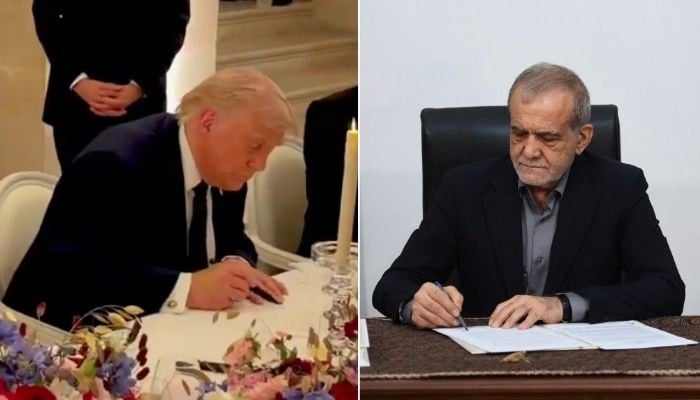
Renewed US-Iranian hostilities are eroding an interim agreement signed in June, reflecting disagreements over the Strait of Hormuz and other issues and underlining difficulties facing efforts to secure lasting peace.
The 14-point Islamabad Memorandum of Understanding (MoU) declared an end to the war and the Strait of Hormuz open for commercial vessels. But its wording was vague on key points, analysts say, while leaving tough issues — notably the fate of Iran’s nuclear programme — to a second phase of negotiations.
What have the parties said recently about the deal?
US President Donald Trump declared the initial ceasefire agreement “over” last week, saying Iranian officials were not honouring deals they negotiated. On Monday, he said the United States would probably take over the Strait of Hormuz.
Iranian Foreign Ministry spokesperson Esmaeil Baghaei accused Washington on Monday of driving the MoU “into crisis”, saying Washington has consistently violated its commitments.
Mediator Pakistan has urged all sides to uphold their commitments.
What’s at issue in the Strait of Hormuz?
After the start of the war, which began with US-Israeli strikes on Iran on February 28, Tehran effectively shut the Strait of Hormuz, through which a fifth of the world’s oil and liquefied natural gas had been shipped.
Article 5 of the MoU says that the traffic of commercial vessels would immediately start and that Iran “will make arrangements using its best efforts for the safe passage of commercial vessels with no charge for 60 days only, from the Persian Gulf to the Sea of Oman and vice versa.”
Tehran interprets this as US recognition of Iran’s right to manage the whole waterway, albeit without charging fees or tolls for two months.
The United States — and Gulf states — reject that interpretation, regarding the language as meaning only that Iran should facilitate safe passage for vessels and not impose restrictions backed up by force.
The US has said the strait will remain toll-free.
Over the last week, Iran has fired on vessels it says have tried to sail through the waterway on an unapproved route, and declared it closed again.
The US Navy’s Joint Maritime Information Centre said on Sunday a southern route through the strait remains available and has been expanded to accommodate two-way traffic.
What is happening to US oil waivers for Iranian oil sales?
Article 10 says Washington will issue waivers allowing for the export of Iranian crude oil, petroleum products, and all associated services, including banking transactions, insurance and transportation.
This was a big win for Iran, its economy suffocated for years by sanctions.
But on July 7, the US revoked a license allowing Iran to sell oil, warning that Iranian actions in the Strait of Hormuz were “wholly unacceptable” and would be met with consequences.
Tehran condemned this as a breach of the MoU.
What is the status of Iran’s frozen assets?
Article 11 says the US “undertakes to make fully available for use the frozen or restricted funds and assets” of Iran, and that Tehran and Washington would agree on procedures related to the release of these funds during the negotiation.
The assets include $6 billion held in Qatari accounts. Qatar said on June 30 that it had not transferred these funds to Tehran.
On June 22, US Vice President JD Vance said the US and Qatar would have control over the funds when they are unfrozen, and that the money could be spent on US corn, soy and wheat.
In response, Ali Bahreini, Iran’s ambassador to the United Nations in Geneva, said Iran alone would decide how to use unfrozen assets.
How does Lebanon fit in?
Iran’s parliament speaker and chief negotiator Mohammad Bagher Ghalibaf on July 8 cited Israeli attacks in Lebanon as a violation of the MoU.
Lebanon was pulled into the conflict when Iran-backed Hezbollah opened fire at Israel on March 2, leading to an Israeli offensive and invasion of the south.
Iran had said Israel must cease fire in Lebanon as part of the deal.
Where does this leave wider negotiations?
The MoU says Washington and Tehran commit to negotiating a final deal in a maximum of 60 days, extendable by mutual consent. But with control over the Strait of Hormuz contested, the sides have not declared any date for further talks.
It took years for Iran to negotiate its 2015 nuclear agreement with world powers. Trump withdrew the US from that deal during his first term.
“The MoU is in crisis, and you now need a secondary deal to restore it, if it is to be a basis for restoring calm,” said Mohanad Hage Ali of the Carnegie Middle East Centre think tank. “The vagueness reflected the difficulty of the issues and the fragility of the agreement.”
