


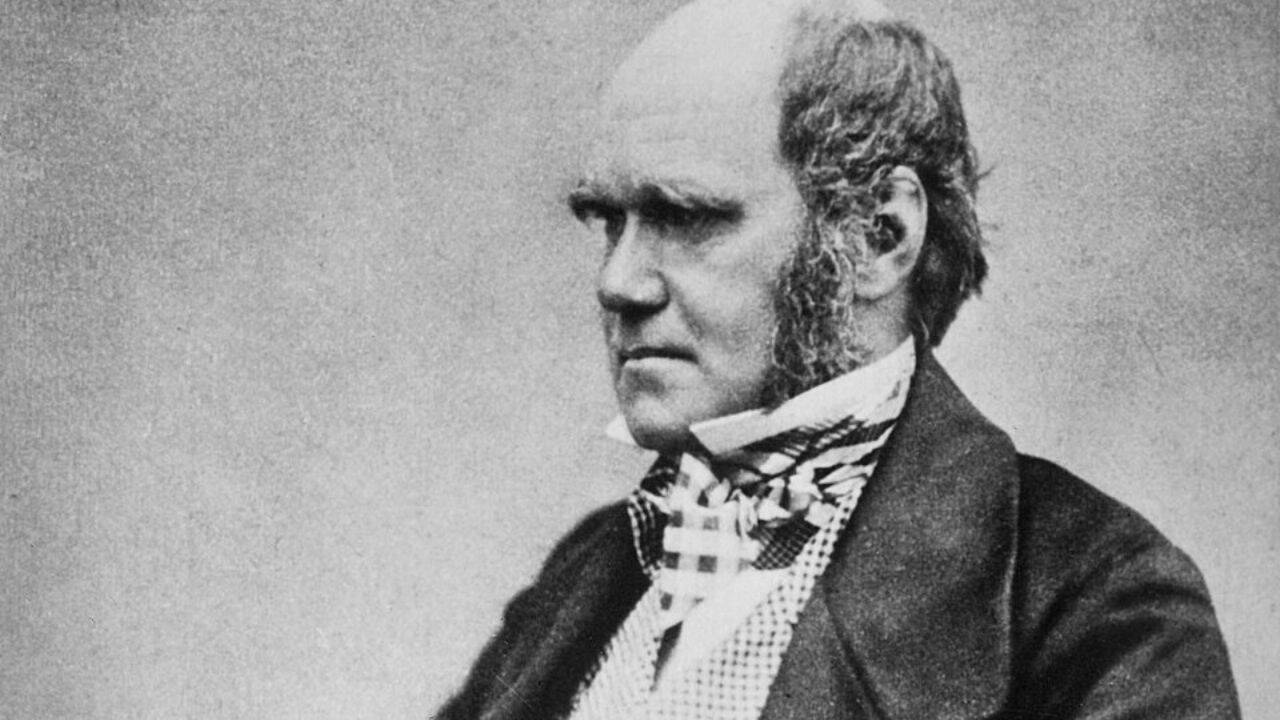
A bad experience is supposed to teach a lesson, yet people return to habits they already know are harmful more often than logic would suggest. Charles Darwin noticed the same contradiction and put it more bluntly than most. “An American monkey, after getting drunk on brandy, would never touch it again, and thus is much wiser than most men,” he wrote. The line comes from The Descent of Man, where Darwin describes an account of a monkey that reportedly avoided brandy entirely after one unpleasant experience with it, then turns the story into a joke at humanity’s expense. It is one of the few genuinely funny lines in a book mostly known for far weightier arguments about human origins.
Quote of the day by Charles Darwin
“An American monkey, after getting drunk on brandy, would never touch it again, and thus is much wiser than most men”
Charles Darwin’s quote: Meaning, lessons and relevance
The monkey has one bad experience, remembers it, and avoids repeating it. That is the whole lesson, simple and complete. Humans, despite considerably more reasoning ability, often behave differently, understanding perfectly well that a habit or decision has caused trouble before and choosing it again anyway.Darwin is not seriously arguing that monkeys are wiser than people in general. He is pointing at one narrow but real form of wisdom, learning from experience and actually changing behaviour because of it, and noting how often humans manage to talk themselves out of doing exactly that.
Why intelligence does not guarantee wise decisions
People can build cities, write books and develop entire scientific fields, and still keep making the same personal mistake more than once. Someone can know a habit is unhealthy and continue it anyway, or recognise that a decision has repeatedly gone badly and make it again regardless. Knowledge and behaviour simply do not always move together, and that gap is exactly what makes Darwin’s comparison land.
Why people reinterpret the past to justify repeating it
Human memory rarely stays neutral. People tend to remember the pleasure of an indulgence more vividly than the discomfort that followed it, or convince themselves that a previous bad outcome was an unusual exception rather than a pattern. The monkey, in Darwin’s telling, skips all of that. It simply experienced something unpleasant and avoided it afterward, without needing an elaborate story to explain away what happened.
Why immediate reward tends to beat long-term consequence
Habits become automatic, emotion affects judgement, and an immediate benefit usually feels far more real than a consequence still sitting somewhere in the future. That imbalance, weighing the present more heavily than tomorrow, is a large part of why people can make a decision while already half-expecting to regret it.
The difference between making a mistake and repeating one
Nobody avoids poor decisions entirely, and a single mistake does not make someone unwise. What actually separates people is what happens afterwards, whether the mistake becomes a lesson or simply gets repeated without much reflection at all.
Why Darwin reached for an animal comparison
Darwin spent his career studying the connections between humans and other animals, and this quote fits that broader interest closely. By placing a monkey’s simple response to experience next to humanity’s far more complicated relationship with its own mistakes, he creates a genuinely funny reversal of the usual hierarchy, one that still lands because the underlying observation about human behaviour holds up.
Other famous quotes by Charles Darwin
- “I love fools’ experiments. I am always making them.”
- “The highest possible stage in moral culture is when we recognise that we ought to control our thoughts.”
- “I am turned into a sort of machine for observing facts and grinding out conclusions.”
- “False facts are highly injurious to the progress of science, for they often endure long; but false views, if supported by some evidence, do little harm.”
Why this still holds up today
Wisdom, by Darwin’s own comparison, was never really about how much someone knows. It is about whether that knowledge actually changes behaviour the next time a similar situation shows up. Sometimes it does. Often, for entirely human reasons, it does not, which is precisely the gap this quote has been quietly pointing at since 1871.
