


How Data Centers and AI are Impacting Communities’ Utility Bills and Air Quality
The explosive expansion of generative AI is driving massive electricity consumption, prompting utility companies to delay fossil fuel plant retirements and pass infrastructure costs onto regional ratepayers.
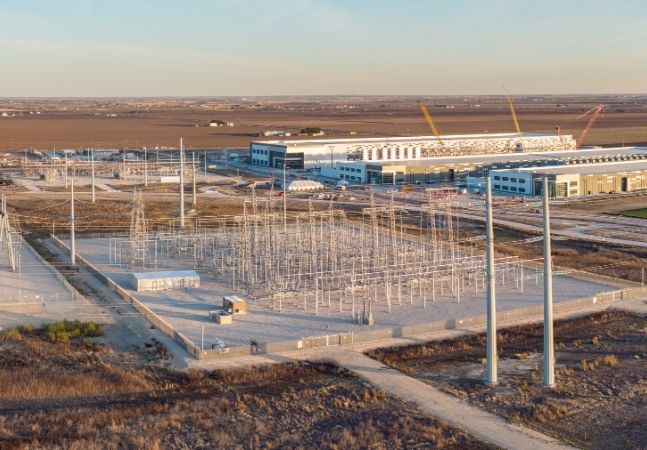
Data centers — large buildings filled with computer servers, networking hardware, and cooling systems that store and process the data needed to make online activities possible – have been around for decades. However, the advent of generative artificial intelligence (AI) in 2022 has increased the demand for new and larger data centers across the country.
These data centers, particularly the extremely large facilities known as hyperscale data centers, are reshaping the US energy grid; in some cases for the worse.
How is AI Driving Data Center Growth?
Generative AI refers to the ability of a computer to create new content such as text, images, videos or audio. Large language models (LLMs), such as OpenAI’s ChatGPT, are a type of generative AI. LLMs analyze large collections of text, images and other data to learn patterns that can then be used to create new content such as images, videos and articles.
LLMs require special high-speed computer servers with powerful computer chips that use more energy than traditional chips. Competition among tech companies to produce the best LLM, as well as increased AI use and reliance on high-speed computing from other sectors, has led to the rapid expansion of data centers.
How Do Data Centers Use Electricity?
A data center’s electricity use depends on its size, purpose, number of servers, storage equipment and cooling systems. On average, 60% of the electricity used by data centers powers the servers that process and store data at the facility. Another 7% to 30% of the site’s electricity can go towards cooling the computer servers, which can get quite hot while operating.
Why is Data Center Electricity Use a Concern?
- Data centers use much more electricity than before. Data centers in the US accounted for more than 4% of total electricity use in 2024. Much of that is likely from hyperscale data centers, which use more electricity than standard data centers. A typical data center may use 10-25 megawatts (MW) of electricity when operating. However, an AI-focused hyperscale data center can use 100 MW or more, consuming as much electricity annually as 100,000 households. Some hyperscale data centers, such as the Homer City plant in Pennsylvania, can use gigawatts of electricity, as much as small cities. If this rate of growth continues, data centers could use 9% to 17% of total US electricity by 2030.
- Data centers clusters are straining regional electricity grids. In six states in the US, data centers consume over 10% of the electricity supply. Virginia currently hosts 643 data centers, which account for 25% of the state’s energy use. The huge increase in energy use by data centers is outpacing available power in these regions, putting grid reliability at risk.
- Data centers are raising energy costs. To meet rising energy demand, utilities are building expensive new fossil fuel power plants, keeping older power plants running longer and pursuing costly transmission system upgrades. The cost of these expenses is being paid by all utility customers. Utility bills have gone up by more than $20 per month for the 67 million customers in the PJM Interconnection, the regional electric grid which includes Virginia. They are expected to increase by $70 per month by 2028.
- Electricity demand from data centers is making air quality worse and derailing climate progress. To meet the fast pace of data center growth, grid operators are delaying the retirement of highly polluting power plants and running them more frequently, as well as fast-tracking the approval of new fossil fuel power plants. Emissions from the US power sector are expected to increase by 30% by 2030 because of electricity demand from data centers. Data centers also frequently use diesel generators as backup power, which can increase local air and noise pollution. All of this has serious health impacts on the surrounding community. One study of a data center in Virginia found that emissions from the site would lead to up to 33 premature deaths over the next five years, and up to $99 million per year in increased health costs.
What Can Be Done to Address These Impacts?
- Ratepayer protections. Congress is currently considering a bill that would require large electricity users, such as data centers, to cover 100% of the costs of new power generation and transmission upgrades, paying for at least some of these costs upfront. If the bill is passed, it will be up to individual states to implement this standard, although many states are already considering similar ratepayer protection measures.
- “Bring your own power” models. The Federal Energy Regulatory Commission recently issued orders to the six regional transmission organizations (RTOs) it oversees to potentially modify the way large electricity users connect to the grid. These modifications, among other things, would make it easier for data center customers to build their own power generation facilities, co-locate with existing power generation, or enter private contracts with power producers. This model, known as “bring your own power” or BYOP, could reduce the impact data centers have on regional grids, and bring down the associated costs for ratepayers. Many states, including Pennsylvania, Texas and Ohio, have implemented or are considering incentives for data centers to bring their own power.
- Incentivizing renewable energy and battery storage use. The BYOP model can help address some of the grid impacts data centers bring, but without guardrails in place, BYOP can increase emissions. Globally, data center operators have 114 gigawatts (GW) of on-site fossil fuel gas generation planned, with about 90% of those projects planned in the US. Some states, such as New Jersey, are considering legislation to require that data centers obtain electricity from zero-emissions sources to reduce reliance on fossil fuels.
Will This be Enough to Protect Communities?
Unchecked data center development has already led to serious consequences for many communities, including increased energy bills and locked in fossil fuel infrastructure. While many municipalities have successfully pushed back against harmful data center proposals, oversight at the state and federal level is still needed.
Generative AI use continues to climb, making it unlikely that demand for the most energy-intensive data centers, such as hyperscalers, will go away. By implementing strong regulatory measures, policymakers can ensure that future data center development is less harmful to the grid, utility customers and communities.
