


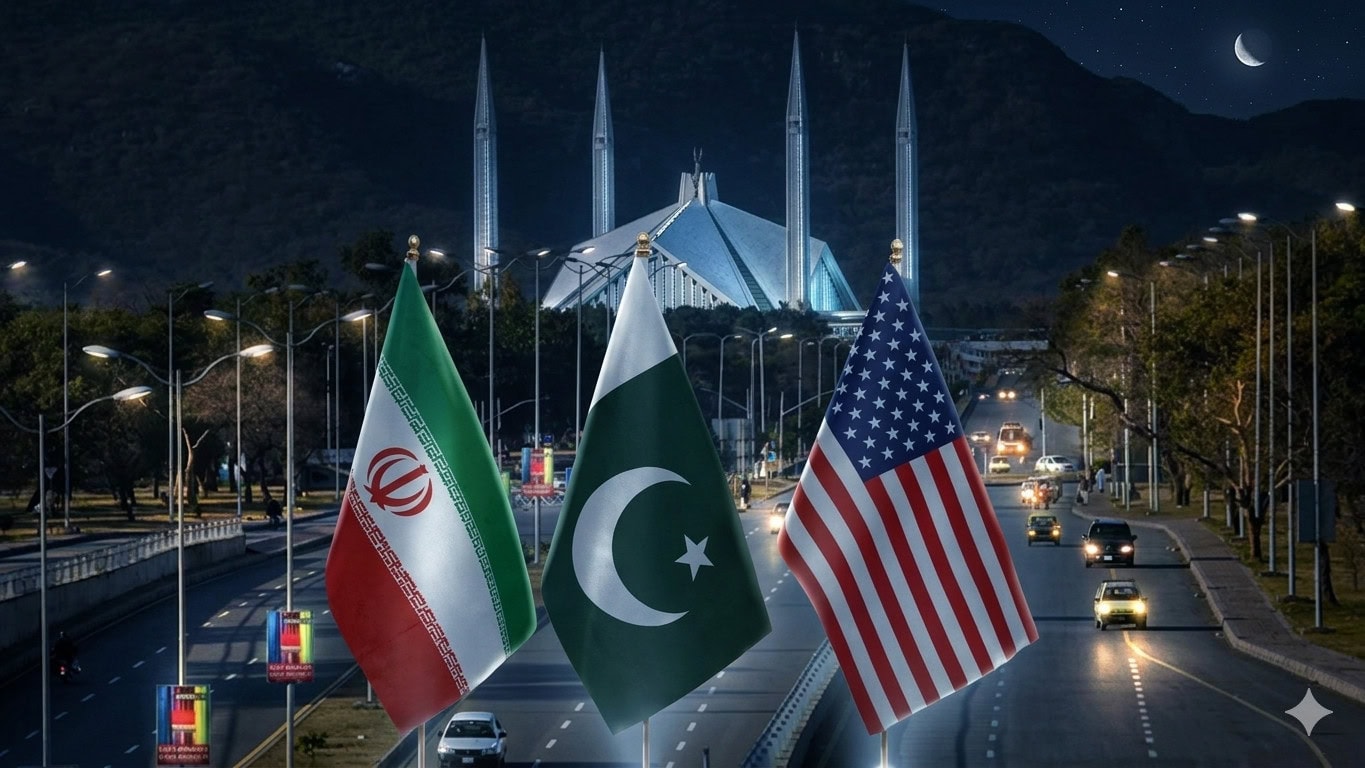
WASHINGTON – White House confirmed that second round of high-stakes US–Iran negotiations is likely to be held in Islamabad, as intense backchannel diplomacy accelerates behind the scenes amid growing regional uncertainty.
Officials insist discussions remain “productive,” while firmly denying reports that Washington has requested any extension of the fragile ceasefire, calling such claims completely false.
White House Press Secretary Karoline Leavitt said the next phase of talks is expected to return to the Pakistani capital, where earlier negotiations took place but ended without any breakthrough. U.S. President Donald Trump further heightened speculation, stating that discussions “could be happening over the next two days,” although no official schedule has been confirmed.
Pakistan suddenly emerged as critical diplomatic epicenter in the escalating crisis. Prime Minister Shehbaz Sharif’s simultaneous visit to Saudi Arabia and Chief of Army Staff Field Marshal Syed Asim Munir’s arrival in Iran have drawn global attention, with analysts interpreting the timing as part of a coordinated two-pronged diplomatic push aimed at defusing tensions and reviving stalled U.S.–Iran engagement.
Behind the scenes, Islamabad is reportedly working with multiple regional intermediaries, including Turkey and Egypt, in a complex effort to bring Washington and Tehran back to the negotiating table. At the center of these fragile efforts is the urgent attempt to extend a precarious ceasefire first brokered on April 8 after weeks of escalating conflict.
Inside Islamabad, Prime Minister Shehbaz Sharif told a cabinet meeting that “full efforts” are underway to resolve outstanding disputes, warning that while the ceasefire remains intact, the situation is still highly unstable and unresolved.
Adding further pressure, US Vice President JD Vance declared that “the ball is in the Iranian court,” insisting Washington has already delivered its “final and best offer” and clearly outlined its red lines following the Pakistan-hosted negotiations. His remarks underscored growing U.S. impatience, with responsibility now placed squarely on Tehran to respond.
Pakistani officials are reportedly engaged in highly sensitive backchannel diplomacy involving Iran as well as indirect communication with other key international stakeholders, as Islamabad positions itself at the center of an increasingly volatile diplomatic showdown.
At same time, Iranian state-linked reports suggest the talks may go far beyond a simple ceasefire extension. Tehran is reportedly preparing to push sweeping demands, including an end to hostilities, formal recognition of Iran’s rights, lifting of sanctions, and compensation for war-related damages, dramatically raising the stakes of an already fragile and high-pressure negotiation process.
Field Marshal Asim Munir lands in Iran amid High-Stakes Push for US–Iran Peace Talks
