


UK Water Utilities Turn to Smart Tech to Fight Leaks
As extreme weather swings accelerate infrastructure damage, water utilities turn to advanced data analytics and automated acoustic tracking.
Rapidly shifting weather patterns across the United Kingdom are forcing British water utilities to overhaul leak detection strategies as volatile environmental conditions accelerate infrastructure damage.
The Environment Agency recently warned that the UK is increasingly prone to “weather whiplash”—a rapid succession of intense droughts and heavy flooding. These sharp hydroclimatic swings cause significant soil movement in regional ecosystems, which stresses underground pipe networks and triggers severe leakage outbreaks. Prolonged dry spells and sudden freeze-thaw cycles further exacerbate structural vulnerabilities within UK water networks.
To maintain network resilience under these unstable conditions, water operators are shifting away from traditional reactive maintenance toward automated, data-driven systems. This modern approach relies on continuous monitoring hardware and cloud analytics to isolate anomalies before major pipe bursts occur.
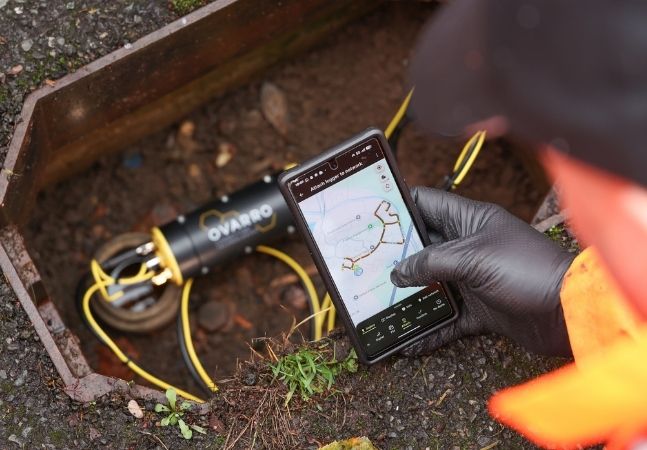
Acoustic sensors, advanced correlating loggers and hydrophones are now deployed to map underground audio frequencies. The hardware tracks the sound of escaping water to pinpoint micro-leaks within meter-level accuracy, operating effectively even on difficult plastic piping. Cloud-based analytics platforms process this acoustic data alongside flow metrics to filter out false positives and rank repair urgency.
Recent field deployments demonstrate how combining physical tracking hardware with automated cloud analytics expedites the detection window. During an infrastructure review in Paris, an integrated correlation system covered eight kilometers of a metropolitan network in a single test cycle. The system captured 60-second audio samples to successfully identify multiple deep, undetected leaks and failing valves within the first month of deployment.
In tandem with hardware upgrades, the utility sector is increasingly adopting managed service models to offset labor constraints. Rather than buying and maintaining equipment independently, water companies contract specialized providers to manage sensor deployment and data analysis. Specialists flag points of interest directly to utility field teams via mobile applications, allowing internal utility resources to focus entirely on physical repairs and immediate loss prevention.
About the Author
Jesse Jacobs is Assistant Editor of EPOnline.com.
