


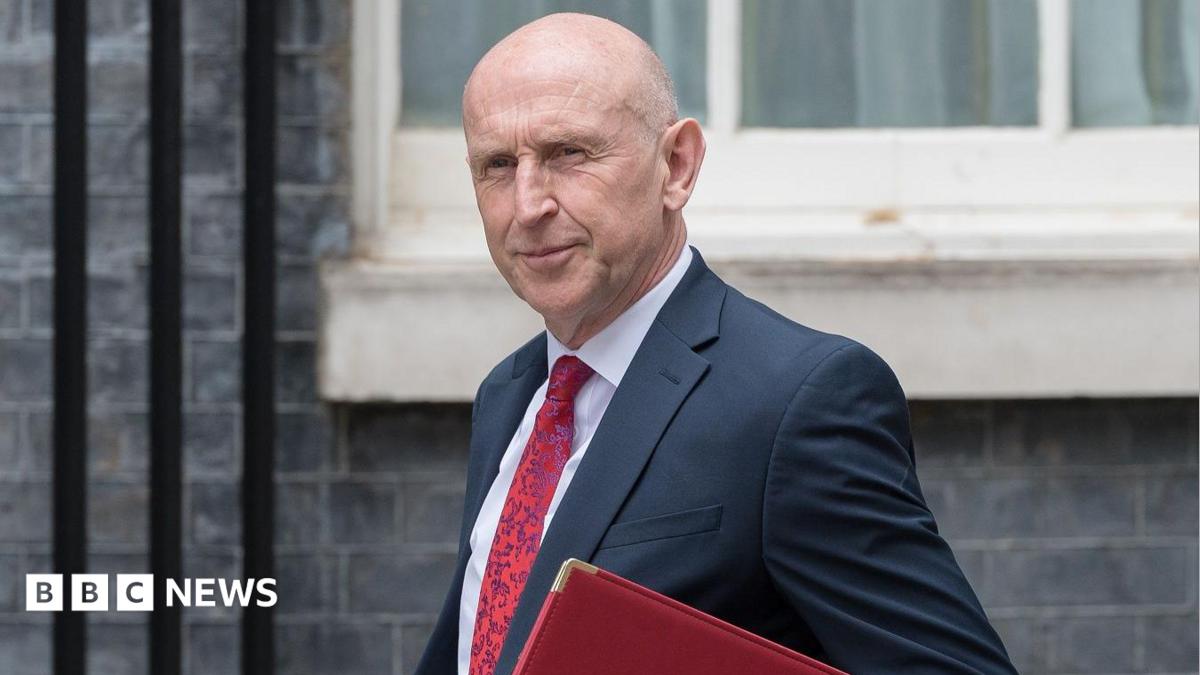
The government borrowed slightly more than expected in July, according to figures published as Chancellor John Healey draws up his first Budget.
The Office for National Statistics (ONS) said borrowing was £2.3bn more than official forecasts from the Office for Budget Responsibility (OBR).
Borrowing, the gap between what the government spends and what it takes in tax receipts, was £1.8bn in July, two thirds higher than the same month last year.
Economists warned the figure will restrict Healey and Prime Minister Andy Burnham’s room for manoeuvre as they target measures aimed at easing the cost of living for households, with little room to increase borrowing in the Budget on 27 October.
Healey has made it clear he will oversee “strong fiscal discipline” at the Budget – which will limit how much the government has to spend.
He has adopted his predecessor Rachel Reeves’ fiscal rules, which commit the government to funding all day-to-day spending through tax receipts by the end of the decade.
Responding to the borrowing figures, Healey said: “We are cutting the deficit faster than any other G7 economy, while giving people a bit of breathing space with cost of living pressures and focusing support to get young people into work.”
The government borrowed £16bn less in July than it did in June, helped by a surge in self-assessed income tax receipts.
But the figure came in higher than expected due to increased welfare spending, including benefits and other payments such the state pension. Social payments were £2bn higher than the same period last year.
The ONS said borrowing from April to July, the first four months of the government’s fiscal year, has reached £56.7bn. This is lower than last year, but £2.3bn higher than forecasts from the OBR, which the government uses when drawing up its spending plans.
Senior economist at Capital Economics Ashley Webb said the figure continued a “run of bad news” for the economy and that “there will be little scope to raise borrowing in the Budget later this year”.
He said the borrowing overshoot “will probably get bigger” this year as economic growth slows and the government rolls out more measures to support households with the cost of living.
Joe Nellis, head of economic research at accountancy MHA, also said the figures will not “prevent difficult decisions that must be made in the upcoming October Budget”.
Healey will have to find “additional tax revenue, tighter control over public sector spending and changes elsewhere” to balance the books and meet the government’s fiscal rules.
“Failure to do so will unsettle the financial markets and potentially push up the cost of government borrowing still further,” Nellis warned.
The ONS also said Britain’s overall debt pile is approaching £3tn, having grown by £127.2bn a year earlier. The Conservatives said Labour’s spending would leave “ordinary families” left to cover the bill.
Shadow Chancellor Mel Stride said: “We spend more on just the interest of our soaring debt than we do on our defence, police, and prisons combined. We simply cannot afford the price of Labour.”
The ONS also said retail sales were lacklustre in July, falling 0.5% from June. Analysts said the drop was caused by a surge of hot weather and a World Cup-induced surge in sales in June. Clothing and footwear saw the slowest growth since May last year.
