


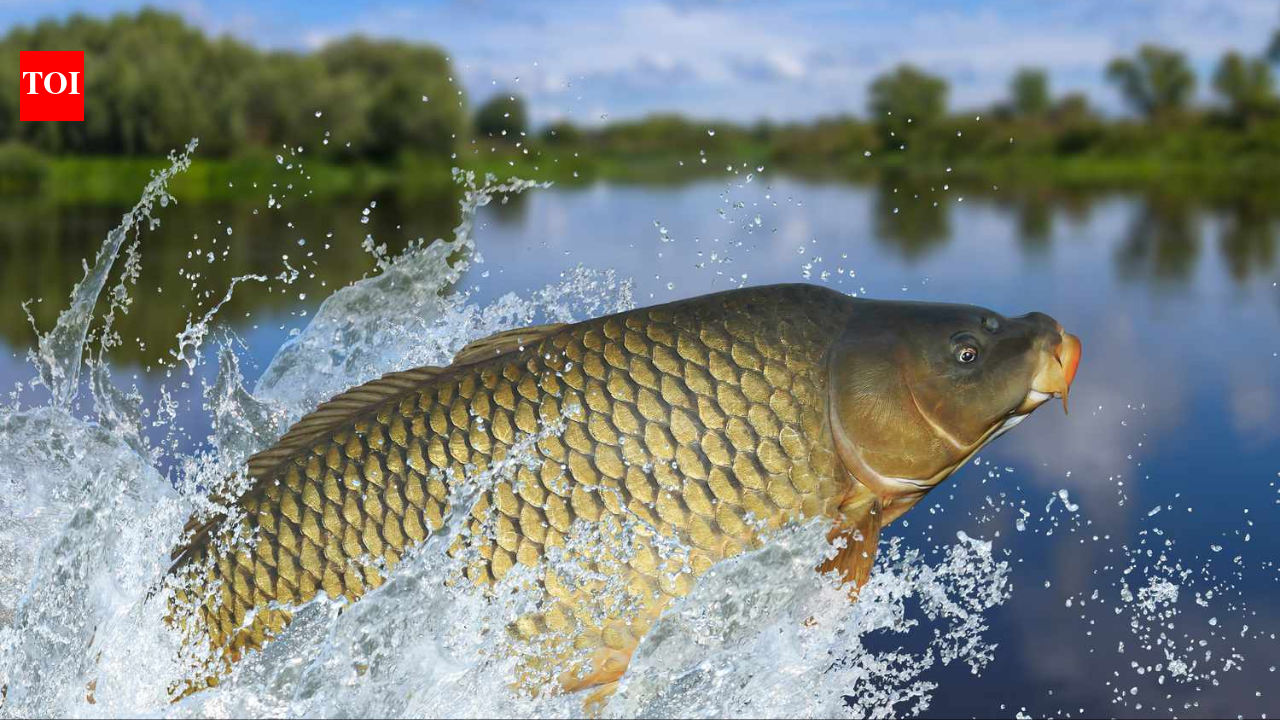
An intensive 28-year eradication campaign has eliminated common carp from two major Tasmanian lakes, achieving what fisheries experts around the world once considered almost impossible in a large, open freshwater system. The Tasmanian Inland Fisheries Service (IFS) has officially declared European carp (Cyprinus carpio) functionally eradicated from Lake Sorell and Lake Crescent. The declaration followed the capture and removal of 49,301 invasive fish over nearly three decades. This included 41,504 carp removed from Lake Sorell and 7,797 from neighbouring Lake Crescent. Removing the invasive bottom-feeding fish has changed the lakes significantly. Water clarity has improved, native plants have returned to submerged marsh areas, and wild brown trout populations have recovered, helping restore the lakes as important recreational fisheries.
An illegal introduction triggers environmental crisis
Carp were first found in Lake Crescent in January 1995, when a local fly fisherman discovered a dead fish on the shore. Soon after, state officers confirmed that carp were also living in nearby Lake Sorell. They were believed to have been illegally introduced by people using live fish as bait. Located on Tasmania’s Central Plateau, the two connected shallow lakes cover 53 square kilometres and 23 square kilometres respectively. They form an important freshwater catchment linked to the Clyde River. The discovery alarmed authorities. Carp are highly destructive fish that feed by searching through soft sediment on lake beds. This behaviour uproots aquatic plants, damages fish spawning areas and stirs fine silt into the water. The resulting muddy water blocks sunlight from reaching aquatic plants and damages habitats for native species. The infestation posed a major threat to the golden galaxias (Galaxias auratus), a rare native fish found nowhere else in the world. It also threatened wetlands around the lakes that are protected under the Ramsar Convention. To stop the carp from spreading into Tasmania’s wider river system, IFS closed the lakes to public access, installed screens to block water flowing into the Clyde River and created the dedicated Carp Management Program.
New tracking and netting methods cut numbers
Using poison such as rotenone was ruled out because of the size of the lakes and the need to protect sensitive native species. Draining the large lake basins was also impossible. Managers therefore had to physically catch the carp while also preventing them from breeding. IFS developed a strategy that combined physical removal with radio tracking. Biologists placed small radio transmitters inside captured male carp before releasing them back into the water. These “Judas fish” naturally moved towards groups of carp during the spring spawning season, when the fish gathered in warm, shallow marshes. Teams followed the radio signals to these groups and surrounded them with specialised gill nets and seine nets before the carp could lay their eggs. During years when water levels were high, crews also installed kilometres of mesh barriers across shallow marsh entrances. These barriers stopped adult carp from reaching grassy areas where they could breed. Specialised electrofishing boats were also used to stun and remove fish hiding among dense vegetation. The approach cleared Lake Crescent first. The last carp there was caught in 2007, and the lake was officially declared free of carp in 2009. The operation then focused entirely on the larger and more difficult Lake Sorell.
Natural sterility helps final push in Lake Sorell
Removing the last carp from Lake Sorell took years of careful work. The effort was helped by a natural condition known as jelly gonad, which can make male carp completely sterile. Through genetic testing and field sampling, IFS biologists tracked the number of fertile fish in the population. The last fertile male carp in Lake Sorell was caught during the 2018-19 season. Monitoring suggested that any remaining carp were either sterile males or isolated females that could not reproduce. IFS surveys found no evidence of successful juvenile carp production in Lake Sorell after 2013, even though conditions were suitable for spawning in 2016, 2021 and 2022. In November 2022, crews caught a single female carp in a gill net. No carp were caught or detected in later surveys. In March 2025, IFS teams carried out a major juvenile carp survey using backpack electrofishers and 66 fyke nets across important marsh areas around Lake Sorell. No carp were found during 6,128 fyke net hours and 335 minutes of electrofishing. The results confirmed that the carp were no longer successfully breeding and supported the lake’s functional eradication status.
Trout and lake clarity recover
Removing nearly 50,000 bottom-feeding carp has allowed the lakes to move back towards their natural condition. With carp activity gone, suspended silt settled to the bottom, greatly improving water clarity and allowing more sunlight to reach the lake bed. Native underwater plants and marsh vegetation have returned to shallow bays, creating better habitat for insects and the native golden galaxias. The recovery has also helped wild trout numbers increase. Lake Sorell, once famous among Australian anglers for its large brown trout, has been reopened for recreational fishing. State fisheries surveys show that naturally bred brown trout are benefiting from the return of aquatic insects. Anglers have reported fish in very good condition, with many weighing between two and three kilograms. The Tasmanian campaign is now seen as an important achievement in freshwater conservation. It shows that invasive fish can be removed from large, open lakes through long-term planning, monitoring and persistence. The IFS continues to monitor the lakes and maintains strict biosecurity measures to prevent non-native fish from being introduced again.
