


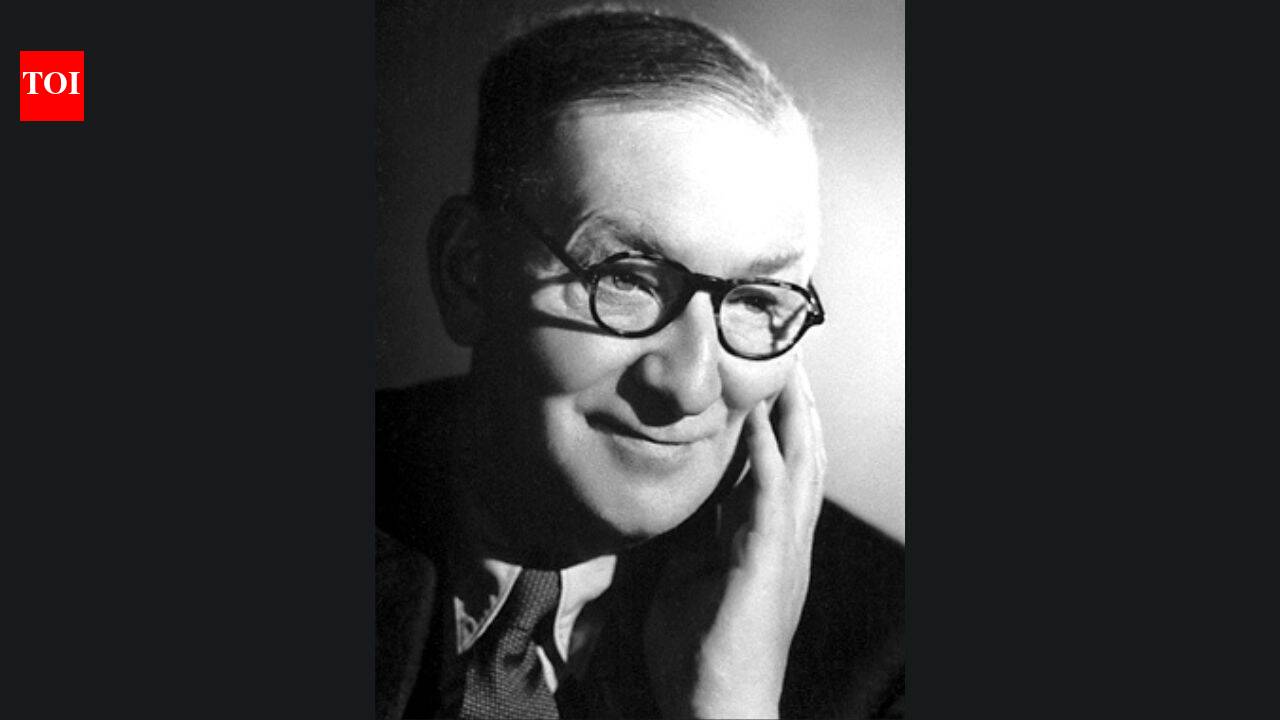
Some people don’t just contribute to the world. They bend its direction. The British physicist John Cockcroft, himself a Nobel Prize winner who helped split the atom, believed history turns on such rare figures. Human progress has always depended on the achievements of a few individuals of outstanding ability and creativity, he said. Homi Bhabha was one of these. It was a tribute, spoken after the death of his friend, the Indian physicist who built his country’s nuclear programme almost from scratch. Coming from Cockcroft, the praise carried real weight. He was not a man given to easy flattery, and he knew exactly what genuine scientific achievement looked like. In a single breath, he captured two things: a belief about how progress happens, and his admiration for a friend he counted among the rare few who make it happen.
Quote of the day by John Cockcroft
“Human progress has always depended on the achievements of a few individuals of outstanding ability and creativeness. Homi Bhabha was one of these”
Who was John Cockcroft
John Cockcroft was a British physicist who shared the 1951 Nobel Prize in Physics with Ernest Walton. The two are remembered for an experiment in 1932 in which they split the nucleus of an atom for the first time using a machine they had built, a landmark moment in the history of science.Cockcroft went on to lead Britain’s atomic energy research after the war. He was a careful, understated man, better known for sound judgement than showmanship. So when he singled out another scientist as one of the rare individuals who move humanity forward, it was not a compliment he paid lightly.
Who was Homi Bhabha
Homi Bhabha, the subject of the tribute, is widely called the father of India’s nuclear programme. Born in 1909 into a prominent family, he went to Cambridge to study engineering but was soon pulled toward physics, doing important early work on cosmic rays and particle interactions. It was at Cambridge, in the famous Cavendish Laboratory, that he and Cockcroft became friends.Bhabha could have built a comfortable career abroad. Instead, he returned to India, convinced his country could become a scientific power in its own right. He founded the Tata Institute of Fundamental Research and the centre at Trombay, later renamed the Bhabha Atomic Research Centre in his honour. He laid the foundations of India’s atomic energy effort and helped spark its space programme too. When he died in a plane crash in 1966, the loss was felt across the scientific world, and his old Cambridge friend was among those who paid tribute.
Understand the meaning of the quote by John Cockcroft
The quote rests on a particular view of how the world moves forward. Cockcroft is saying that progress, the real and lasting kind, has usually come from a small number of unusually gifted and creative people. Not from crowds or committees, but from individuals with the vision to see what others cannot and the drive to build it.There’s room to argue with how complete that picture is. Even the greatest individuals stand on the work of many others, and Bhabha himself is a good example, because his genius showed partly in building institutions and training thousands of others. But the core of Cockcroft’s point still holds. Every so often, a single person of rare ability and imagination changes what a whole nation, or the whole species, is capable of.
Why this quote by John Cockcroft is relevant
It’s easy to feel that the big things, science, technology, the shape of a country’s future, are decided by vast impersonal forces far beyond any one person. Cockcroft’s words are a reminder that individuals still matter enormously. Behind most leaps forward, there is usually someone who refused to accept that it couldn’t be done.For India especially, the quote lands close to home. Much of the country’s standing in science and technology traces back to a handful of determined visionaries like Bhabha, who chose to build at home rather than shine elsewhere. The wider lesson is encouraging. Talent and creativity, backed by real determination, can genuinely shift the course of things. The trick is to recognise such people, to support them, and where you can, to become one.
How to apply John Cockcroft’s quote in daily life
You don’t need to reshape a nation to take something from this.
- Back the exceptional people around you. When you spot real talent in someone, a colleague, a student, a child, help it grow rather than hold it back. Progress often hinges on who gets supported.
- Cultivate your own ability. The people Cockcroft admired weren’t born finished. They worked relentlessly at their craft, and deep skill is something you build over years.
- Value creativeness, not just effort. Original thinking, the willingness to imagine what doesn’t exist yet, is what separates real progress from busywork.
- Think about what you’ll build. Bhabha’s lasting impact came from institutions that outlived him. Ask what you could create that will still help people once you’ve moved on.
