


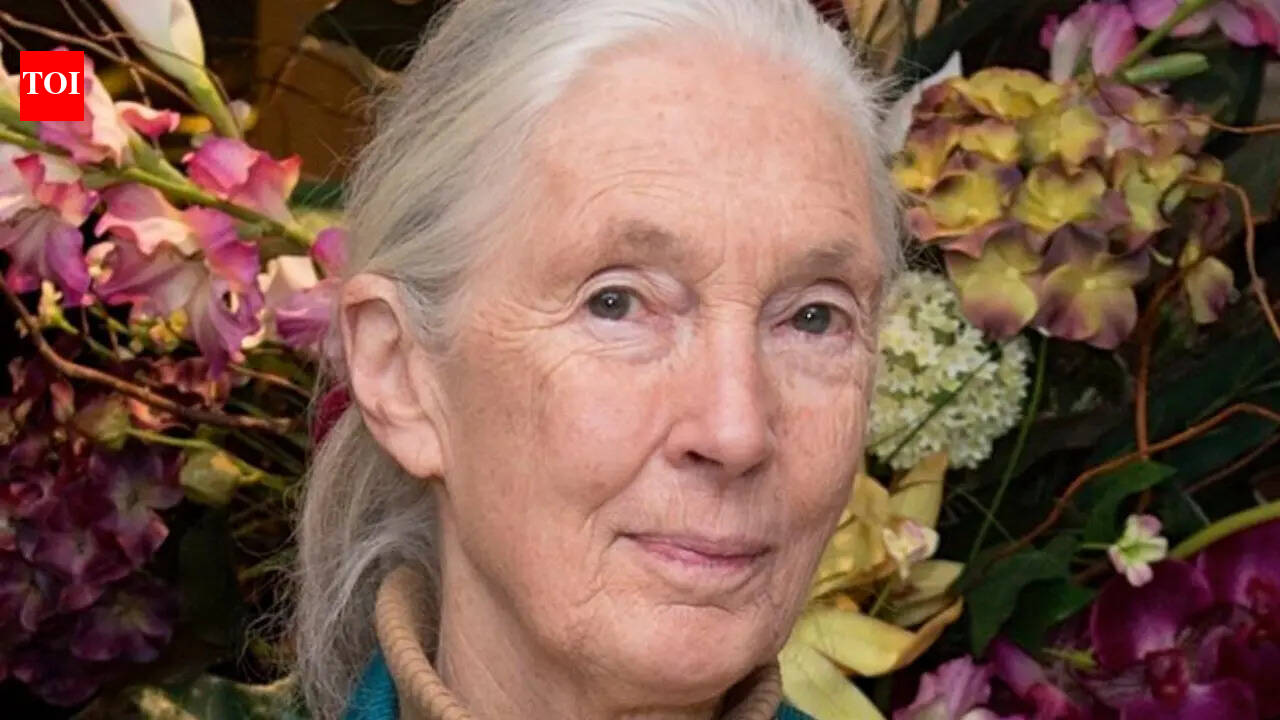
Some quotes feel unusual because they move against instinct. The line often attributed to Jane Goodall is one of them.When people encounter behaviour they strongly disagree with, the natural reaction is often criticism. Sometimes it is anger. Sometimes it is avoidance. In many situations, people simply stop talking to one another altogether. The quote points in a different direction.Instead of beginning with an argument, it begins with listening.That can sound surprisingly difficult, particularly at a time when public conversations often become divided very quickly. Political disagreements, social debates and even everyday disputes can turn into situations where each side speaks more than it listens. The result is familiar. Positions become fixed, frustration grows and very little changes.Jane Goodall’s words suggest another possibility. Not because listening guarantees agreement, but because meaningful change rarely begins when communication has completely broken down.The quote does not ask people to abandon their beliefs. It does not suggest that every viewpoint deserves acceptance. What it proposes is something more practical. If change is the goal, understanding often needs to come before persuasion.That idea may sound simple, yet it remains one of the hardest things to practise consistently.
Quote of the day by Jane Goodall
“Change happens by listening and then starting a dialogue with the people who are doing something you don’t believe is right.”
What is the meaning behind the quote by Jane Goodall
At the centre of the quote is a distinction that people sometimes overlook. Listening is not the same thing as agreeing.Many conversations fail because these two ideas become confused. The moment someone listens to an opposing viewpoint, others may assume they are accepting it. In reality, listening simply creates an opportunity to understand why another person thinks the way they do.The quote reflects that difference.Jane Goodall is not suggesting that harmful actions should be excused or ignored. Instead, she is pointing towards a process. Before people can change minds, influence behaviour or solve problems, they often need to understand what is driving the behaviour in the first place.Without that understanding, discussions tend to become repetitive. Each side repeats familiar arguments. Neither side learns anything new. The disagreement remains exactly where it started.Dialogue introduces something different. It creates a chance to move beyond assumptions.That movement may be small. It may not produce immediate results. Yet it often creates possibilities that do not exist when communication stops altogether.
Listening has become a surprisingly rare skill
Modern life provides endless opportunities to speak.People post opinions online. They comment on news stories. They share reactions within seconds of hearing information. Communication has become faster than at any other point in history.Listening has not always kept pace.In many public discussions, people begin preparing responses before the other person has finished talking. Conversations become contests rather than exchanges. The goal shifts from understanding to winning.This pattern appears everywhere. It appears in politics. It appears in workplaces. It appears in families and friendships.The problem is not disagreement itself. Disagreement can be useful. Different perspectives often help people see issues more clearly. The difficulty begins when people stop trying to understand why another person holds a particular view.At that point, assumptions take over.The quote gently pushes against that tendency. It suggests that listening is not a sign of weakness. It is often the first step towards meaningful engagement.
Real change usually begins with understanding
Many of the most significant social changes in history involved dialogue in some form.People often remember speeches, protests and public campaigns. Those moments are important, but they are rarely the entire story. Behind them are usually countless conversations where individuals attempted to understand opposing viewpoints, negotiate differences and identify common ground.That process can be frustrating.Understanding someone’s perspective does not automatically solve a problem. In some cases, it may reveal deeper disagreements than expected. Yet understanding still provides information that would otherwise remain hidden.Someone may hold a particular belief because of personal experience. Another person may be influenced by cultural traditions, economic concerns or fears about uncertainty.Without listening, those factors remain invisible.The quote reflects an awareness that behaviour rarely exists in isolation. Actions often emerge from experiences, assumptions and circumstances that are not immediately obvious from the outside.
Dialogue works differently from debate
Many people think of dialogue and debate as similar activities, but they often operate in very different ways.Debate usually focuses on proving a point. Participants attempt to persuade others that their position is correct. There is often a winner and a loser, at least in the eyes of the audience.Dialogue has a different purpose.The goal is not necessarily victory. The goal is understanding. Participants explore ideas rather than simply defend them. Questions become more important than declarations.This does not mean dialogue is always comfortable. In fact, it can be challenging because it requires patience. People must remain engaged even when they hear opinions they strongly dislike.That patience can feel slow, especially in a culture that often rewards immediate reactions.Yet many long-term solutions emerge from exactly that kind of slower conversation.
Jane Goodall’s work reflects the same principle
The quote feels particularly fitting because it connects with themes that appear throughout Jane Goodall’s life and work.She became known internationally for her research on chimpanzees, but her influence eventually extended beyond scientific observation. Over time, she became involved in conservation, environmental education and public advocacy.Much of that work required communication with people whose priorities were very different from her own.Conservation efforts, for example, often involve local communities, governments, businesses and environmental groups. These stakeholders may disagree on important issues. Progress rarely comes from one side simply demanding compliance from another.Instead, progress often depends on conversation.That reality mirrors the idea expressed in the quote. Sustainable change frequently requires engagement with people who see the world differently.
The message feels relevant in a divided age
One reason the quote continues to attract attention is that it speaks directly to a challenge many societies face today.Public discussions often become polarised. Complex issues are reduced to opposing camps. Individuals are encouraged to choose sides quickly and defend them vigorously.Under those conditions, listening can seem unfashionable.Yet the absence of listening often makes problems worse. Misunderstandings grow. Distrust increases. Opportunities for cooperation become harder to find.The quote offers an alternative approach.Not because it guarantees agreement. Agreement is not always possible. Instead, it suggests that dialogue creates opportunities that silence and hostility cannot.Even when people continue to disagree, understanding tends to improve the quality of the disagreement itself.That may not sound dramatic, but it can have significant consequences.
A thought that lingers
There is something quietly practical about Jane Goodall’s observation.It does not promise quick solutions. It does not suggest that difficult conversations will suddenly become easy. It simply points towards a process that many people overlook when emotions run high.Listen first. Then talk.Not because listening automatically changes minds, but because meaningful dialogue becomes impossible without it.In a world where people are often encouraged to react immediately, that approach can feel surprisingly uncommon. Yet it remains one of the few ways genuine understanding has ever managed to take root.
Other famous quotes by Jane Goodall
- “What you do makes a difference, and you have to decide what kind of difference you want to make.”
- “Only if we understand, can we care. Only if we care, will we help.”
- “Every individual matters. Every individual has a role to play.”
- “The greatest danger to our future is apathy.”
- “You cannot get through a single day without having an impact on the world around you.”
