


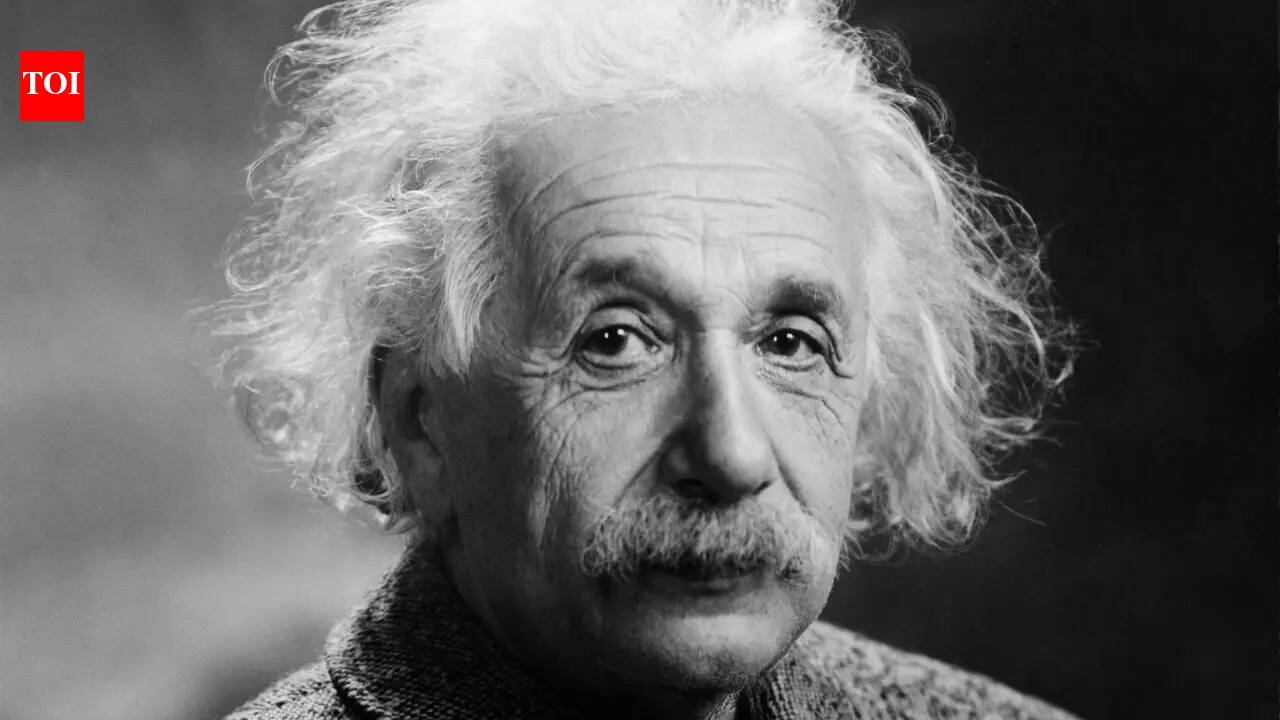
When people think of Albert Einstein, fairy tales are probably not the first thing that comes to mind. Equations, physics, scientific breakthroughs and images of a famous thinker usually arrive much sooner. That is one reason this quote continues to attract attention. It feels unexpected.The line appears regularly in discussions about parenting and education, often because it challenges a belief that has become quite common. Many adults assume intelligence grows mainly through facts, information and academic achievement. Einstein’s remark nudges the conversation in another direction. It suggests that imagination deserves a place in the discussion too.What makes the quote interesting is that it does not praise fairy tales because they are factually correct. Quite the opposite. Fairy tales are filled with impossible events, magical creatures and situations that make little sense in the real world. Yet Einstein appears to be arguing that these stories may still contribute something important to the way children think.The quote has survived because it asks people to reconsider what learning actually looks like in the early years of life.
Quote of the day by Albert Einstein
“If you want your children to be intelligent, read them fairy tales. If you want them to be more intelligent, read them more fairy tales.”
What is the meaning behind the quote by Albert Einstein
The statement is often misunderstood as advice about reading a particular type of story. The deeper point seems less specific than that.Einstein appears to be talking about imagination.Children do not begin life solving mathematical problems or analysing scientific theories. Long before formal learning becomes important, they spend time imagining worlds, creating stories and asking questions that adults sometimes find surprising.Fairy tales fit naturally into that stage of development. They introduce possibilities that are impossible in ordinary life. Animals speak. Giants appear. Ordinary people achieve extraordinary things.The stories themselves may not be realistic, but they encourage a child to think beyond immediate reality. That process matters because imagination is often where curiosity begins.The quote suggests intelligence is not built only from information. It also grows from the ability to imagine possibilities.
Childhood is filled with questions before answers
Anyone who has spent time around young children knows how naturally questions appear.Why is the sky blue? Why do birds fly? What happens after the story ends?Children often ask things that adults never think about. Sometimes they move from one question to another so quickly that there is barely time to answer the first one.Fairy tales fit neatly into this tendency. They create mysteries rather than resolving every detail. Strange things happen without lengthy explanation. Children are left to wonder about the gaps.That wondering has value.Not because every question leads to an important discovery, but because the habit of questioning becomes part of how children engage with the world.
Stories exercise parts of the mind that facts cannot reach
Facts are important. No serious educator would argue otherwise.Yet stories do something different.When a child listens to a story, they are not only receiving information. They are building images, following characters, anticipating outcomes and imagining situations they have never personally experienced.The process is active rather than passive.A fairy tale asks a child to participate. The forest, the castle and the characters exist partly in the story and partly in the imagination of the listener.That involvement is difficult to measure, which may be one reason it is sometimes underestimated.The effects are not always visible immediately. They appear gradually through creativity, language development and the ability to think beyond obvious answers.
Imagination often receives less credit than it deserves
Modern discussions about education tend to focus on measurable results.Examination scores can be counted. Academic performance can be compared. Progress can be tracked through numbers and assessments.Imagination is different.It does not fit neatly into a spreadsheet. There is no simple test that captures how creatively a child thinks or how deeply they imagine possibilities.Because of that, imagination sometimes ends up treated as secondary.Einstein’s quote pushes against that assumption. It suggests that imagination is not merely entertainment. It is part of intellectual development itself.That idea may explain why educators continue discussing the quote decades after it first entered public circulation.
Creative thinking often begins with unlikely ideas
Many breakthroughs in science, technology and art begin with ideas that initially seem unrealistic.A person imagines a possibility before proving it can exist.That pattern appears repeatedly throughout history. New inventions often start as concepts. Scientific discoveries frequently begin as questions. Creative achievements emerge from people willing to think beyond established assumptions.Children naturally do this.They imagine possibilities without worrying whether those possibilities sound practical. Fairy tales encourage exactly that kind of thinking.The connection between imagination and intelligence becomes easier to see when viewed from this angle. Creative thought is not separate from learning. In many cases, it helps drive learning forward.
Fairy tales offer more than simple entertainment
It is easy to dismiss fairy tales as stories meant only to keep children occupied.Yet many have survived for centuries.Part of the reason is that they speak to emotions and experiences in symbolic ways. Fear, courage, kindness, greed and perseverance often appear beneath the magical surface.Children may not analyse these themes consciously, but they still engage with them.A young reader or listener begins to recognise challenges, consequences and choices. Characters succeed, fail, struggle and change.The lessons are rarely delivered directly. Instead, they emerge through the story itself.That indirect approach can be surprisingly powerful.
Modern childhood leaves less space for wandering imagination
One reason this quote feels particularly relevant today is that childhood has changed in noticeable ways.Many children grow up surrounded by screens, structured schedules and constant streams of information. Answers are available almost instantly.There are obvious benefits to that environment, but there is also less room for uncertainty.Fairy tales belong to a slower experience. They do not provide immediate explanations for everything. They invite children to sit with questions and create their own mental pictures.That difference matters.Imagination tends to flourish in spaces where not every detail has already been supplied.The quote seems to recognise the value of those spaces long before modern debates about technology and attention emerged.
The quote says something about learning itself
Perhaps the reason this line continues to circulate is that it broadens the definition of learning.Learning is often imagined as the collection of knowledge. The quote hints at something wider.A child learns facts, certainly. But a child also learns how to wonder, how to imagine and how to explore possibilities that do not yet exist.Those abilities are difficult to separate from intelligence.The stories children hear may not teach them physics or mathematics directly. What they can do is help develop the curiosity and creative thinking that make deeper learning possible later on.That idea sits quietly underneath Einstein’s words.The fairy tales are important, but they are also standing in for something larger. A reminder that imagination is not the opposite of intelligence. In many cases, it is one of the places where intelligence begins.
Other famous quotes by Albert Einstein
- “Imagination is more important than knowledge.”
- “Anyone who has never made a mistake has never tried anything new.”
- “The important thing is not to stop questioning.”
- “Life is like riding a bicycle. To keep your balance, you must keep moving.”
- “Try not to become a person of success, but rather try to become a person of value.”
