


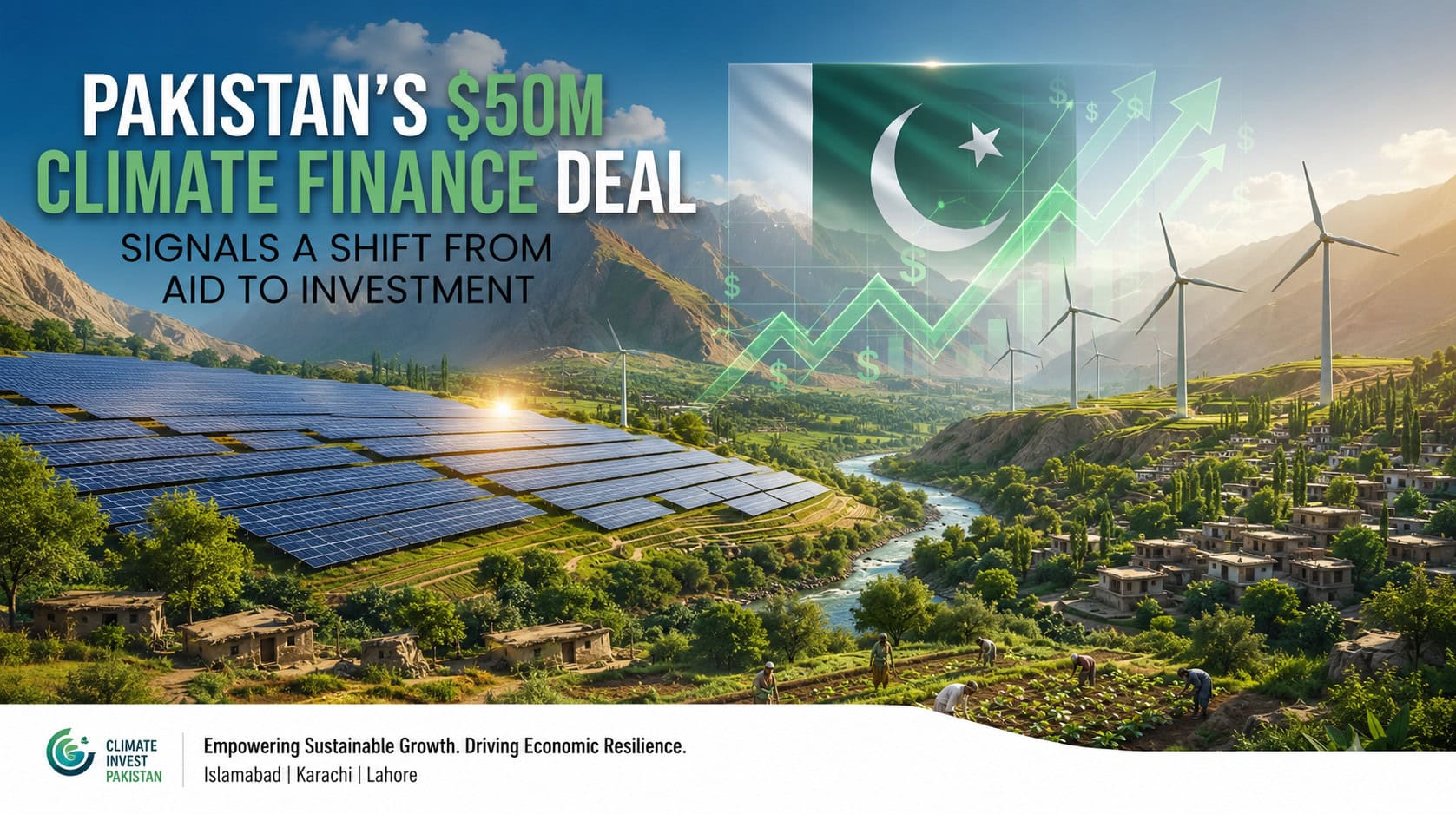
For nearly two decades, the story told about Pakistan and climate change has followed one script: a nation drowning — literally, after the 2022 floods submerged a third of the country — waiting for the next tranche of foreign aid. It isn’t wrong. But it’s incomplete. A new $50 million senior term loan facility, signed by British International Investment (BII), the UK’s development finance institution, and Bank Alfalah, quietly rewrites part of it.
The deal is unglamorous by design: commercial capital for climate-resilient projects and sustainable agriculture, routed not through a UN agency or disaster fund, but through the balance sheet of one of Pakistan’s largest private banks. That distinction matters more than the dollar figure.
From Aid Recipient to Investment Destination
Victimhood narratives are easy to write. They cast Pakistan as a passive recipient of climate catastrophe — a country responsible for roughly 1 percent of global emissions yet among the most exposed to disaster, dependent on outside goodwill to stay afloat. That’s not fabricated. It’s just partial.
What it omits is capital allocation as a vote of confidence. A senior term loan isn’t a grant or emergency relief — it expects repayment and gets underwritten against real credit risk. BII routing $50 million through Bank Alfalah is a statement that Pakistan’s private financial sector is a credible conduit for institutional capital, not merely a dependent awaiting the next disbursement.
This isn’t an isolated bet. BII has invested in Pakistan since 1988, backing infrastructure, clean energy, financial services, and agriculture. Months before this facility, BII signed a $75 million deal with HBL, Pakistan’s leading bank, to boost farmers’ and agribusinesses’ access to finance and climate resilience. Two of the country’s largest private banks, two commercial-grade climate facilities, one calendar year — that’s a market being underwritten, not propped up.
Why Agriculture Is the Right Battlefield
Agriculture is where Pakistan’s climate vulnerability and economic backbone overlap. The sector contributes 24 percent of GDP and employs 37 percent of the workforce — and absorbs the worst of the floods, heatwaves, and water stress climate change intensifies. Capital for climate-smart irrigation and resilient agribusiness isn’t symbolic; it targets the precise point where climate risk intersects with national output. In the HBL deal, half the funds went to smallholder farmers, who make up more than 90 percent of Pakistan’s farming population — a template this facility likely follows.
Part of a Global Pattern
BII runs similar commercial facilities across Kenya, South Africa, and Bangladesh, each priced at market rates, not concessional relief. Pakistan’s inclusion in that pipeline means its banks are now judged by the same commercial bar as Nairobi’s or Dhaka’s — one that acknowledges real risk without treating the country as a permanent charity case. That’s a harder standard to meet, and Pakistan is meeting it.
The Honest Caveat
None of this replaces the loss-and-damage funding high-emitting nations owe vulnerable countries, and a term loan carries repayment obligations that grant-based aid never does. Success ultimately depends on how transparently Bank Alfalah deploys the capital — a track record still to be written. But a country can be vulnerable and viable at the same time. This deal is evidence of the second half of that sentence, and it deserves to be read as such.
