


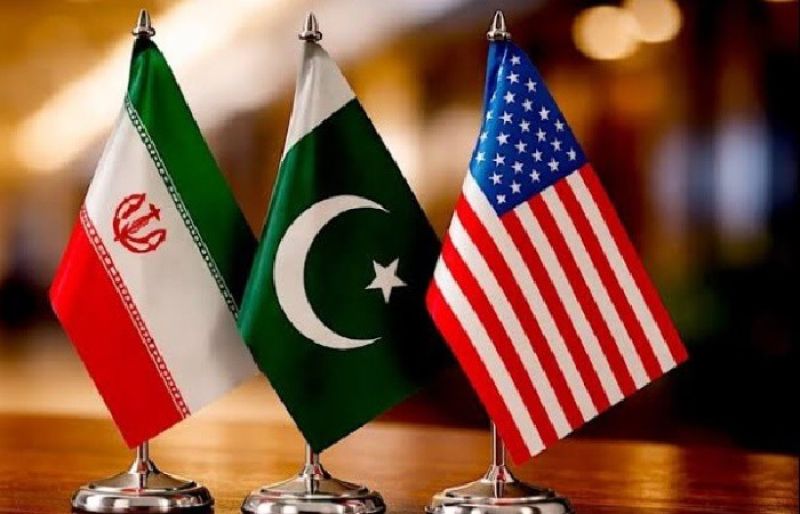
Prime Minister Shehbaz Sharif on Sunday confirmed that Pakistan has received Iran’s response to a United States proposal aimed at ending the war in the Middle East.
Addressing an event to mark the first anniversary of Marka-e-Haq in Islamabad, the prime minister said that he was briefed about receiving Iran’s response to the US proposal to end the war.
“Right now, the Field Marshal [Asim Munir] informed me that [we have] received Iran’s response. I cannot go further into details,” he said.
PM Shehbaz’s confirmation came shortly after Iranian media reported that Tehran has sent its response to a US proposal to begin peace talks.
The response, sent to mediator Pakistan, would focus at this stage on ending the war, Irna reported, but no details were immediately available.
After some 48 hours of relative calm following sporadic clashes last week, hostile drones were detected over several Gulf countries on Sunday, underlining the threat still facing the region despite a month-old ceasefire.
The proposal put forward by the United States would formally end the war before the start of talks on more contentious issues, including Iran’s nuclear programme.
Trump under pressure to end war
With US President Donald Trump due to visit China this week, there has been mounting pressure to draw a line under the war, which has ignited a global energy crisis and poses a growing threat to the world economy.
But, despite diplomatic efforts to break a deadlock between the two sides, the threat to shipping lanes and the economies of the region remained high.
On Sunday, the UAE said it intercepted two drones coming from Iran, while Qatar condemned a drone attack that hit a cargo ship coming from Abu Dhabi in its waters. Kuwait said its air defences had dealt with hostile drones that entered its airspace.
Tehran has largely blocked non-Iranian shipping through the narrow Strait of Hormuz, which before the war carried one-fifth of the world’s oil supply and which has emerged as one of the central pressure points in the war.
Qatari Prime Minister Mohammed bin Abdulrahman al‑Thani, who discussed Pakistan’s mediation efforts to end the war with US Secretary of State Marco Rubio in Miami on Saturday, told Iran’s Foreign Minister Abbas Araghchi that using the Strait of Hormuz as a “pressure tool” would only deepen the crisis.
He told Araghchi in a phone call that freedom of navigation should not be compromised, the Qatari foreign ministry said on Sunday, without specifying the exact date of the call.
Iranian lawmakers have said they are drafting a bill to formalise Iran’s management of the strait, with clauses including forbidden passage to vessels of “hostile states”.
Recent days have seen the biggest flare-ups in fighting in and around the strait since a Pakistan-mediated ceasefire began a month ago. The UAE came under renewed attack on Friday, and sporadic clashes were reported between Iranian forces and US vessels in the strait.
US berates allies for not helping to reopen strait
Washington imposed a blockade on Iranian vessels last month but Tehran has so far taken its time before responding to calls to end a war that surveys show is unpopular with US voters facing ever-higher gasoline prices.
A CIA assessment indicated Iran would not suffer severe economic pressure from a US blockade for about another four months, according to a US official familiar with the matter.
A senior intelligence official characterised as false the “claims” about the CIA analysis, which was first reported by the Washington Post.
The US has also found little international support in the conflict, with Nato allies refusing calls to send ships to open the Strait of Hormuz without a full peace deal and an internationally mandated mission.
After meeting Italian Prime Minister Giorgia Meloni on Friday, Rubio questioned why Italy and other allies were not backing Washington’s efforts to reopen the strait, warning of a dangerous precedent if Tehran were allowed to control an international waterway.
Britain, which has been working with France on a proposal to ensure safe transit through the strait once the situation stabilises, said on Saturday it was deploying a warship to the Middle East in preparation for such a multinational mission.
