


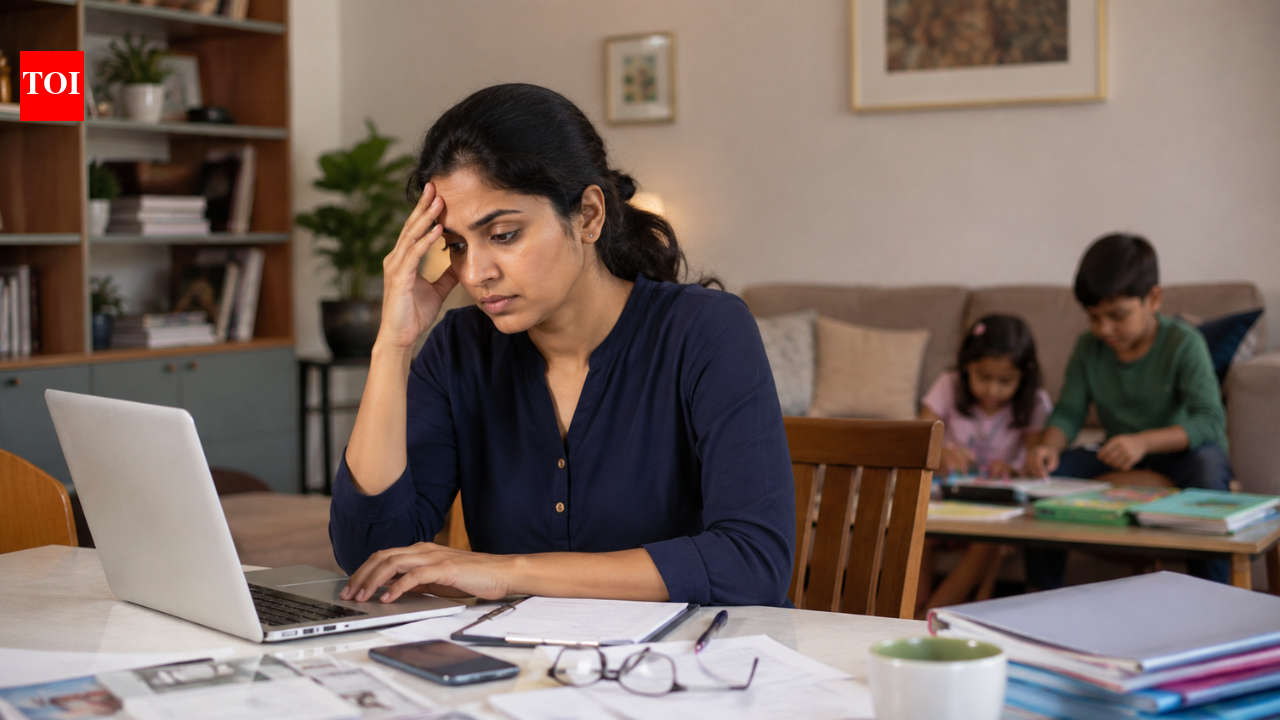
There is a kind of tiredness that sleep does not always fix. It comes from waking up thinking about the child’s school schedule, rushing through work, remembering the doctor’s appointment, checking whether the project materials were packed, figuring out dinner, answering emails, attending a family function and then lying in bed wondering what was forgotten.For many millennial mothers, this has quietly become everyday life. They are working, building careex`rs, running businesses, taking up leadership roles and becoming financially independent. At the same time, they are still expected to be the person who knows what is happening at home, what the children need, when the next school event is and which family obligation cannot be missed.
28 Jul 2026 | 16:26
Which parenting tip from elders actually worked for you?
Delhi-NCR-based gynecologist Dr Bhoomika Shukla believes this may have created a generation of women who are unusually exhausted. And, importantly, she does not believe they are tired because women today are less capable.In fact, she believes it is almost the opposite.“I think millennial moms may be the most tired generation in history. And no, it is not because women today are weak. It is because women today are doing everything,” she says. “They are studying, working, running businesses, taking up leadership positions and becoming financially independent. But at the same time, they are also expected to manage the house, raise children, keep up with school projects, take care of doctor’s appointments, remember family functions, maintain relationships, stay fit and somehow still smile through it all.”That last expectation may be the most exhausting one of all: to keep everything going without looking like it is too much.

File photo
Women moved forward. Expectations moved even faster.
For an earlier generation, motherhood was often treated as a woman’s primary responsibility. Today, the definition of a woman’s life has expanded considerably. A woman can be a professional, entrepreneur, leader, wife, mother, daughter, daughter-in-law, friend and caregiver- often all within the same day.The problem is not that women have these identities. The problem is that society can still expect them to perform each one at full capacity. “I sometimes feel that women have moved so far ahead, but the expectations from them have increased even more,” Dr Shukla says.“Earlier, if a mother’s primary role was considered to be raising her children, today she is expected to raise children, build a career, take care of the home, maintain relationships and also take care of herself.”That sounds like progress on paper. In reality, it can feel like adding new floors to a building without changing the foundation. And research increasingly suggests that the strain is not imagined.
The “supermom” ideal can come with a hidden cost
A 2025 study published in PLOS One looked specifically at the idea of the “supermom” among employed Indian mothers. The researchers studied 306 mothers and examined how beliefs around being a supermom were connected with work engagement, self-efficacy and psychological well-being. The findings add an important layer to the conversation around modern motherhood: the image of the highly capable mother can coexist with significant psychological pressure.The study does not suggest that ambition or competence is the problem. Rather, it raises questions about what happens when women feel they must continually live up to an ideal of being able to handle everything.
The invisible job: remembering everything
There is another reason mothers can feel exhausted even when they are not physically doing everything themselves. They are often the ones thinking about everything. This is what researchers increasingly describe as cognitive household labour or mental load.A 2024 study involving 322 mothers of young children examined this invisible form of household work. The researchers found that mothers carried a disproportionate share of the cognitive labour involved in organising family life. Greater cognitive household labour was associated with stress, burnout, poorer mental health and difficulties within relationships.In other words, sometimes it is not the number of things a mother physically does that exhausts her. It is the number of things she has to keep track of.“People then ask why mothers today don’t socialise as much, why they always seem tired or why they don’t have the same energy,” Dr Shukla says. “But how can they not be tired? We have doubled their responsibilities, but we haven’t doubled their support.” That may be the heart of the issue.
Perhaps we need to redefine what a “good mother” looks like

File Photo
Maybe a good mother isn’t the woman who remembers everything. Maybe she isn’t the woman who attends every event, answers every message, prepares every meal, monitors every assignment and knows exactly where every missing sock is. Maybe a good mother is the one who’s allowed to be tired, allowed to say no, allowed to ask for help, allowed to have ambitions, and allowed to be a mother without having to perform motherhood perfectly. Because children do not need a mother who has sacrificed every part of herself to make their lives flawless. They need a mother who is supported enough to be present, emotionally available and, importantly, human.
