


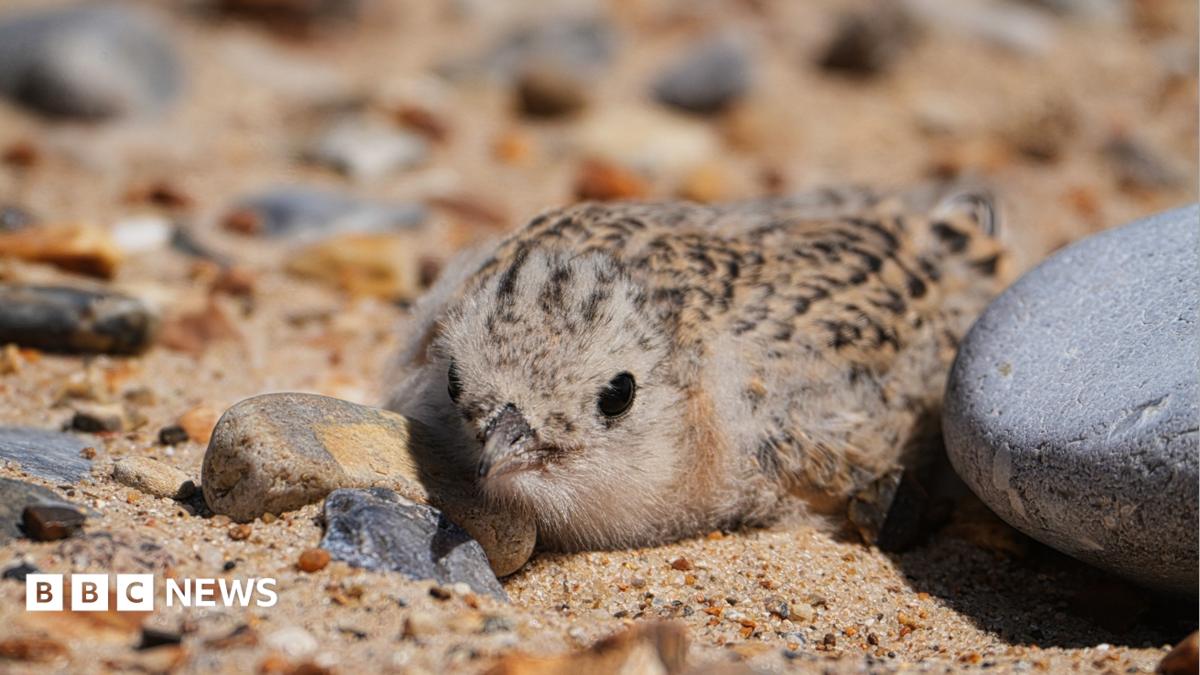
Hidden in the scrapes, this little tern chick is camouflaged – and vulnerable – on a Norfolk beach.
But it is surrounded by a record 700 other ground nests due to a project set up to protect the threatened species 40 years ago.
With the help of local volunteers and wardens, who monitor breeding sites 24 hours a day, the future of the little tern is looking much brighter than it did back in 1986.
“I think without all the concerted effort of many, many people there’s no way that the numbers would be increasing in the way they are now,” said Finn Duncan, the community and volunteering officer on the RSPB Tern Around project in Norfolk and north Suffolk.
“Year by year now, we’re getting more little tern fledglings off and away back to Africa – so that’s really amazing.”
Little terns travel 3,000 miles (4,828km) from west Africa to breed on the UK coast, but once here they face high tides, natural predators and the risk of being trampled by beachgoers and their dogs.
