


Says ongoing reforms focused on bringing retailers into the tax net and strengthening the revenue system
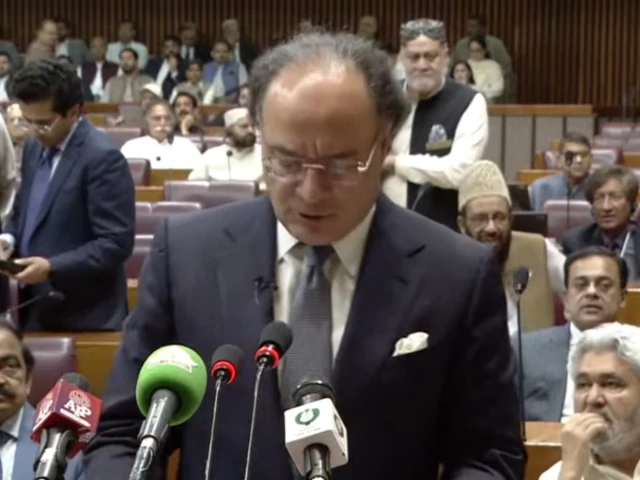
Finance Minister Muhammad Aurangzeb presents Budget 2026-27 in the National Assembly on Friday. — SCREENGRAB
ISLAMABAD:
Finance Minister Muhammad Aurangzeb on Saturday said that Pakistan’s macroeconomic indicators remained stable and the government was focused on expanding the tax base rather than increasing the burden on salaried individuals.
While addressing a budget session in the National Assembly, Aurangzeb said objections raised by some members regarding budget figures were misplaced, adding that no changes had been made to national accounts or key economic indicators.
He thanked lawmakers for participating in the budget debate and said several proposals from members would be considered for inclusion in the finance bill.
On economic targets, Aurangzeb said the government aimed to achieve $41 billion in remittances and expects IT exports to reach $4.5 billion.
Read More: Opposition, treasury clash over Rs5.9tr budget
He said the Federal Board of Revenue’s (FBR) performance had improved, noting that the government collected an additional $14 billion in revenue over the past two years. He compared this with earlier periods, saying similar increases took 23 years (1988–2011) and 13 years (2011–2024), respectively.
The finance minister said ongoing reforms were focused on bringing retailers into the tax net and strengthening the revenue system.
He also announced agriculture-related relief measures, describing the sector as the backbone of the economy. These include collateral-free loans worth up to Rs300 billion for small farmers, expected to benefit around 750,000 farmers.
Under the Prime Minister’s Youth Agriculture and Business Loan Scheme, Rs109 billion has been allocated. Additional measures include Rs9.5 billion for agricultural credit subsidies, Rs15.8 billion for fertiliser price stabilisation, and Rs10 billion for urea subsidies.
He said Rs4.2 billion had been allocated for agriculture and livestock projects, while nearly Rs2 billion in import duty relief had been provided for agricultural machinery. Duties on high-horsepower tractors, combine harvesters, irrigation pumps and spare parts had been removed.
Aurangzeb also outlined broader fiscal allocations, including major spending on debt servicing, judiciary, and constitutional institutions, while reiterating that fiscal discipline remains a key government priority.
