


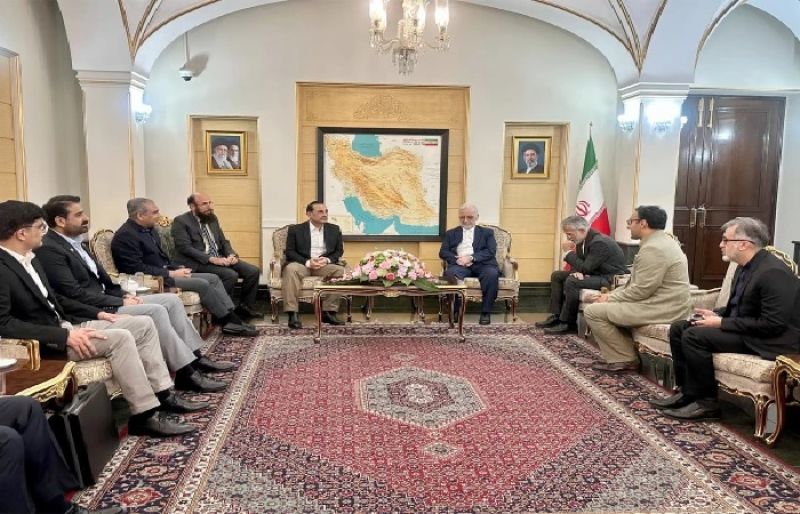
Chief of Defence Forces (CDF) and Chief of Army Staff (COAS) Field Marshal Syed Asim Munir met Iranian Interior Minister Eskandar Momeni in Tehran on Monday after arriving in the Iranian capital for talks on regional peace and stability.
CDF Munir will hold discussions with senior Iranian officials during the visit, according to Fars news agency.
The Inter-Services Public Relations (ISPR) in a statement issued earlier today said that the field marshal’s visit is part of Pakistan’s efforts to promote regional peace and stability.
During the visit, the ISPR said that CDF Munir will focus on promoting efforts towards a peaceful, lasting and comprehensive resolution of the conflict in the Middle East.
Field Marshal Munir was accompanied by Interior Minister Mohsin Naqvi, the press release said.
Islamabad has taken on a mediator role in negotiations between Tehran and Washington aimed at ending the war which began with US and Israeli strikes on Iran in February.
The Shehbaz Sharif-led government brokered a two-week ceasefire between the two sides on April 8 that ended six weeks of fighting and continues to relay messages between Washington and Tehran.
The visit comes amid heightened tensions as Iran threatens a military response to US plans for sanctions that could further put a strain on the Islamic Republic’s ailing economy.
Thousands of people have died, most of them in Iran and Lebanon, since the US and Israel began strikes on February 28, degrading much of Iran’s conventional military capacity and inflicting economic pain while killing Iranian Supreme Leader Ayatollah Ali Khamenei.
But Iran has preserved enough missile and drone capability to attack its Gulf neighbours and threaten oil tankers in the Strait of Hormuz, bringing shipping in the key waterway to a near standstill and pressuring world fuel prices. The exact state of Iran’s nuclear programme, which the Americans and Israelis aim to wipe out, remains unknown.
The CDF Munir’s visit will coincide with a Monday announcement on details related to the planned sanctions, which US officials have said would be “the toughest sanctions in history” on Iran.
Trump had warned of economic consequences against any country that provided “any type of lifeline to Iran” as he seeks to isolate the Islamic Republic.
Oil shipments are at a virtual standstill in the Strait of Hormuz, with Tehran threatening to strike any unauthorised oil tankers that try to transit the vital waterway, and Iran’s economy is already under immense pressure from sanctions.
Iran entered the war with high inflation, a weakening currency, energy shortages, sanctions and deep structural weaknesses, and must now contend with damaged infrastructure, disrupted trade, lost production and the cost of rebuilding.
Pakistan’s earlier mediation efforts between the US and Iran resulted in an interim peace agreement signed in June. But the Islamabad Memorandum quickly faltered, amid new fighting between Iran and the US that has threatened to spiral into a wider regional conflict in recent weeks.
