


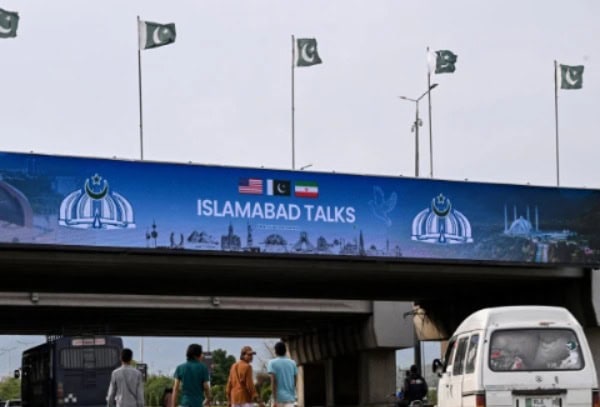
ISLAMABAD – A second round of US-Iran talks is expected on Monday in Pakistan’s capital city of Islamabad, US media reported citing Iranian sources on Saturday.
CNN noted that the US has not officially confirmed the schedule.
The first round of negotiations between the two countries was held in Islamabad. The US. delegation was led by Vice President JD Vance and included Jared Kushner, son-in-law of former President Donald Trump, and Trump’s special envoy Steve Witkoff.
The Iranian team was headed by Parliament Speaker Mohammad Bagher Ghalibaf, alongside Foreign Minister Abbas Araghchi.
Following the Islamabad talks, both sides reached preliminary agreements on several issues and expressed willingness for another round of meetings.
Meanwhile, tensions between United States and Iran are once again on the brink, as US President Donald Trump issued warning that the current ceasefire could collapse within days if a long-term deal is not secured by Wednesday.
Speaking aboard Air Force One while returning to Washington from Phoenix, Arizona, Trump signaled that he may refuse to extend the ceasefire, making it clear that the US naval blockade on Iranian ports will remain firmly in place. He warned that failure to reach an agreement could push the situation back into open conflict, saying military strikes may resume if diplomacy breaks down.
In a swift and forceful response, Iran raised stakes even higher, warning it could once again shut down the critical Strait of Hormuz, a move that could send shockwaves through global energy markets. Parliament Speaker Mohammad Bagher Ghalibaf declared that if the US blockade continues, Iran may restrict access to the strategic waterway, placing control of passage firmly in Tehran’s hands.
Iran’s Defence Ministry reinforced the warning, stating that the strait is currently open only under fragile ceasefire conditions. Spokesman Reza Talaei-Nik emphasized that the situation remains temporary and could change rapidly depending on developments on the ground—including tensions in Lebanon. He also made it clear that military or “hostile” vessels would not be allowed to pass through the route.
Despite escalating rhetoric, Iran’s Foreign Minister Abbas Araghchi confirmed that the waterway is presently open for commercial shipping under the ceasefire. Trump has also acknowledged that maritime traffic is continuing, even claiming that Iran had indicated it would not close the strait again—though he simultaneously reaffirmed that the US blockade would stay “in full force.”
With both sides issuing warnings and setting conditions, the situation remains highly volatile. The coming Wednesday deadline remained in spotlight, and could determine whether the region moves toward peace or slides back into confrontation, with global markets and energy supplies hanging in the balance.
