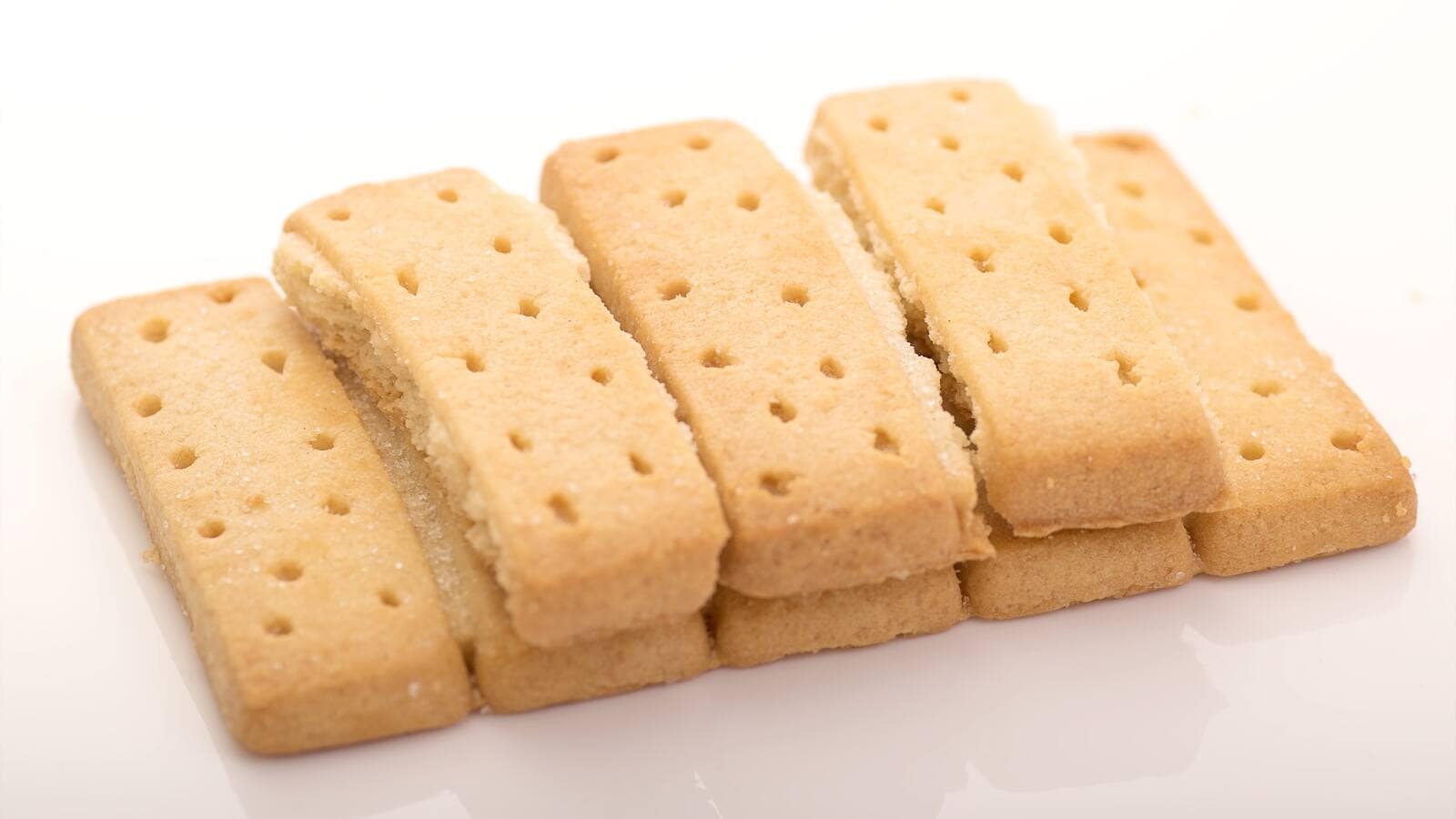
Many people assume these holes are added only for looks. In reality, they serve a very important purpose in the biscuit-making process.
What Happens Inside the Oven: While making biscuits, ingredients like flour, sugar, butter, and water are mixed into dough. When this dough is baked, steam and air build up inside. Without an outlet, biscuits can puff up unevenly or crack.To prevent this, manufacturers punch small holes into the dough, known as docking holes. These allow steam to escape easily, helping biscuits bake evenly and achieve the right crunch—especially in plain and salted biscuits.These tiny holes also help biscuits keep their shape and thickness, even under high oven heat. That’s why biscuits look uniform and don’t bend or warp during baking.Soft, cake-like sweet biscuits often don’t need holes because they’re baked differently. Some sweet biscuits may still have holes—it all depends on the recipe and baking method. So next time you snack, remember: those tiny holes play a big role!
Stay Ahead, Read Faster
Scan the QR code to download the News18 app and enjoy a seamless news experience anytime, anywhere.
Biscuits are a favourite snack for both kids and adults. With morning tea or sudden hunger pangs, biscuits are often the first choice. But have you ever wondered why most biscuits have tiny holes in them?