


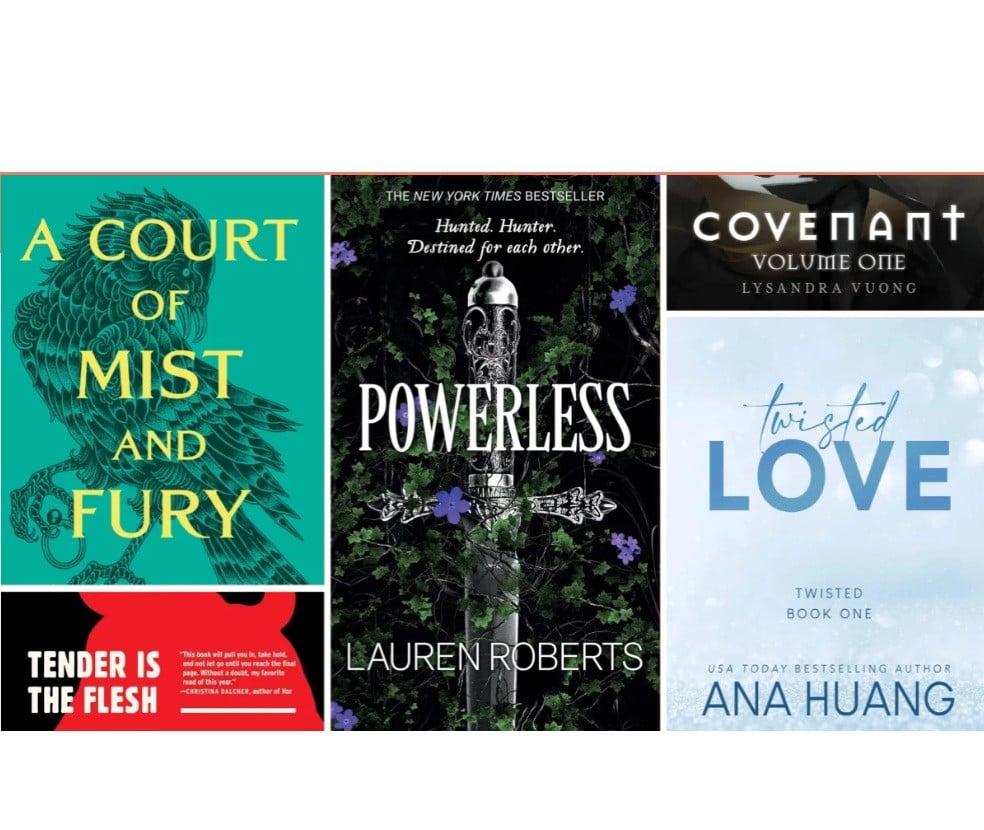
PUBLISHED
May 03, 2026
“So please, oh please, we beg, we pray, go throw your TV set away, and in its place you can install a lovely bookshelf on the wall.” – Roald Dahl
Every year on April 23, the world observes World Book Day, dedicated to celebrating books, authors, and the enduring power of reading. Yet, beyond the symbolic gestures and occasional tributes, an uncomfortable question lingers: in an age dominated by screens, are we slowly losing our relationship with books?
From the earliest days of human civilisation, reading and storytelling have been central to how societies understand themselves and preserve their identities. Long before modern books, stories were passed down orally, carrying history, culture, and wisdom from one generation to another. With the advent of writing, these narratives found permanence, as seen in ancient works, which reflects humanity’s timeless desire to record experiences and seek meaning.
Across centuries, reading has remained more than a skill; it has been a bridge between past and present, allowing individuals to access ideas, emotions, and knowledge beyond their immediate world. At its core, humanity has always been driven by stories, because beyond survival, people seek connection, understanding, and a sense of belonging and it is through reading that these stories continue to live.
In the past, particularly during the 1990s, reading was a natural and encouraged part of childhood. Children eagerly read comics like Enid Blyton, Archie Comics and Urdu magazines such as Naunehal, which were not only entertaining but also culturally familiar and widely accepted by families. Reading was seen as a healthy habit, and parents often gave children the time and freedom to explore books.
In contrast, today’s generation appears more distant from reading. Many children are reluctant to pick up books at all, and those who do often gravitate toward unfamiliar or globally popular content such as Harry Potter books, Japanese anime-based stories, humorous series like Horrid Henry, Captain Underpants, or something from the genre of horror. It is as though what is trending on their screens might influence their choice in reading. While these are not inherently negative, the disconnect lies in the lack of guidance and understanding. For many parents, these titles feel alien or inappropriate, creating a gap between generations.
More importantly, the issue is not what children read, but that reading itself is no longer a widely nurtured habit. Where earlier generations were immersed in books, today’s children are more immersed in screens. Reading, once a shared and celebrated activity, has become increasingly rare.
Mustafa Quraishi, a veteran bookseller who has been running a bookstore in Islamabad for nearly 45 years, observes that reading trends have changed significantly over time. According to him, English novels, self-help, history, and biographies remain among the most sought-after genres among grown-ups. However, a noticeable decline in reading began around 2015, after which the market increasingly tilted toward marketing and self-help books. He points out that while some children still engage with reading, their preferences have shifted toward globally popular content such as Jujutsu Kaisen and other comic-based series. More concerning, he notes, is the growing dependence on short-form digital content: “People now rely on 10-second reels, without even knowing the stories or ideas behind them—because they don’t read.”
Quraishi also highlights a cultural gap, where international authors dominate readership while Pakistani writers remain largely overlooked. Emphasising the role of institutions, he stresses that parents play a key role in building reading habits, but schools must also step up by promoting reading festivals and literary activities instead of focusing solely on routine events.
A similar concern was shared by Muhammad Hafiz, who has been running a bookstore for over 23 years. He said clearly, “Hardly anyone reads books anymore.” According to him, most customers now only come for coursebooks and stationery, while general books are rarely bought. He believes one major reason is that children are given mobile phones at a very young age. “Instead of books, they are given screens,” he said. He also added that because of this, people are moving away from original and authentic knowledge, as they prefer quick and easy information instead of reading in depth. His words paint a clear picture—reading is disappearing, and books are being replaced by screens.
Fiza Ali, teacher in Islamabad, says that parents play a decisive role in shaping a child’s relationship with reading. Long before classrooms and curricula, it is the home that introduces a child to the world of stories. A child who grows up seeing books as a natural part of daily life is far more likely to develop a lasting reading habit. When parents read, discuss stories, or simply make books accessible, they create an environment where curiosity thrives.
Man is a storytelling animal, the only creature on earth that tells itself stories to understand what kind of creature it is. After all, beyond basic needs like food and security, what we ultimately seek is a story. In a way, this is our very nature. From the sun-baked cuneiform tablets on which we discovered the Epic of Gilgamesh, the world’s first known work of written creative literature, to the reading fever of the eighteenth century and beyond, human history is marked by an enduring engagement with narratives in written form. This represented an outlandish departure from the more archaic oral tradition, where memory alone carried the burden of preservation.

Despite this millennia-long relationship between readers and writers, the bond now appears to be in a precarious state. And this is a global phenomenon. Firstly, we are consumed by smartphones: The average person today spends nearly seven hours a day staring at a screen.
For Gen Z, the figure rises to nine hours. A recent article in The Times notes that modern students are projected to spend up to 25 years of their waking lives scrolling on screens. Correspondingly, global (Programme for International Student Assessment) PISA scores, widely regarded as the most reliable international measure of student ability, have begun to decline. Compound this with the AI glut and widespread internet connectivity, and we face a severe short attention span problem: How come then a person will be willing to spend hours and days with books? The consequences are stark: low sales. According to a 2022 report, half of all books published by Penguin Random House reportedly sell fewer than 12 copies. And, of course, we risk becoming less informed, less democratic, less creative, and more brutal.
In Pakistan, the situation is arguably worse, despite rising literacy rates. According to the World Population Review, the top three countries in terms of books read annually and hours spent reading are the US (17 books, 357 hours), India (16 books, 352 hours) and the United Kingdom (15 books, 343 hours). Pakistan, in contrast, ranks among the lowest three, with only 2.6 books read per person annually and 60 hours spent reading. This lack of reading is so widespread that statistics aren’t even necessary; lived experience speaks louder than any report. Just ask your friends and family when they last read a book from start to finish.
Even a cursory scrutiny unfurls problems along two self-reinforcing dimensions: On the demand side, the public increasingly lacks the inclination to read. Shrinking attention spans, limited exposure to quality writing, and the absence of cultivated literary taste all contribute to weak demand. On the other side, the supply side: The quality of writing is also affected. With such limited demand, writing is rarely seen as a viable career, forcing writers to axe their energy elsewhere. The rise of AI has further catapulted the formulaic, MFA-style slop writing. Further, the broader literary ecosystem remains malnourished: poignant criticism is scarce, literary circles are often gatekept and elitist, and publishers, pestered by low demand and high costs, are reluctant to take risks on new writers. Marketing strategies and institutional support for authors are also notably weak.
We need to rethink all of this. The fundamental questions remain: how do we contend with the cognitive offloading effects of AI? What gaps exist in our curricula that fail to nurture readership? How can we reform our literary circles and strengthen the culture of criticism? Lastly, what exactly should the government, civil society, and the public do in this reading crisis?
This broader decline is also reflected in everyday experiences. Bookshop owners note that customers increasingly visit stores with a singular goal: to purchase exam-related materials rather than books for leisure. As one bookseller observed, “People come for notes, not novels anymore.” Similarly, teachers report that students often rely on summaries instead of engaging with full texts, highlighting a growing inability or unwillingness to read deeply.
A senior teacher, Shahida Ahmed said, “Ten or fifteen years ago, students were more engaged with books. Today, their attention is divided, mostly because of digital distractions.”
At the heart of this issue lies a fundamental misunderstanding, particularly among children and young readers. Many perceive reading as something confined to school, an obligation tied to exams rather than an activity associated with enjoyment. This perception strips reading of its true essence. Literature, across cultures and generations, has always been a source of escape, imagination, and emotional connection.
For many readers, the relationship with books begins on a deeply personal level. Before the rise of the internet, books often served as the first gateway to imagination. They offered comfort, joy, and a sense of discovery. For some, they even shaped life paths, inspiring careers and creative pursuits. Reading was not merely about gaining knowledge—it was about experiencing different worlds.
This is precisely what the theme of this year’s World Book Day “Reading for Pleasure” seeks to highlight. Beyond academic benefits, books possess a unique ability to connect us with lives beyond our own. Holding a story from another time or another part of the world creates a sense of wonder that few other mediums can replicate.
Muhammad Khizar, a student from grade 6 said, “Books help me relax. When I read, I feel disconnected from everything else. I think more students would read if they found the right book.”
Reading for pleasure is rooted in connection. It may be a connection with a character, a storyline, or an imagined world. Through these connections, readers find joy, understanding, and often reassurance. Books remind individuals that their experiences are shared, that their emotions are valid, and that they are not alone.
Representation plays a crucial role in strengthening this connection. When readers see their own realities reflected in stories, literature becomes more meaningful. Expanding narratives to include diverse voices and experiences not only enriches literature but also invites more people to engage with it.
However, the responsibility of reviving reading culture does not lie with individuals alone. Educational institutions must move beyond rote learning and actively encourage reading as a habit rather than a task. Schools should create spaces where students explore literature freely, rather than limiting reading to prescribed texts. Teachers must inspire curiosity, not just deliver content.
Families, too, play a significant role. In homes where reading is valued, children are more likely to adopt the habit. Simple acts—such as keeping books accessible or discussing stories—can have lasting effects. At a societal level, libraries and public reading spaces must be revitalised. Community initiatives, book fairs, and reading circles can help restore the collective experience of reading.
Ultimately, however, the decision to read remains deeply personal. In a world filled with distractions, choosing to pick up a book is an act of intention. It is a decision to slow down, to think deeply, and to engage meaningfully with ideas.
World Book Day, therefore, should not be reduced to a symbolic celebration. It should serve as a reminder—a moment to reflect on what we are losing and what we stand to regain. Because books are not just objects; they are tools of thought, imagination, and connection.
In the end, the question is not whether books still matter. It is whether we are willing to make space for them again.
For a society that stops reading does not merely lose its stories; it risks losing its ability to understand itself
.
The writer is a teacher and freelance contributor and can be reached at rabiayousufzai26@gmail.com
All facts and information are the sole responsibility of the writer
