


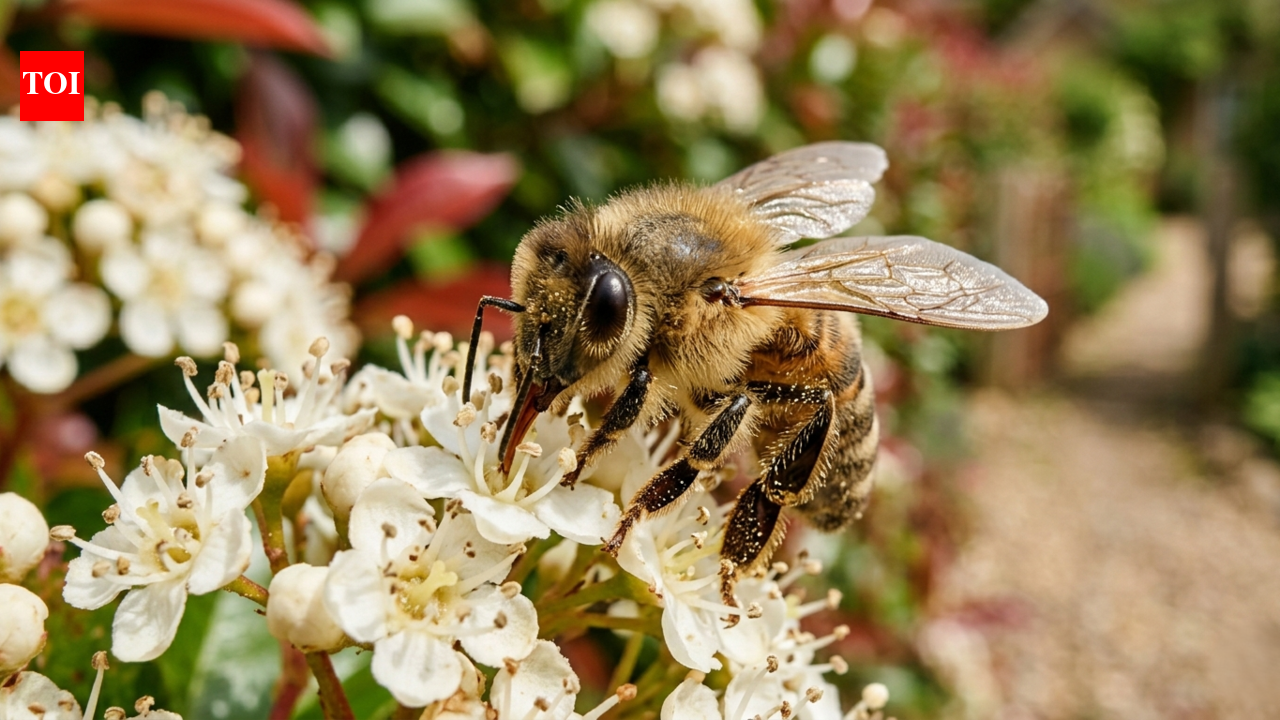
Let’s be honest: your first reaction to a buzz near the window or a bunch of bees partying under the porch is not “how fascinating,” more like panic, a quick Google spiral and maybe a frantic grab for whatever spray you have under the kitchen sink. Before you do anything rash, take a breath. Most of the time, bees are just minding their own business, and knowing the difference between a minor inconvenience and a genuine problem can save you money, stress, and frankly, some guilt.Here’s what you really need to know.What kind of bee are you dealing with?Not all buzzing things are the same, and this is more important than most people realise.The little fuzzy ones that fly over your garden flowers? Harmless. Let them be, but if you see a lot of activity around a specific spot, a gap in your siding, a corner of your attic, or a water meter box, that’s when you need to look more closely.Honeybees are social insects that build large colonies. The nest infrastructure of a honeybee colony, made from beeswax into repeating hexagonal cells, is central to the way the colony functions and reproduces, according to The Biology of the Honey Bee. They are not aggressive by nature, but they will defend their home if they are threatened. Interestingly, studies have shown that a bee’s upbringing is as important as its species. Bees grown in high-aggression environments actually turn more aggressive as adults, a study in Scientific Reports finds. So if you agitate a colony, you are not only dealing with an angry bee today, you are effectively training the next generation to be more defensiveCarpenter bees, however, work in solitude. They bore neat, tidy holes in your wood trim or siding that are a nuisance but rarely cause serious structural damage.Then there are the Africanized honeybees. If you are in Texas, Florida, Louisiana, Oklahoma or Arkansas, this is worth knowing about. They look exactly like regular honeybees, but behave much differently. They are much more defensive, much faster to swarm, and they will chase a threat much farther. If you think you might be dealing with these, skip the DIY route and call a pro.That scary swarm outside your house? It’s probably fineIf you have ever been outside and seen a huge swarm of bees hanging from a tree branch like something out of a nature documentary, you know the feeling. It looks terrifying, but it usually isn’t.
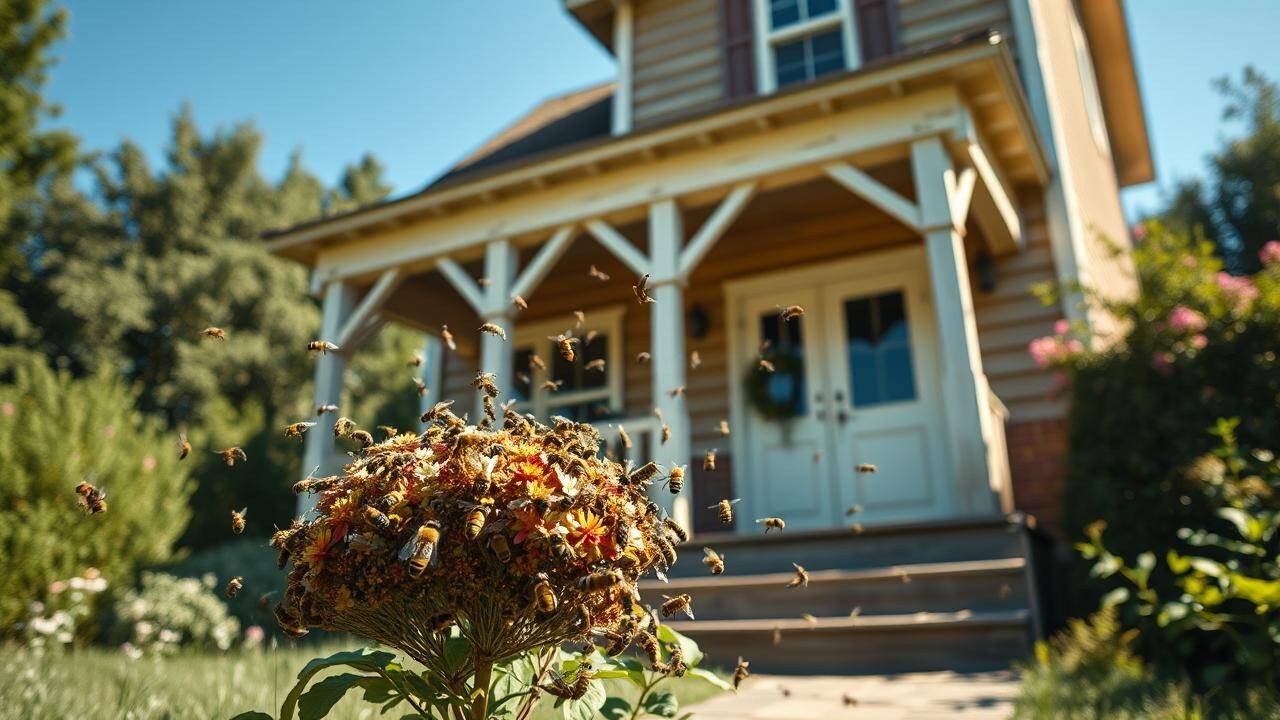
The fuzzy ones hovering over your flowers are the least of your worries.
Swarming happens when a honeybee colony gets too large, and the queen takes half the bees with her to find a new home. They often stop somewhere temporarily in transit, a branch, a fence post, or sometimes an unfortunate mailbox. In fact, this is the time of year when they are the least aggressive, as they have no hive to defend.The move? Stand clear, keep your pets indoors and wait. Most swarms disappear in less than 24 hours.The problem comes when they don’t move on, when they find a nice little gap in your wall or a quiet corner of your attic and decide that’s home. Then you have to move quickly. The longer you wait, the more honeycomb and honey they build up, making it that much more difficult and expensive to remove. Contact your local cooperative extension service or a beekeeper. Many will move the colony rather than destroy it.What not to doSpraying the entrance. If bees are getting into your wall through a small opening, spraying insecticide into that opening won’t reach the colony; it will just annoy the bees at the entrance. Worse, dying bees emit an alarm signal that causes the rest of the colony to defend itself.Blocking the entry point. It just means the bees are trapped and will have to find another way out, possibly into your living space.Waiting it out once they’ve moved in. A colony isn’t just some swarm that just leaves. The longer you wait, the larger the job gets.How to make your home less attractive to beesFill any cracks larger than 1/8 inch around your foundation, windows, pipes and chimney. A bee needs only that to be convinced a spot is worth exploring. Use fine-mesh screening (also under 1/8 inch) anywhere you need airflow. Keep your trash cans covered and clean. Foraging bees are attracted to sugary residue from soda cans or juice bottles. If you have fruit trees, grab anything that falls to the ground before it becomes a point of interest. Do you have bare or patchy spots on your lawn? That’s prime real estate for ground-nesting bees. Fill them in to destroy the appeal.The bottom lineBees are not your enemy; they are one of the most important creatures in our food system. However, that doesn’t mean you have to live with them. Understand what you are dealing with, act fast if you see a colony starting to build up in an undesired location and call in a professional if needed.Coexistence is feasible. You just have to understand the rules.
