


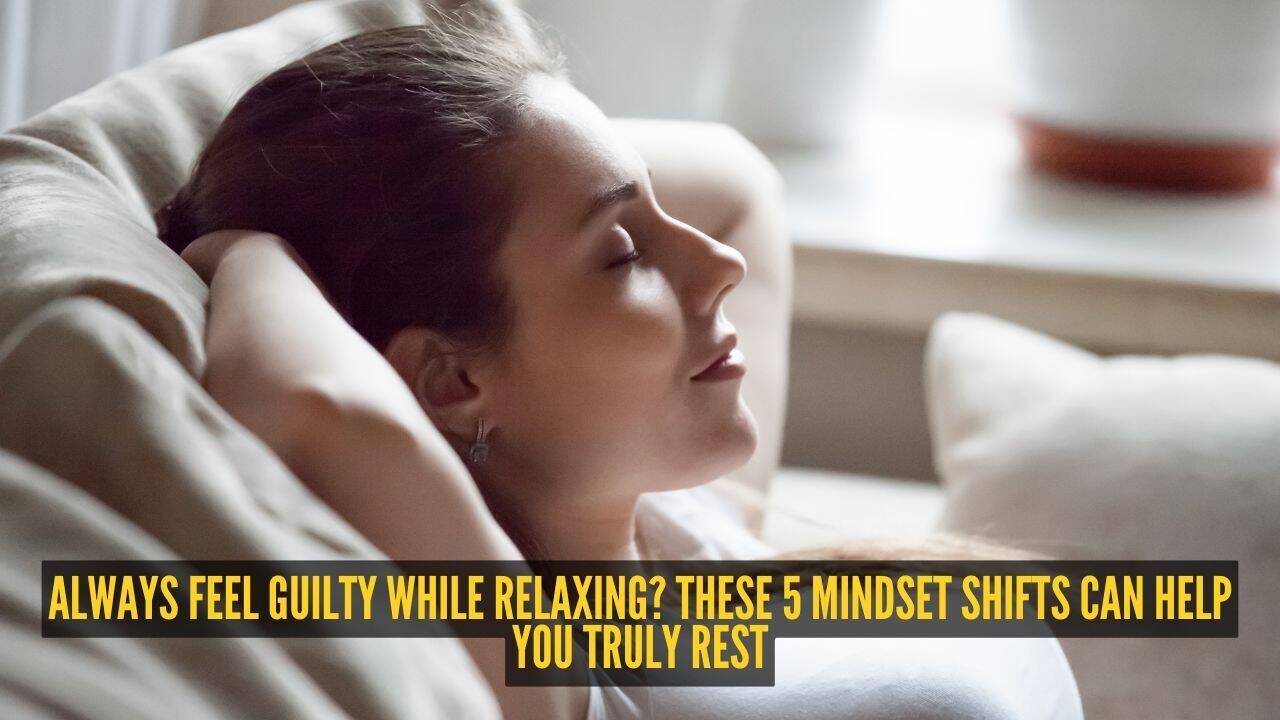
There is something strange about the way many of us have learned to rest. We finally sit down after a long day, put our phones aside, make ourselves a cup of tea, or simply stare out of the window. Within minutes, a familiar thought appears.“I should be doing something productive.”Instead of feeling refreshed, we begin mentally listing unfinished tasks, unread emails, laundry waiting to be folded, or goals we have not yet achieved. Relaxation slowly turns into another source of stress.The truth is, guilt has quietly become part of rest for many people. We celebrate being busy, praise ourselves for pushing harder, and often treat relaxation as something that has to be earned. But real rest is not a reward. It is a basic emotional need.If you often struggle to switch off without feeling guilty, these small mindset shifts may help.
Stop treating rest like a prize you have to earn
Many people unknowingly create invisible conditions before allowing themselves to relax.“I’ll rest after I finish everything.”The problem is that “everything” rarely gets finished. There is always another email, another chore, another responsibility.Instead of making relaxation the final item on an endless to-do list, try seeing it as something that helps you do everything else better. Rest is not a luxury reserved for people who have completed every task. It is what gives you the energy to return to those tasks with a clearer mind.Sometimes, doing nothing for a while is also doing something important.
Notice where your guilt actually comes from
The guilt you feel while relaxing may not even belong to you.Many of us grew up hearing phrases like “Don’t waste time,” “Successful people are always working,” or “You can relax later.” Over time, these messages become internal rules that keep playing in the background.The next time guilt appears while you’re resting, pause and ask yourself one simple question:“Is this my belief, or is it something I learned from someone else?”Often, simply becoming aware of that inner voice is enough to loosen its grip.
Replace the idea of productivity with the idea of presence
Not every moment has to produce something.Some of the most meaningful experiences in life happen when nothing measurable is achieved. Watching rain fall, listening to your favourite music, sitting quietly with someone you love, reading a few pages of a novel, or taking an unhurried walk may not improve your résumé, but they can quietly restore your emotional energy.A life filled only with achievements can still feel empty if it has no moments of presence.Sometimes the most productive thing you can do is fully experience the moment you are in.
Remember that your worth is bigger than your output
It is easy to tie your identity to what you accomplish.When work goes well, you feel valuable. When you are resting, you may feel as though you are falling behind.But your value as a person has never depended on how many boxes you tick in a day.You deserve kindness, peace, and moments of stillness simply because you are human, not because you have worked hard enough to deserve them.The more you separate your self-worth from your productivity, the easier it becomes to relax without carrying guilt alongside you.
Create small rituals that tell your mind the day is over
Our minds often stay in “work mode” long after work has ended. That is why simply sitting on the couch may not feel relaxing.Instead, create a small ritual that signals a shift.It could be changing into comfortable clothes, lighting a candle, watering your plants, making herbal tea, stretching for five minutes, or stepping onto your balcony before dinner.These tiny habits gently remind your brain that it is safe to slow down.Rest becomes easier when your mind recognizes that this part of the day has a different purpose.Thumb image- Canva
