


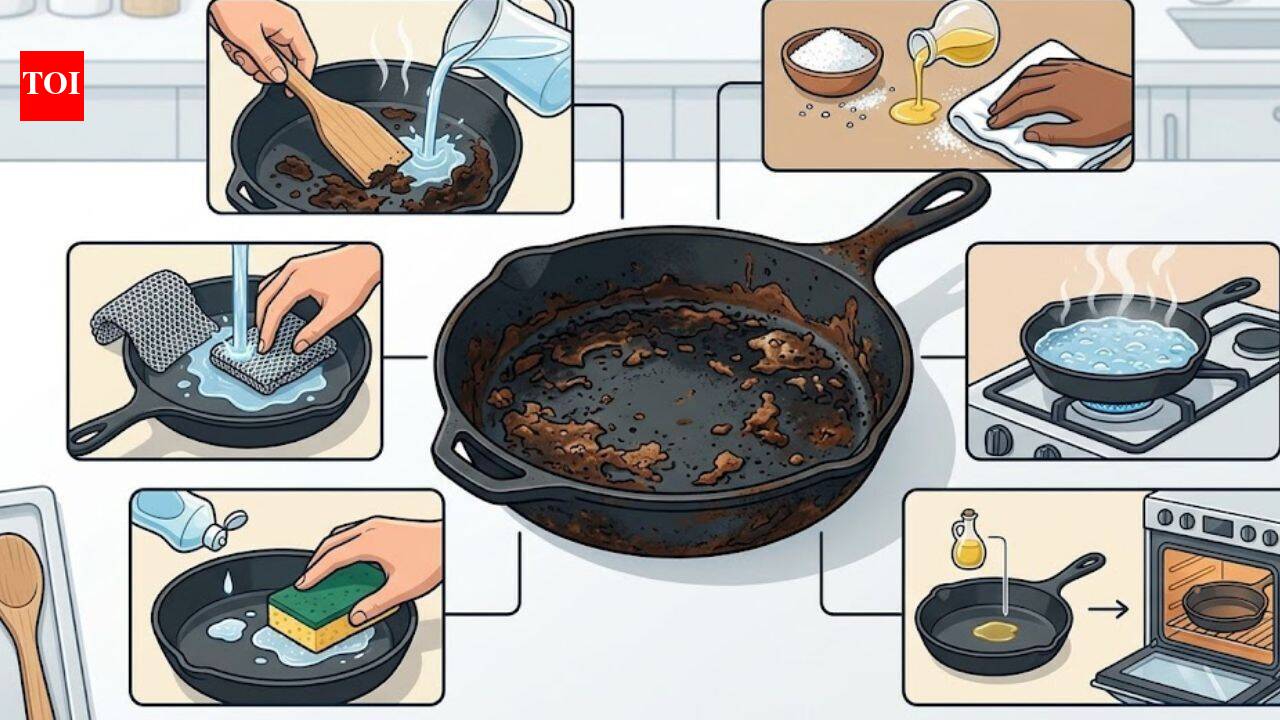
A burnt iron pan can be difficult to clean, especially when food has hardened onto its surface. Food may be stuck to the bottom in a thick black layer, while the surface underneath can appear dull and rough. But that burnt food does not always mean the pan is ruined. With the right approach, the hardened residue can be loosened, and the surface can be cleaned without unnecessarily damaging the seasoning that gives a cast-iron pan its cooking properties. Start by softening it, then rub away the loosened food and deal with the remaining residue. Heat, water, a suitable scraper, and gentle scrubbing are usually enough for most burnt patches. Once the pan is clean, drying it properly and applying a thin layer of oil helps protect the exposed iron from moisture and rust. Here are 5 practical methods to clean a burnt iron pan.
Methods to clean a burnt iron pan without damaging it
1. Simmer water to loosen burnt food
When burnt food hardens onto the surface, trying to rub it off while completely dry can require unnecessary force. Instead, use water and heat to soften the residue first.Add enough water to cover the burnt area and bring it to a gentle simmer for about three to five minutes. Turn off the heat and allow the pan to cool enough to handle safely.Once the residue softens, use a pan scraper or suitable stiff brush to loosen it. It is recommended to simmer water for three to five minutes when food is badly stuck. Do not leave the pan submerged in water after the burnt food has loosened.
2. Rub off the thick burnt layer
If large pieces of charred food remain after simmering, use a pan scraper to lift them from the surface.Work gently over the affected areas rather than repeatedly scraping the entire pan. A scraper is particularly useful for thick, hardened patches because it can remove the bulk of the burnt food before you begin scrubbing.Once the large pieces get removed, rinse away the loosened debris.
3. Use coarse salt for remaining residue
Coarse salt can help when the pan has a thin layer of stubborn burnt food left after scraping. Sprinkle a small amount over the affected area and scrub with a suitable brush.The salt provides gentle abrasion that can help break up residue without relying on strong chemical cleaners. This method is most useful for smaller patches rather than thick, completely carbonised layers.After cleaning, rinse the pan thoroughly and move on to drying it immediately.
4. Use a scrubber for stubborn patches
Some burnt food can remain firmly attached even after simmering and scraping. A scrubber designed for cast iron can provide additional cleaning.Use it with warm water and scrub the affected areas with controlled pressure. For very stubborn food, loosen the residue with simmering water, then use the scrubber. The aim is to remove the burnt food without unnecessarily stripping the entire seasoned surface.
5. Dry the pan and apply a thin layer of oil
Cleaning does not end when the burnt food disappears. Cast iron needs to be dried properly because remaining moisture can cause rust.After rinsing, wipe the pan thoroughly with a clean cloth or kitchen towel. You can also place it over low heat briefly to evaporate any remaining moisture.Once completely dry, apply a very thin layer of cooking oil over the surface. Wipe away excess oil so the pan does not feel greasy. This helps protect the iron to maintain its seasoned finish.
What not to do when cleaning a burnt iron pan
1. Do not leave the pan soaking overnight
A short period of simmering can help loosen burnt food, but leaving cast iron submerged for hours is not recommended.Once the burnt residue has softened, clean the pan and dry it rather than leaving it in the sink.
2. Do not put cast iron in the dishwasher
The combination of water, heat, and detergents can damage the seasoning and leave the iron vulnerable to rust. Cast-iron pans should be cleaned by hand.
3. Do not pour cold water into a very hot pan
Avoid taking a pan straight from a hot hob and putting cold water into it. A sudden temperature change can cause thermal shock and potentially damage the cookware.
4. Do not use harsh chemical cleaners
Strong cleaners and aggressive chemicals are not necessary for ordinary burnt-food residue. They can also interfere with the pan’s seasoning.Start with simpler methods such as simmering water, scraping, and suitable scrubbing. If the seasoning has already been badly damaged, the pan may need to be re-seasoned instead.
5. Do not put the pan away while it is still wet
Even a small amount of water left on cast iron can encourage rust. Dry the entire pan carefully, including the sides and around the handle, before storing it. A very thin layer of oil after drying provides additional protection.
