


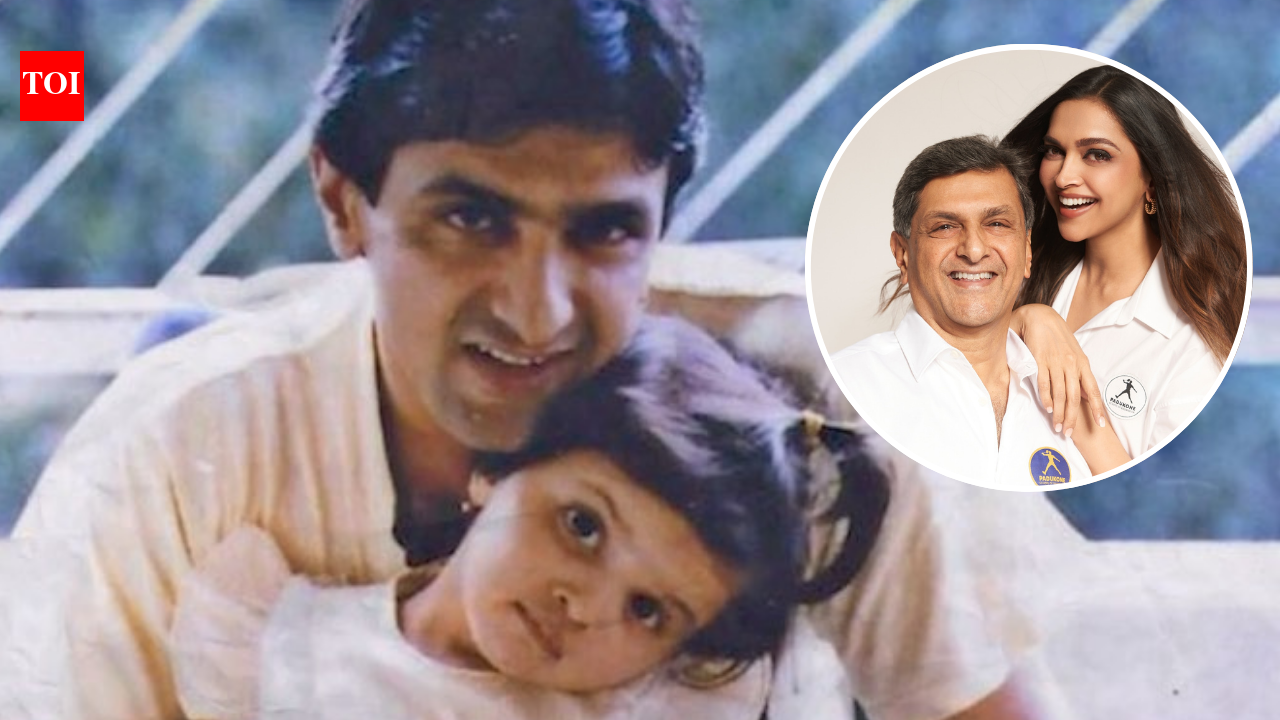
When parents think about putting their child into a sport, the conversation often starts with practical questions. Will it affect studies? Is the coach good? Is the child talented enough? Will they compete at the school or state level? And, sometimes, could this eventually become a career?But former badminton champion Prakash Padukone believes parents may be looking at sport through too narrow a lens. For him, some of the most important things his daughter Deepika Padukone gained from badminton had little to do with trophies.
28 Jul 2026 | 16:22
How do you teach children about money and financial responsibility?
Speaking about her childhood on the Something Bigger Talk Show, Padukone recalled how Deepika would wake up at 5 in the morning, train with players at his academy, return home and then go to school. She played badminton at the state level, but the routine itself seems to have left a deeper mark.“Sport has taught her… the discipline, the focus, the ability to think big,” he said. He then made a point that many parents may recognise but perhaps do not always act on. “Many parents don’t realize that,” Padukone said, adding that this is something he often highlights when speaking to parents. “Sport teaches a lot of good things, you know, especially now,” he added.And perhaps, Prakash Padukone’s words are worth pausing over. A child does not have to become a professional athlete for sport to be worthwhile. In fact, some of the biggest lessons may happen during the ordinary parts- turning up for practice when they would rather sleep, losing a match, trying the same skill again, listening to a coach, working with teammates and slowly getting better.Here are five things children can learn through sport that can stay with them long after the game is over.
Discipline becomes a habit, not a lecture
Parents spend a lot of time telling children to be disciplined. Wake up on time. Finish your homework. Practise regularly. Don’t give up halfway. Sport can teach the same lessons without turning them into a lecture.Deepika’s routine, as recalled by her father, is a good example. Getting up at 5am to train and then going to school meant learning to work around a commitment. There was a schedule to follow and a responsibility to show up. That kind of discipline is different from doing something because a parent is standing nearby reminding you.A child gradually learns that progress depends on consistency. And that lesson can travel well beyond a badminton court. The ability to keep going when something is difficult is useful in studies, work, relationships and almost every other part of life.

FIle Photo
Children learn that being good at something takes time
There is a particular kind of frustration children experience when they are learning a sport. They practise a shot and still miss it. They try again and lose. They watch someone else perform a skill more easily. They may spend weeks working on something before anyone notices an improvement.That can be uncomfortable. But it also teaches an important lesson: you do not have to be good at something immediately to become good at it eventually. In a world where children are increasingly used to quick results, sport gives them a different experience. Improvement is often slow, visible and earned. For parents, this is also a useful reminder not to rush in every time a child struggles.Sometimes, letting them stay with the difficulty is part of the learning.
Losing teaches something winning cannot
No parent enjoys watching their child lose. It is tempting to soften the disappointment, explain why the loss wasn’t fair or immediately point out what the child did well. But losing is one of the unavoidable parts of playing sport- and that makes it valuable.A child who loses a match gets a chance to experience disappointment without the world falling apart. They learn that a bad day does not erase all the work that came before it. More importantly, they have to decide what comes next. Do they quit? Blame someone? Stay upset? Or return to practice? That small decision can slowly build resilience. Children do not need to win every time to develop confidence. Sometimes confidence comes from discovering that they can lose and still come back.
Sport teaches children to focus on what is in front of them
Padukone specifically mentioned focus when describing what sport gave Deepika. It is an increasingly important skill for children growing up surrounded by distractions.On a court, there is very little room for being mentally elsewhere. A player has to watch, anticipate, respond and adjust. One moment of distraction can change the outcome of a point.Of course, concentration is not magically transferred from a badminton court to a school desk. But repeated practice in paying attention to a task can help children understand what sustained focus feels like. And perhaps this is one reason sport can complement academics rather than simply compete with them.
It can make children think bigger about themselves
This may be the most interesting part of Padukone’s observation. He did not only talk about discipline or focus. He spoke about the “ability to think big.” Sport can give children a glimpse of possibilities they may not have considered before.They meet children from different schools and backgrounds. They compete at different levels. They travel for tournaments. They encounter people who are better than them and, sometimes, discover that they can become better too. A child who once thought, “I can’t do this,” may eventually find themselves saying, “Maybe I can.” That shift matters. Thinking big does not necessarily mean dreaming of an Olympic medal or a professional sporting career. It can simply mean developing the confidence to imagine a bigger version of one’s own life.
FIle Photo
What parents sometimes miss about sport
Perhaps the biggest takeaway from Padukone’s comments is that parents do not have to know whether their child will become an athlete before deciding that sport is valuable. The point is not that every child needs to train at 5am, compete at state level or pursue sport seriously.Children have different interests, abilities and temperaments. Some may love competitive sports. Others may prefer swimming, skating, athletics, dance or simply playing outdoors with friends. What matters is that children have opportunities to move, practise, struggle, improve and experience both success and disappointment. Parents may see the hour spent at practice as an hour taken away from homework.But the child may be learning something homework cannot always teach- how to keep trying when the answer does not come easily. That is why Padukone’s observation feels particularly relevant to parents today. The scoreboard tells you who won the match.It does not tell you who learnt to be patient, who became more disciplined, who discovered resilience or who started believing they could do something they once thought was impossible. Those lessons may never come with a medal. But they can stay with a child for life.
