


The Environmental Cost of Empty Offices
As hybrid work leaves desks empty, businesses must rethink the “environmental afterlife” of their office space to prevent a waste crisis.
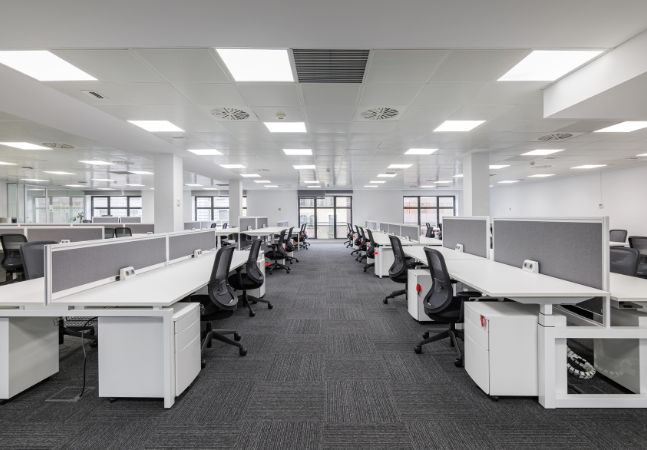
Workplace habits have shifted. Many companies now operate with smaller offices, hybrid teams, or fully remote structures. These changes leave many commercial spaces partially used or completely empty. For organizations focused on sustainability, this raises an important question: what happens to the buildings we leave behind? Our company began examining the afterlife of office buildings as part of a wider effort to reduce long-term environmental impact.
The life of a building does not end when employees move out. Looking at these spaces differently helped us rethink our responsibilities. Instead of treating office buildings as disposable assets, we began asking how each location could contribute to environmental progress. Sometimes the best ideas start when teams pause to learn something new about how buildings evolve after their primary business use ends.
The Hidden Environmental Cost of Vacant Office Buildings
Empty office buildings often appear harmless from the outside. Lights may still turn on. Heating systems may continue running. Maintenance crews keep basic systems operational. Behind the scenes, however, these buildings can quietly generate environmental strain.
Large commercial structures were designed for daily use by hundreds or thousands of people. When occupancy drops, the infrastructure does not instantly adapt. Climate control systems still consume power. Water systems may cycle regularly. Aging materials can deteriorate faster without proper use.
Demolition adds another environmental challenge. Office buildings contain large amounts of concrete, steel, glass, insulation, wiring, and flooring. When a building is removed without a recovery plan, these materials often end up in landfills. Construction waste represents a large share of global landfill volume.
Recognizing this helped our leadership team take a closer look at the long-term effects of relocation decisions. Instead of focusing only on new offices, we now evaluate the environmental afterlife of office buildings whenever a location closes or moves.
Why Businesses Should Plan for Buildings Beyond Their Use
Sustainability planning often focuses on energy efficiency, renewable power, and carbon reduction during active building use. These goals remain important, but they do not tell the whole story.
Businesses influence what happens to buildings long after daily operations end. Leasing decisions, renovation choices, and construction materials all shape what future developers or communities can do with a structure.
Our company now treats building transitions as part of environmental planning. When evaluating a move, we examine whether the building can support new tenants, serve another community purpose, or be adapted for different industries. During relocation, we also work with Centennial Moving, a Canadian company offering moving services, to help transport reusable furniture and equipment instead of discarding them.
This perspective changes how companies approach property management. Instead of short-term thinking, organizations begin planning for the next chapter of a structure’s life. By doing this, businesses take responsibility for the environmental afterlife of office buildings rather than leaving the outcome to chance.
Adaptive Reuse: Extending the Life of Office Buildings
One of the most effective ways to reduce environmental impact is simple: keep buildings in use.
Adaptive reuse allows existing structures to serve new purposes without major demolition. Former office spaces have become apartments, research centers, educational campuses, and creative studios. These conversions reduce the need for new construction while preserving large amounts of material.
Our sustainability team began studying adaptive reuse options whenever we exited a building. In some cases, interior renovations made the property attractive to new tenants. In others, partnerships with developers allowed buildings to transition into residential housing.
This process also led us to examine the materials used in office construction. If buildings are designed with reuse in mind, future transformations become much easier. That idea connects to a larger shift across the construction sector: rethinking what we build with so that materials remain useful long after the original design purpose ends.
Responsible Deconstruction Instead of Traditional Demolition
Demolition has long been the fastest way to clear space for new development. Unfortunately, speed often comes with environmental costs. When structures are demolished quickly, valuable materials are destroyed or mixed with debris.
Deconstruction offers a more responsible alternative. Instead of knocking down a building all at once, trained teams carefully dismantle sections in stages. Steel beams, wood framing, lighting fixtures, and mechanical equipment can be removed and reused.
Our company began supporting deconstruction strategies when leaving larger office facilities. The process takes longer than demolition, but it produces significant environmental benefits. Materials stay in circulation instead of becoming landfill waste.
Working with contractors who understand how to manage construction waste also ensures that materials are sorted properly. Recovered components can move into reuse markets, recycling programs, or new construction projects.
Designing Office Buildings with Their Future in Mind
Once our company began focusing on building transitions, we quickly saw the value of designing offices with flexibility from the start. Buildings that adapt easily are far more likely to stay useful instead of being demolished.
Modern office design supports this approach through features such as:
- Adaptable floor plans that can shift between open workspaces and private areas
- Movable walls that allow teams to reconfigure layouts as needs change
- Raised flooring systems that simplify electrical and technology upgrades
- Modular components that reduce waste during renovations
Material choices also matter. Recyclable metals, sustainably sourced wood, and low-impact composites make it easier to reuse building components during future renovations.
The Environmental Afterlife of Office Buildings Should Be Thought About More
Buildings are often viewed as static assets. In reality, they are part of a long environmental story that continues well beyond a company’s occupancy. When organizations move offices, expand operations, or consolidate locations, they influence what happens next.
Thoughtful planning helps ensure buildings continue serving communities rather than becoming environmental burdens. By addressing the environmental afterlife of office buildings, businesses can transform what once seemed like an ending into the beginning of a more sustainable future.
