


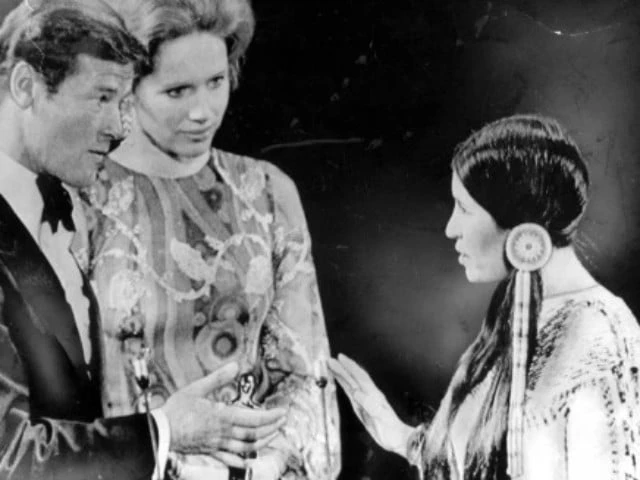
Unfazed by glitz, glory of Academy Awards, three winners have had courage to refuse prizes to support moral positions
Dudley Nichols, George C. Scott and Marlon Brando, three winners refused their awards.
Winning an Academy Award is widely seen as the pinnacle of achievement in the film industry, but not every winner has been eager to accept the honor. In the nearly century-long history of the Oscars, only three winners have actually refused their awards: Dudley Nichols, George C. Scott and Marlon Brando. Each rejection came with its own motivations, ranging from political protest to criticism of the awards themselves.
Nichols, a prominent screenwriter in the 1930s, won the Oscar for Best Screenplay for the film The Informer. However, he declined the award in 1936 as a show of support for Hollywood writers who were pushing to unionize during the economic struggles of the Great Depression. Nichols later accepted the Oscar in 1938 after the Screen Writers Guild, which would eventually become the Writers Guild of America, was formally established.
Actor George C. Scott made headlines decades later when he refused the Best Actor Oscar for his performance as the controversial World War II general in Patton. Scott had already warned the Academy that he did not wish to be nominated, saying he disliked the idea of actors competing against one another. He also argued that filmmaking disrupted the natural flow of acting, famously stating that “film is not an actor’s medium.”
Perhaps the most famous rejection came from Marlon Brando, who won Best Actor for his iconic role as Don Vito Corleone in The Godfather. Instead of attending the 1973 ceremony, Brando sent Native American activist and actor Sacheen Littlefeather to decline the award on his behalf. She used the moment to protest the film industry’s portrayal of Native Americans and draw attention to the standoff at Wounded Knee.
While many celebrities have skipped the ceremony or sent someone else to collect their trophies, these three figures remain the only Oscar winners to actively refuse the award itself, turning one of Hollywood’s biggest nights into a moment of protest and principle.
After working as a reporter for the New York World, Dudley Nichols moved to Hollywood in 1929 and became one of the most highly regarded screenwriters of the 1930s and 1940s. He collaborated on many films over many years with director John Ford, and was also noted for his work with George Cukor, Howard Hawks, Fritz Lang and Jean Renoir.
Nichols wrote or co-wrote the screenplays for films including Bringing Up Baby (1938), Stagecoach (1939), For Whom the Bell Tolls (1943), Scarlet Street (1945), And Then There Were None (1945), The Bells of St. Mary’s (1945), Pinky (1949) and The Tin Star (1957).
George C. Scott’s notable films include Dr. Strangelove (1964), Petulia (1968), The Day of the Dolphin (1973), Movie Movie (1978), Hardcore (1979), and The Exorcist III (1990).
Scott gained fame for his roles on television earning two Primetime Emmy Awards for his performances in Hallmark Hall of Fame (1971), and 12 Angry Men (1997). He also played leading roles in Jane Eyre (1970), Beauty and the Beast (1976), and A Christmas Carol (1984). Scott continued to maintain a prominent stage career even as his film stardom waned, and by the end of his career he had accrued five Tony nominations for his performances in Comes a Day (1959), The Andersonville Trial (1960), Uncle Vanya (1974), Death of a Salesman (1975), and Inherit the Wind (1996). He directed several of his own films and plays and often collaborated with his wives Colleen Dewhurst and Trish Van Devere.
Marlon Brando came under the influence of Stella Adler and Stanislavski’s system in the 1940s. He began his career on stage, where he was lauded for adeptly interpreting his characters. He made his Broadway debut in the play I Remember Mama (1944) and won Theater World Awards for his performances in Candida and Truckline Cafe (1946). He returned to Broadway as Stanley Kowalski in the Tennessee Williams play A Streetcar Named Desire (1947), a role he reprised in the 1951 film adaptation directed by Elia Kazan.
He made his film debut playing a wounded G.I. in The Men (1950) and won two Academy Awards for Best Actor for his performances as a dockworker in On the Waterfront (1954) and Vito Corleone in The Godfather (1972). He was also Oscar-nominated for playing Stanley Kowalski in A Streetcar Named Desire (1951), Emiliano Zapata in Viva Zapata! (1952), Mark Antony in Julius Caesar (1953), an air force pilot in Sayonara (1957), an American expatriate in Last Tango in Paris (1973), and a lawyer in A Dry White Season (1989).
