


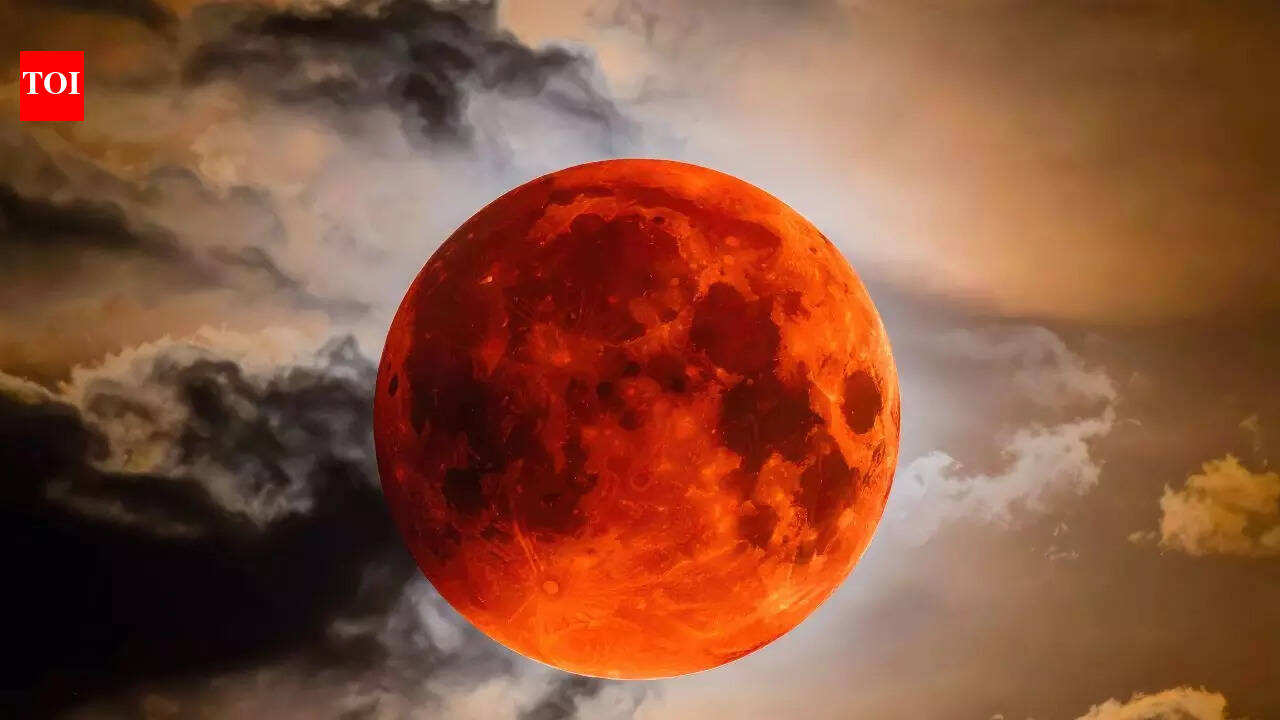
On March 3, 2026, the Moon will turn red in a rare total lunar eclipse. This Blood Moon coincides with Holi, giving the sky its own festival of colour. In many regions, the Moon will rise already glowing red, making the eclipse feel like a dramatic opening act for the evening. For those in the best viewing spots, totality for the period when the Moon is fully in Earth’s shadow will last about 58 minutes, giving skywatchers nearly an hour to enjoy the spectacle.People are already planning where to watch, especially in Northeast India. The sight of a glowing red Moon creeping over hills or rivers has a way of sticking in memory. Experts say total lunar eclipses happen a few times a year globally, but they are not always visible from India.
Total Lunar Eclipse: How and when to watch in India 2026
The eclipse on March 3, 2026, starts in the late afternoon. The penumbral phase kicks off around 4:58 PM IST. Totality, when the Moon is fully in Earth’s shadow, lasts roughly 58 minutes, ending around 5:32 PM. Maximum eclipse falls around 5:10–5:25 PM, depending on your city.For most of India, the Moon rises during the eclipse. That means only the final stages might be visible. Even so, catching that glowing red Moon pop up over the horizon is reportedly magical. And no one has to stay up super late. Just step out at dusk and look east.
Chandra Grahan 2026 : States in India where the Blood Moon is visible
Source: Timeanddate
Blood Moon 2026 : Global locations to watch the total lunar eclipse
According to Timeanddate.com, regions seeing at least some parts of the eclipse: Europe, Asia, Australia, North America, South America, Pacific, Atlantic, Indian Ocean, Arctic, Antarctica.
What is a lunar eclipse and why does the moon turn red
A Blood Moon happens during a total lunar eclipse. The Earth gets right between the Sun and the Moon. Sunlight bends through our atmosphere and filters red light onto the Moon. That’s what makes it glow coppery, almost surreal. During a total lunar eclipse, the Earth comes directly between the Sun and the Moon. This casts the Earth’s shadow, called the umbra, across the Moon’s surface.While the Earth blocks direct sunlight, our atmosphere acts like a lens. It filters out blue and violet light. It bends red and orange light toward the Moon. This effect is known as Rayleigh scattering. It is the same reason sunsets look red.When you look at a Blood Moon, you are seeing the reflection of all the sunrises and sunsets on Earth hitting the Moon at once.
Blood Moon viewing tips
Watching a lunar eclipse is surprisingly simple.
- Step outside.
- Find a clear view of the eastern horizon.
- Avoid bright city lights if you can.
- Binoculars or a telescope can add detail, but aren’t necessary. Rooftops, beaches, and hilltops are popular spots.
People have been sharing photos online. Some catch the Moon framed by city skylines, some by rivers.
