


The Future of Environmental Remediation and Long-Term Stewardship
Move beyond quick fixes. Discover why modern environmental strategy requires decades of planning, sustainable funding and adaptive management.
Environmental risk is no longer a short-term problem, and it’s no longer confined to the site where it originated. From PFAS to aging infrastructure, today’s environmental challenges require long-term strategies that extend decades beyond initial remediation.
When T&M Associates was founded in 1966, environmental regulation as we know it did not yet exist. There was no U.S. EPA, no comprehensive framework for managing contaminated soil or groundwater and a limited understanding that environmental impacts could persist long after a facility closed. Issues were often addressed only when they became visible or unavoidable.
That approach has fundamentally changed. Landmark legislation such as the Clean Air Act and Clean Water Act established the regulatory foundation, while advances in environmental science introduced routine sampling, long-term monitoring, defined cleanup criteria and enforceable accountability. What was once novel is now standard practice.
Yet one lesson has remained consistent over more than 30 years in environmental remediation: environmental challenges rarely stay contained. Contamination migrates through soil and groundwater, impacts drinking water systems and affects communities far removed from the source. Addressing these risks requires more than technical solutions; it requires long-term planning, sustained funding and accountability.
Today, much of the work focuses on legacy conditions. Former manufacturing facilities, closed landfills, aging fuel sites and outdated infrastructure were often left unaddressed due to limited funding, regulatory clarity or technical capability. Through brownfield and other public funding programs, these sites can now be investigated, remediated and returned to productive use. Thus, reducing risk while supporting economic development.
For environmental professionals, the key challenge is alignment: integrating regulatory requirements, engineering solutions and future land use. Successful projects are those that consider not just cleanup, but what comes next. In Paterson, New Jersey, for example, work in the Overlook Brownfields Development Area has supported the assessment and prioritization of cleanup across more than two dozen historic industrial properties, enabling redevelopment within the Great Falls Historic District.
These projects demonstrate that environmental protection and economic development are not competing priorities but are mutually reinforcing when approached with long-term accountability.
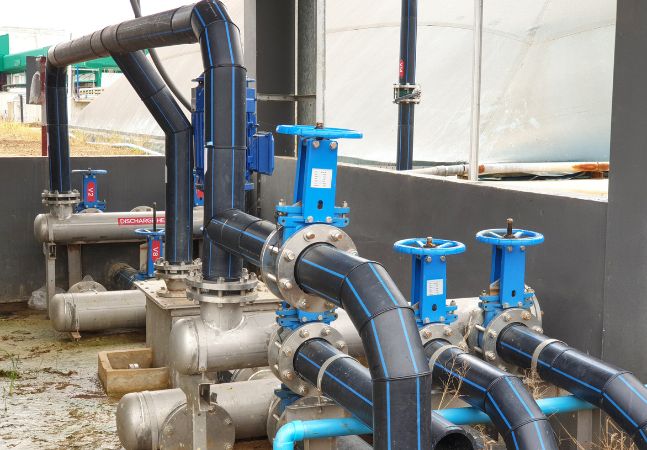
Some of the most complex projects involve large industrial sites with significant groundwater impacts, where treatment systems must operate reliably for decades. Increasingly, sustainability is part of that equation. Energy-efficient systems, automation and renewable power integration are helping to control long-term costs and improve system resilience. This is an important consideration for remedies that may remain in place for generations.
Few issues illustrate the shift toward long-term stewardship more clearly than PFAS, often referred to as “forever chemicals.” Used for decades in firefighting foams and consumer products, PFAS compounds persist in the environment and require ongoing management.
While treatment technologies can remove PFAS from drinking water, they do not eliminate the need for monitoring, funding and responsible disposal. As detection methods improve and regulations evolve, infrastructure and remediation strategies must evolve alongside them.
At the same time, environmental responsibility has become a material business consideration. Property owners are now expected to identify environmental liabilities, evaluate long-term financial exposure and demonstrate that cleanup obligations can be sustained over time. Environmental risk does not disappear with a change in ownership; it follows the site until it is properly addressed.
For practitioners, this shift has practical implications:
- Remediation strategies must be designed for long-term operation and maintenance, not just initial compliance
- Funding mechanisms must account for decades (not years) of oversight
- Site redevelopment plans should be integrated early to ensure cleanup supports future use
- Emerging contaminants like PFAS require adaptive management approaches, not one-time solutions
Sixty years after T&M Associates was founded, environmental stewardship is no longer reactive or theoretical. It is measurable, enforceable and central to how communities and industries plan for the future. The most effective solutions combine technical expertise with practical experience, designing systems that can be built, operated and optimized over time.
The challenges ahead, emerging contaminants, aging infrastructure, water reuse and climate-driven impacts; will demand that same long-term mindset. Environmental protection is not about quick wins. It is about planning, accountability and investing in solutions that endure well beyond the present generation.
