


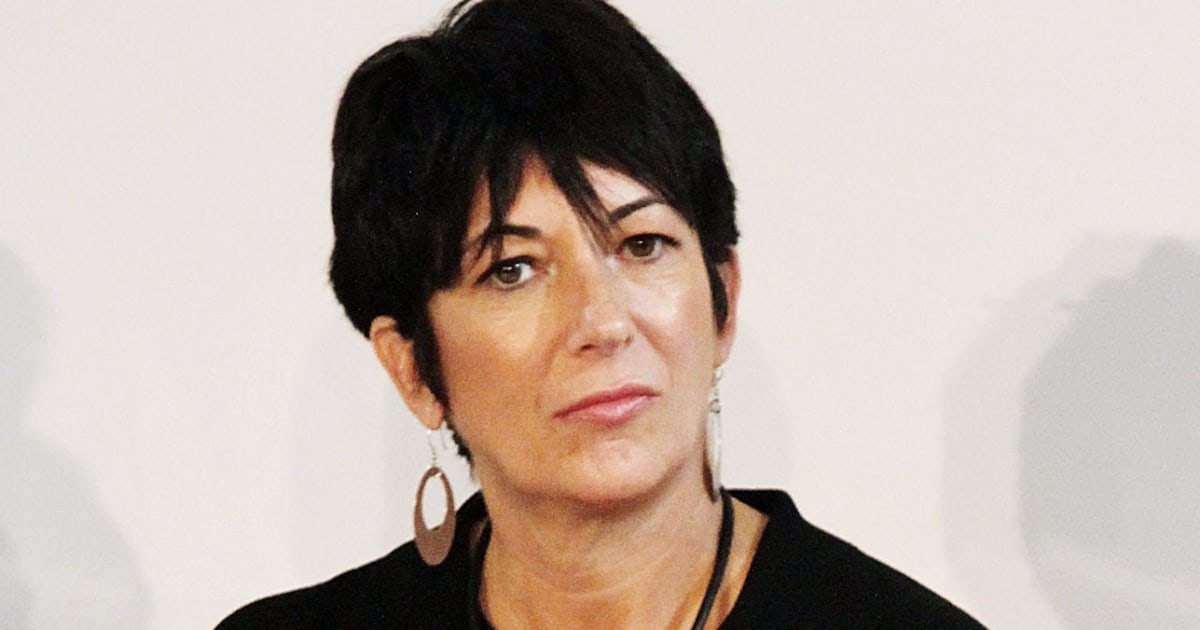
WASHINGTON — The Supreme Court on Monday rejected Ghislaine Maxwell’s challenge to her criminal conviction for recruiting and grooming teenage girls for sexual abuse by Jeffrey Epstein.
The decision means that Maxwell’s conviction on three counts and her 20-year criminal sentence remain in place. The case was one in a list of dozens of appeals that piled up in recent months that the justices rejected as they started a new nine-month court term.
Maxwell lawyer David Oscar Markus argued in court papers that an agreement Epstein made with the then-U.S. attorney in the southern district of Florida, Alex Acosta, not to prosecute him or potential co-conspirators should apply to one of the three counts in her case, which was prosecuted in New York.
“We’re, of course, deeply disappointed that the Supreme Court declined to hear Ghislaine Maxwell’s case,” Markus said in a statement. “But this fight isn’t over. Serious legal and factual issues remain, and we will continue to pursue every avenue available to ensure that justice is done,” he added.
At issue in Maxwell’s appeal was whether the terms of a so-called nonprosecution agreement apply only in the district where it was negotiated or also bind federal prosecutors nationwide.
The Justice Department asked the Supreme Court to reject Maxwell’s appeal, with Solicitor General D. John Sauer noting in his brief that under internal policies, the U.S. attorney would have needed to obtain permission from superiors if the agreement were to apply outside his district. There is no evidence that occurred, he added.
Maxwell was convicted in 2022 of three counts relating to her role in assisting Epstein in recruiting and grooming his victims, some of whom were as young as 14 years old.
She would befriend the girls and then assist in transporting them to Epstein’s residences and was sometimes present when the abuse took place, prosecutors alleged.
The Epstein case and Maxwell’s involvement were thrust into the news again this year as the Justice Department and the FBI said that, contrary to theories promoted by some who now work in President Donald Trump’s administration, there was no Epstein “client list” or evidence he was blackmailing famous men.
The government also said there was no doubt Epstein killed himself in 2019, pushing back on unfounded conspiracy theories suggesting he was killed.
This led to a backlash against the Trump administration’s approach, including from some of the president’s supporters. Trump was friendly with Epstein for many years but has said they had a falling-out sometime before the allegations against Epstein were public.
In an unusual twist, Deputy Attorney General Todd Blanche, who was previously a personal lawyer for Trump, then met with Maxwell for hours for an interview that had been shrouded in secrecy.
Maxwell was then transferred from a prison in Florida to a lower, minimum-security prison camp in Texas. The Bureau of Prisons did not say why she was transferred.
The Justice Department later released audio and a transcript of Blanche’s interview with Maxwell.
Among other notable appeals the court turned away Monday was conservative activist Laura Loomer’s attempt to sue various companies, including Meta Platforms and X, over alleged suppression of right-leaning voices.
The court also rejected an appeal brought by the state of Missouri that sought to revive a novel law aimed at limiting the way law enforcement agencies cooperate with the federal government in enforcing gun laws.
