


Ozone Technology Slashes Tijuana River Bacteria Levels
A pilot study using nano-bubble ozone infusion significantly outperformed expectations by reducing coliform bacteria by over 90%.
Greenwater Services announced the successful completion of a five-week pilot project on the Tijuana River, reporting a 91.5% average reduction in total coliform bacteria. The results significantly exceeded the project’s initial performance goal of 15% to 20%.
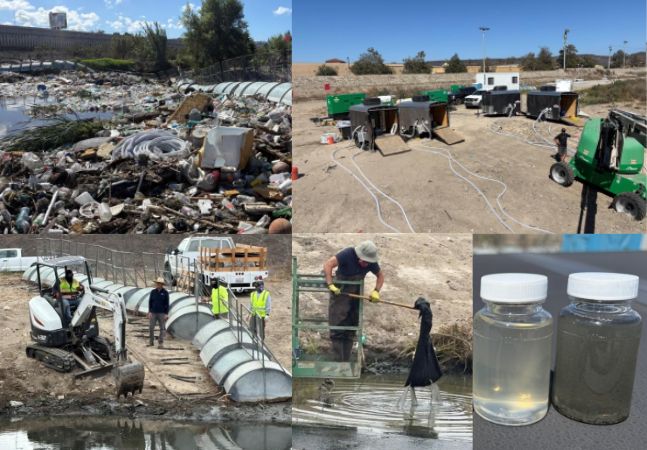
The $1.1 million initiative, overseen by the International Boundary and Water Commission, utilized patented Nano Bubble Ozone Technology to treat contaminated water along the flood control plain west of the U.S.-Mexico border. The river, which flows into San Diego County, has long struggled with untreated wastewater and industrial discharge.
The treatment system works by infusing water with microscopic ozone bubbles that neutralize pathogens and dissolved contaminants. Unlike traditional chemical treatments, the process keeps ozone contained within the water column and increases dissolved oxygen levels without harming the surrounding ecosystem.
During the trial, Greenwater deployed four treatment units. Operations were primarily limited to daylight hours to manage heavy debris and plastic loads in the waterway. Despite these constraints, the system maintained high performance, and Border Patrol agents in the vicinity reported a notable decrease in foul odors during treatment periods.
Research collaborators, including experts from the National Oceanic and Atmospheric Administration and Ohio State University, have validated the technology’s efficacy. While the pilot focused on a specific section of the river rather than total watershed remediation, Greenwater estimates that approximately 40 units equipped with advanced filtration could achieve compliance-level improvements at scale.
Following the success in California, the company is expanding its national footprint. Upcoming projects include collaborations with the Florida Department of Environmental Protection and the U.S. Army Corps of Engineers to reduce phosphorus and nitrogen levels in Florida lakes. Additional restoration efforts are planned in partnership with the University of Florida to address nutrient runoff and ecosystem health.
About the Author
Jesse Jacobs is Assistant Editor of EPOnline.com.
