


Microplastics and Pharmaceuticals Added to Federal Water Watch List
The draft Sixth Contaminant Candidate List marks a historic expansion of the agency’s priorities for monitoring unregulated drinking water threats.
New federal actions are set to prioritize the monitoring of microplastics and pharmaceuticals in the nation’s drinking water for the first time.
The draft Sixth Contaminant Candidate List (CCL 6) was released this week for public comment, serving as a primary tool under the Safe Drinking Water Act to identify unregulated substances that may require future federal oversight.
The list includes 75 individual chemicals and nine microbes, but it is the addition of four specific contaminant groups—microplastics, pharmaceuticals, per- and polyfluoroalkyl substances (PFAS) and disinfection byproducts—that represents a shift in agency strategy.
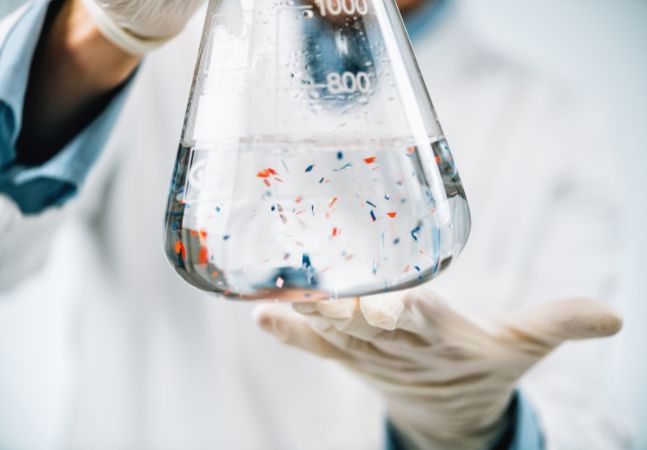
Microplastics, which are tiny plastic particles recently detected in human blood and organs, have never previously been elevated to a priority contaminant group. Their inclusion on the CCL 6 allows for dedicated research and funding to determine the potential health risks and the necessity of future water utility regulations.
Pharmaceuticals, including hormones, antibiotics and antidepressants that enter the water supply through waste and improper disposal, are also being prioritized as a group for the first time.
Alongside the list, the agency released human health benchmarks for 374 pharmaceuticals. While these benchmarks are not enforceable regulations, they provide local water systems with data to evaluate risks if drug residues are detected in their supply.
The announcement also marks a coordinated effort with the Department of Health and Human Services (HHS), which is launching a $144 million initiative titled Systematic Targeting of Microplastics (STOMP). Managed by the Advanced Research Projects Agency for Health (ARPA-H), the program is designed to develop a comprehensive “toolbox” for measuring and removing microplastics and nanoplastics from the human body.
STOMP will focus on three primary technical areas: deploying gold-standard detection technology to quantify plastic levels in human tissue, identifying how these particles migrate through organ systems and eventually validating clinical methods to eliminate them. This dual-agency approach aims to create a shared scientific foundation that addresses microplastic contamination from both the initial environmental exposure in drinking water to the long-term biological impact on human health.
The Safe Drinking Water Act requires an update to this list every five years for contaminants known or anticipated to occur in public water systems. The publication of the draft initiates a 60-day public comment period.
A final version of the list is expected to be finalized by November 2026, following a consultation with the Science Advisory Board.
About the Author
Jesse Jacobs is Assistant Editor of EPOnline.com.
