


KARACHI:
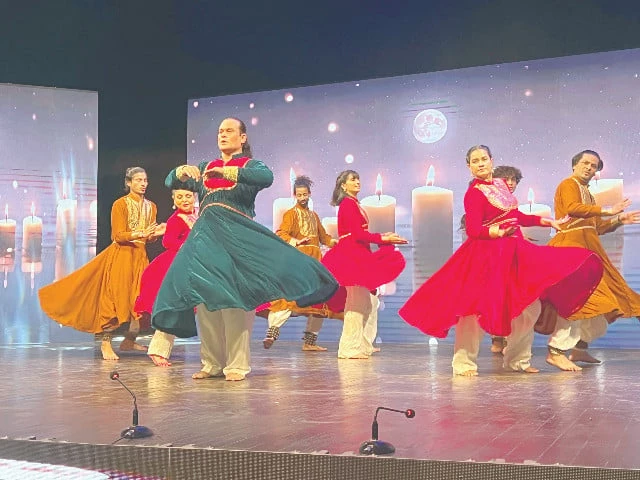
A two-day Kathak dance presentation titled Aqsaam-e-Naach: Andaaz-e-Kathak was held at the Arts Council of Pakistan Karachi, showcasing the discipline, grace and expressive depth of one of South Asia’s most refined classical dance traditions.
Choreographed by renowned Kathak maestro Mohsin Babar, the performance brought together 12 scholarship students from his Kathak School of Performing Arts — the city’s first academy dedicated exclusively to Kathak training.
The programme featured eight pieces, presented through a mix of group compositions and solo performances. Audiences experienced both traditional Kathak repertoire and interpretive works, including Thumri, Tarana, Guru Vandana and ghazal-based compositions, alongside stylistic variations such as fusion Tarana, offering a layered presentation of the dance form’s range and versatility.
Speaking with The Express Tribune, Mr Babar said the title “Andaaz-e-Kathak” reflected the various aqsaam (forms) of raqs presented during the performance.
“These include Thumri, Tarana, Guru Vandana and ghazal all essential forms of Kathak that we performed today,” he said. “The second half was performed live with music so the audience could see everything happening in real time. The purpose of performing live was to reveal the true essence of Thumri, which is often misunderstood in our society.”
He added that one of the key aims of the show was to challenge social taboos associated with dance, particularly the ghungroo, the ankle bells worn by classical dancers.
“The ghungroo is simply the dancer’s instrument, just as the tabla is for a tabla player,” he said. “Thumri is not something inappropriate it is an expressive and musical instrument within Kathak.”
Mr Babar described live interaction between musicians and dancers, commonly known as jugalbandi as an essential part of the classical tradition, allowing rhythm, improvisation and expression to unfold organically on stage.
He said the broader objective of Aqsaam-e-Naach was to keep Kathak alive at a time when classical dance struggles to find space in mainstream cultural discourse.
“Kathak’s back has almost been broken in our society,” he said. “We are trying to preserve it and take it forward.”
For many in attendance, the event served not only as a cultural showcase but also as an effort to reintroduce Kathak as a living, evolving art form within Pakistan’s contemporary cultural landscape.
