


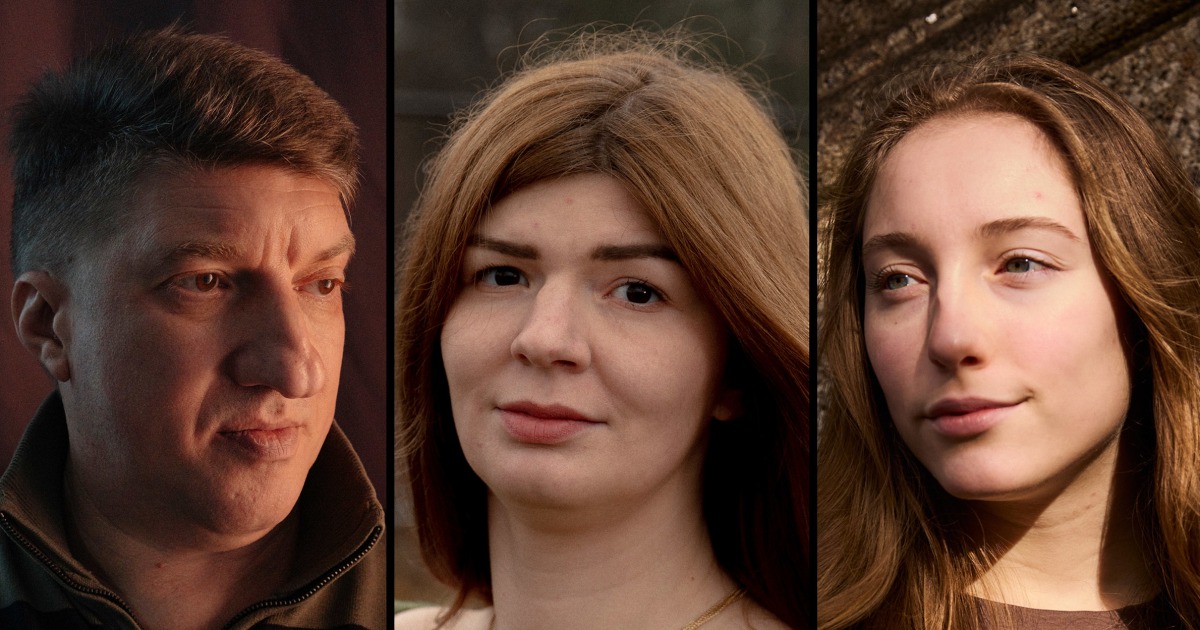
So she moved to London from Ukraine’s southern port city of Odesa in October 2022 and is now studying to be a lawyer. “It is extremely difficult to achieve something in Ukraine because of all the nepotism and corruption,” said Kulia, 21.
Whether Ukrainians will be able to stay in their adopted homelands remains to be seen.
Temporary protected status afforded to Ukrainian refugees by the Council of the European Union will expire in March 2027, although it has suggested a transition to a more permanent status after that.
In the U.S., the Uniting for Ukraine humanitarian program rolled out by the Biden administration was suspended for new applicants after President Donald Trump took power in January 2025, and applications for humanitarian parole extensions were frozen, leaving many Ukrainians in legal limbo. Many now fear they could soon face deportation back to an active war zone.
Blazhevych said that after temporary legal status expired for her and her sons in July 2025, she lost the right to work and survived on tinned food while her extension was pending, and she ran up a large debt.
That status has subsequently been extended until July 2027, but she said the new rules were designed to make “people give up and leave, but I have nowhere to go.”
“I saw the death tolls,” she said of her hometown of Kostyantynivka, which has been under evacuation orders for over a year now. “Children are not supposed to be there.”
While Kulia, the law student, said she had returned to Odesa to visit, she didn’t “feel at home in Ukraine anymore, at least not in the same way as in the U.K., because this is where I formed my personality.”
“Ukraine feels like it was a different life, a different reality, and sometimes I don’t even identify myself with that reality anymore,” she said, adding that while some of her relatives remained in Odesa, “it is hard to stay in touch with them.”
“I am ashamed to tell my family about any happy moments in my life,” she said. “Because I know that their reality is so different to mine.”
