


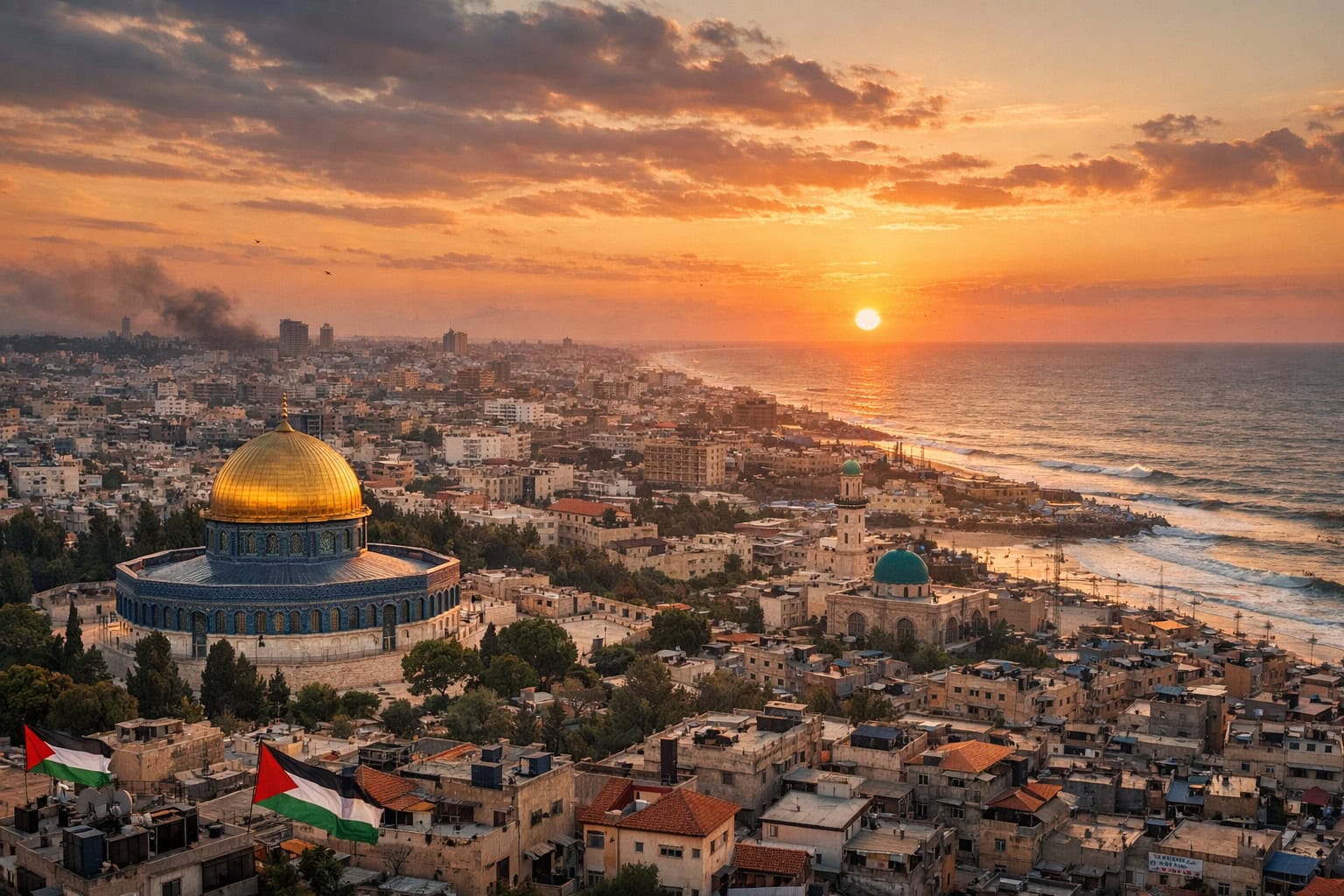
There is a familiar, painful ritual to our Fridays. The outrage spills from the pulpits and floods the streets, driven by a deep, brotherly love for Gaza. The slogans are fierce, and the emotions within the echo chambers of our clergy are real. Yet, we must face a brutal reality. Anger, no matter how loud, cannot shield a child from an airstrike. Rhetoric feels like action, but on its own, it saves no one.
That is why Pakistan’s decision to move in lockstep with the major Muslim powers—Türkiye, Saudi Arabia, the UAE, Egypt, Jordan, Qatar, and Indonesia—is the only way forward.
We are “United We Stand” in practice, not just in theory. Together, we are rejecting any unilateral measures that alter the status of occupied territory. But rejection alone is passive. To actually end the slaughter, we need to be part of the mechanism that forces a solution.
Given the brutal reality of current power structures, there is no magic wand. The personal involvement of the U.S. President (POTUS), coupled with a White House-led initiative like the Gaza Peace Plan (GPP) and the “Board of Peace,” offers the only viable alternative to the current nightmare.
I know this is a bitter pill for many to swallow. But look at the consensus. This plan has been largely endorsed by every stakeholder that matters: the International Community, the Muslim Bloc, the Palestinian Authority (PLA), and significantly, key elements of Hamas and the Palestinians themselves.
If they are willing to accept this path to stop the bleeding, Pakistan’s actions must be guided by that same desired end state. We pride ourselves on having a singular, well-articulated, and bold pro-Palestinian stance. But that stance is wasted if we are absent from the room where the future is being decided.
We must ask ourselves the difficult questions: If we don’t sit at the table, what do we actually do? If we are not part of the solution, what is our role?
Should we really stand apart from a process supported by every major Muslim country? Should we refuse to engage in a peace effort that has not been opposed by any Muslim state?
If the issues facing the Palestinians are ever going to be resolved, Pakistan has to be part of the structures that mitigate the situation. We must be on the table to secure those Palestinian interests. Because while the rhetoric in our streets might soothe our own souls, only presence, power, and pragmatism on the Board of Peace will alleviate the suffering of the Palestinians.
