


If you’re like most people experiencing hair loss and shedding, you’ll notice that treatment takes a lot of trial and error to get your hair back on track. Tools like dermarolling, red light therapy and scalp massagers have come up time and time again on social media promising healthy hair growth, but do those viral products actually work? I spoke to board-certified dermatologists and trichologists to narrow down the best at-home tools you can use to help your hair grow, and how to separate them from the gimmicks.
Want more from NBC Select? Sign up for our newsletter, The Selection, and shop smarter.
What hair growth tools actually work?
The telltale sign a hair growth tool isn’t reliable is dramatic claims. “Anything claiming instant regrowth or dramatic results in a week is unrealistic,” says board-certified trichologist Aga Tompkins. “Hair grows in cycles. No tool overrides biology.”
To separate the tools that actually work and those that are simply gimmicks or shams, I narrowed down the most popular tools on the market today and consulted with dermatologists and trichologists. Keep in mind that the most effective treatments for hair loss with proven results are oral and topical medications, specifically minoxidil, which you can get as a prescription from your doctor or over-the-counter from hair care brand Rogaine.
Red light therapy
Red light therapy is all over social media, but is it effective for hair growth? Experts say yes. “This is one of the few buzzy tools that actually has decent data behind it,” says Dr. Omer Ibrahim, a board-certified dermatologist in Chicago, IL. “Low level red light can stimulate hair follicles and keep them in the growth phase longer, especially for androgenetic hair loss.”
However, red light therapy isn’t magic and it won’t regrow a totally bald area, but it can help thicken hair if you use it consistently, says Ibrahim. When choosing any red light therapy device, it’s important to choose an FDA-cleared device, meaning it has been studied for safety and efficacy, says board-certified cosmetic dermatologist Dr. Michele Green.
This FDA-cleared cap comes recommended by dermatologists in our guide to red light for hair loss. It delivers low-level light therapy, which can help stimulate circulation and cellular activity within the follicle, says Tompkins. It also sits close to the scalp, which is important since proximity matters with light therapy, as energy delivery decreases with distance, experts say. It also comes with a stand, so you can place it under your face to expose it to the red light, or wrap it around smaller body parts like legs and calves.

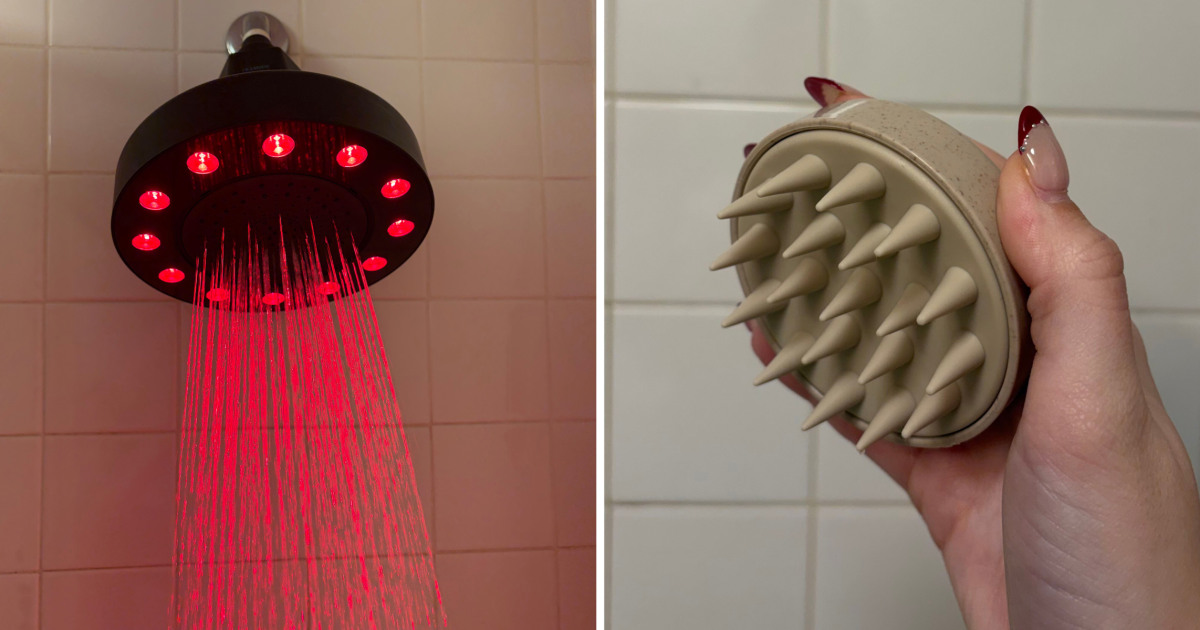
HigherDose recently launched this infrared filtered showerhead, which has a built-in red light ring in addition to a water filtration system. It’s a great way to deliver red light therapy to your hair, face and body all at once. It comes with a remote that lets you control the red light time period and automatically turns off after five-, 10- and 15-minute sessions. I’ve used this showerhead for the past month, and though I haven’t noticed dramatic results quite yet, I have been loving the fact that I can stack my habits. Plus, the showerhead took less than 10 minutes to install, which is great for someone who isn’t handy (like me).

Dermarolling and dermastamping
Dermarolling, also called scalp microneedling, involves a device with several tiny needles that creates microinjuries on the scalp, which stimulate the body’s wound-healing process and lead to the production of new collagen and elastin, says Green. “Collagen helps build hair proteins and strengthen hair follicles, while elastin promotes new hair growth and keeps hair anchored in the follicle,” she says.
Similarly, a dermastamp is a stamping device that uses tiny needles to create microchannels in the skin to stimulate hair growth. Unlike a dermaroller, the device is stamped vertically into the scalp and is best used to target specific areas rather than treat the entire scalp, says Green.
Both dermarollers and dermastamps are most effective when used in conjunction with topical or oral medications (like minoxidil) or with platelet-rich plasma (PRP), says Green. It’s best to have scalp microneedling performed by a dermatologist, though there are at-home devices you can use up to twice a week, experts say. For at-home scalp microneedling, make sure your device doesn’t exceed a 0.5 millimeter needle depth to stimulate hair follicles safely, says William Gaunitz, a certified trichologist.

Vegamour’s dermaroller has a 0.25 millimeter needle depth, which means it’s safe to use at home without irritation or injury, says Gaunitz. It comes with a travel case and has an extra-wide roller to cover more surface area, according to the brand. You can twist the head on and off, so you can easily replace it when the needles get dull.

Dermastamps are basically microneedling, but more controlled than a roller, which Tompkins prefers. “The evidence is the same as microneedling, meaning it can help, especially alongside proven treatments. Stamps are less likely to cause tearing of the skin if used correctly,” she says. This one helps your scalp absorb serums and oils better and quicker, plus supports scalp blood flow to encourage hair growth, according to the brand. It comes with a cover, so the needles won’t be exposed when you’re not using it.
Scalp massagers and brushes
Research on whether scalp massages work for hair growth is very limited. Scalp massagers stimulate circulation and dilate scalp blood vessels, which may encourage hair growth, says Green. They can also remove product buildup and dead skin cells from the scalp. While scalp massagers can be beneficial for overall scalp health, there is little evidence regarding their efficacy for hair growth, says Green.
However, scalp massages alone are unlikely to reverse genetic or autoimmune hair loss, and it’s important to avoid using a scalp massager aggressively because excessive traction can make the problem worse, experts say.
You might also see palm-sized plastic hair brushes or boar bristle brushes that market themselves as increasing scalp circulation and distributing oils, but there is no scientific evidence suggesting brushing alone can stimulate hair growth, experts say. “Brushing does not activate follicles,” says Ibrahim. “Some brushes can reduce breakage or distribute oils better, which can improve the look of hair but not the growth cycle.”

Tangle Teezer’s scalp brush comes recommended by the International Trichology Congress, an educational and professional platform for certified scalp experts. It has a two-tier bristle design, so it’s a brush and massager hybrid. The long flexible bristles exfoliate the scalp and remove flakes, while shorter, firmer bristles stimulate circulation and boost blood flow to your scalp, according to the brand. You can use it in or out of the shower and with or without product, according to Tangle Teezer.
Scalp gua sha tools
Gua sha is a traditional Chinese medicine practice that involves using a smooth-edged tool on the skin to improve blood flow. “On the scalp, gua sha is meant to boost circulation for hair growth,” says Green. But as with scalp massagers, research on gua sha’s efficacy for hair growth is limited. “It may help with relaxation or tension, but it does not flip a switch on follicles,” says Ibrahim. “I would put this firmly in the wellness category, not a treatment.”

Though experts emphasize that gua sha tools aren’t technically hair growth devices, they can help support circulation and lymphatic movement to keep your scalp and hair healthy, says Tompkins. Gaunitz likes these tools for daily use because you can stimulate your scalp without breaking the skin immediately before applying a scalp serum or a peptide spray. “It helps break up deposits underneath the scalp and stimulate blood flow to the scalp and hair follicles,” says Gaunitz. This gua sha comb from Act+Acre is made from natural jade and has ridges to help massage your scalp, according to the brand.
How often should you use your hair growth tools?
When it comes to hair growth tools, consistency is key. “Any tool, serum or shampoo will require consistency to work over time. If you’re going to use the gua sha once and never use it again, then it’s not a good tool for you,” says Gaunitz.
The following is the best routine for the hair growth tools mentioned above, which you should use in conjunction with scientifically-proven treatments like minoxidil, experts say.
- Red light therapy: Use twice weekly for 10 to 15 minutes, then shampoo your hair normally
- Gua sha tool: Use daily and apply a scalp serum afterward
- Dermaroll/dermastamp: Use no more than twice weekly after washing hair to avoid scalp irritation
- Scalp massager: Use once or twice a week, but there’s no harm in gently using it daily
Do scalp oils and serums work for hair growth?
The only topical product proven to promote hair growth is topical minoxidil, which usually comes as a foam or serum, experts say. Topical minoxidil is an FDA-approved medication prescribed by dermatologists to reduce and prevent hair thinning and shedding. It pushes hairs into the growth phase, preventing them from entering the shedding phase, says Green.
However, consistent scalp hygiene is usually overlooked but foundational, says Tompkins. Gentle chemical exfoliants, such as low levels of lactic acid in overnight scalp treatments, can help reduce buildup without stripping the scalp of its natural oils, she says.
Other OTC scalp oils and serums can address concerns like flaking, irritation, dryness and buildup, especially those with hydrating ingredients like jojoba oil and aloe vera. Serums with peptides are also great at helping the hair follicle to work more effectively and grow healthier, thicker hair, says Gaunitz. Serums and oils can also help reduce inflammation, which may help hair growth in the long run, experts say. But they’re not a cure for hair loss, says Ibrahim.
Rosemary oil has some data backing up its efficacy in hair growth, including a small study showing results comparable to low-strength minoxidil for pattern hair loss. That said, the evidence is limited and results are modest, says Ibrahim.

This scalp serum combines 70% rosemary water, extract and oil to help hair look and feel thicker, plus 5% Capixly, an anti-thinning agent, according to the brand. NBC Select senior editor Nikki Brown uses this serum in her hair care routine and says that, while it’s too early to see results, she finds it lightweight, non-greasy and easy to apply (the dropper lets you apply the serum exactly where you want it). But as experts previously noted, consistency is key, so you’ll have to use this serum daily to see results.
What should you use in conjunction with hair growth tools?
A healthy scalp is the most important thing when it comes to hair growth. That means proper cleansing, minimizing inflammation with gentle shampoos and scalp serums, and seeing a doctor if shedding is severe or prolonged, says Gaunitz.
Below are common hair growth treatments including topical solutions and oral medications to combine with hair growth tools:
- Topical minoxidil is an FDA-approved treatment that strengthens hair follicles and promotes hair growth and retention, says Green. Oral minoxidil is also a prescription option for both hair loss and shedding.
- Propecia (finasteride) and dutasteride are FDA-approved oral medications that inhibit the conversion of testosterone to dihydrotestosterone (DHT), which helps prevent hair loss, says Green.
- Ketoconazole is a common ingredient in dandruff shampoos, but paired with a hair loss treatment like minoxidil, it can help hair growth, experts say.
- Spironolactone is an oral medication prescribed to women experiencing hair loss. It regulates androgen (male hormone) production to promote hair growth, says Green. It’s also great for women experiencing hair loss due to Polycystic Ovary Syndrome (PCOS), she says.
Frequently asked questions
There are many factors that can contribute to hair loss, including hormonal imbalances, genetics, age, autoimmune disorders and certain medical conditions, says Green. Autoimmune disorders such as alopecia areata, which is when the immune system attacks its own hair follicles, and certain medical conditions like hypothyroidism can cause sudden hair loss or thinning.
Some people may be sensitive to dihydrotestosterone (DHT), which is a male sex hormone found in both men and women, or are genetically predisposed to higher levels of DHT and other androgen hormones, says Green. Women usually experience hair loss as a result of lowered estrogen levels, especially after pregnancy, during menopause and through changes in birth control, she says.
Supplements only help if you are deficient. “Biotin, iron, zinc or vitamin D can improve hair health if levels are low, but taking more does nothing if your levels are normal,” says Ibrahim. “Many hair supplements are expensive multivitamins with one or two decent ingredients and a lot of marketing.”
Yes, it is safe as long as you choose an FDA-cleared device, meaning it has been studied for safety and efficacy, according to my experts.
You should also be cautious of the intensity that you’re delivering to your scalp. “In my opinion, you should never use more than an 80 diode laser therapy device because of the risk of overstimulation, which can cause unneeded hair loss,” says Gaunitz.
Most hair growth tools take at least three to six months before you see visible results, and closer to nine to twelve months for meaningful change, says Ibrahim.
Meet our hair care experts
At NBC Select, we work with experts who have specialized knowledge and authority based on relevant training and/or experience. We also take steps to ensure all expert advice and recommendations are made independently and without undisclosed financial conflicts of interest.
- Aga Tompkins is a board-certified trichologist and the director of style services and education at Nutrire.
- Dr. Omer Ibrahim is a board-certified dermatologist in Chicago, IL. He has a special interest in hair loss treatments.
- Dr. Michele Green is a board-certified cosmetic dermatologist based in New York City.
- William Gaunitz is a certified trichologist and founder of Advanced Trichology, a hair growth treatment brand.
Why trust NBC Select?
I’m an updates editor at NBC Select who regularly covers beauty and personal care. I’ve covered treatments for thinning hair, itchy scalps, dandruff and more for over five years. For this article, I interviewed board-certified dermatologists about popular hair growth tools and which ones actually work.
Catch up on NBC Select’s in-depth coverage of tech and tools, wellness and more, and follow us on Facebook, Instagram, Twitter and TikTok to stay up to date.
