


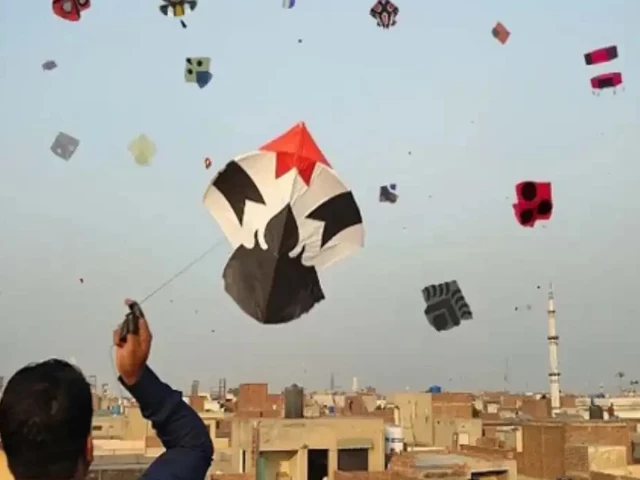
How Lahore’s iconic kite festival lives on through films and music, preserving its colours and memories
Basant has long stood as Punjab’s most vibrant seasonal celebration — a joyous herald of spring, when rooftops and streets burst into colour and sound. Though traditionally marked by kite-filled skies and yellow hues dominating clothing and décor, Basant’s cultural imprint extends far beyond its festive spectacle.
Even when kite flying largely disappeared from public life, the festival’s emotional and sensory legacy endured. Pakistan’s music, cinema and popular imagery preserved its memory, keeping alive a tradition Punjabis continue to hold close to their hearts.
Punjabi cinema has approached Basant not merely as a spectacle, but as a lived cultural experience woven into everyday life. Bo Kata (2007), directed by Shehzad Afzal, is a documentary set during Lahore’s Basant Kite Festival. It vividly captures rooftop battles and the distinctive kite-flying culture that once defined the city.
The film’s atmospheric landscape mirrors the rhythm of competition and celebration within the community. Scenes of kite sellers and makers preparing colourful patangs and winding dor (strings) highlight the economic ecosystem surrounding the festival. A soundtrack by John Walden enhances the lightness and energy of skies filled with kites, reinforcing how sound shapes the feeling of Basant.
“When Basant blooms in the fields, let it bloom in the heart as well.”
Shah Hussain, Sufi poet
Filmed during a period when Basant was gradually being banned, the documentary also includes footage of public debates and rising political and safety concerns, foreshadowing the festival’s suspension that would last more than two decades.
Read: Basant concludes with heavy turnout, tight security
Another notable work, Kites Grounded (Hun Ki Tera Zor Ni Guddiye), released in 2013 and directed by Murtaza Ali, centres on an ageing kite maker in Lahore who loses his livelihood after the ban. Starring Irfan Khoosat, the film tells the story of Chacha Kareem, whose craft and passion are erased by changing regulations.
Shot in Androon Lahore, the drama uses Basant’s absence to explore the loss of tradition, craftsmanship and community. It serves as a cinematic archive of memory, particularly for generations who witnessed the festival in its heyday.
Just as filmmakers documented Basant’s rooftops and rivalries, musicians preserved its spirit through decades of Punjabi music. Songs celebrating kite flying, spring and communal festivity became an auditory record of the festival’s joy and playful competition.
Early Basant songs often carried devotional undertones, praising the arrival of spring and themes of renewal. Folk melodies, mystical verses and qawwalis performed at shrines blended spirituality with seasonal celebration. References to Basant and kites frequently appeared in Sufi poetry, embedding the festival within Punjab’s cultural imagination.
Read more: City receives 900k vehicles during Basant
In later decades, Basant’s energy found new expression in popular music. Fariha Pervez’s 1990 Punjabi hit Patangbaaz Sajna captured the excitement of kite flying and rooftop celebration, while Abrar-ul-Haq’s bhangra track Billo De Ghar echoed the buoyant atmosphere associated with festive gatherings.
As Basant gradually returns to Lahore’s skies after more than twenty years, its story continues to unfold in cinema and music. Contemporary filmmakers revisit the lives of artisans and kite makers, while new Punjabi tracks seek to revive the nostalgia and vibrancy once synonymous with the festival.
Yet the revival faces ongoing hurdles, including restrictions and safety concerns, alongside recent bans on numerous Punjabi songs. Despite these limitations, Basant’s imagery, melodies and memories remain deeply embedded in Pakistan’s popular culture. Though kite strings may be cut, the spirit of Basant — in film, music and collective imagination — continues to soar.
