


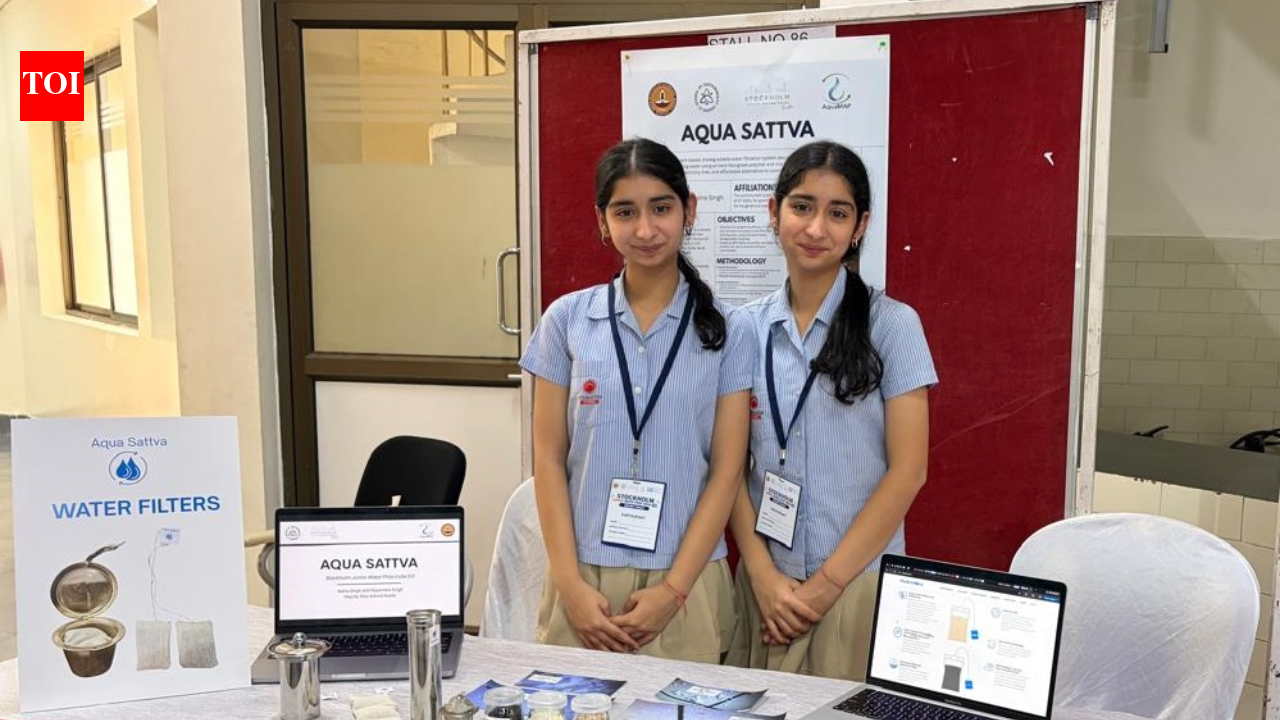
What if some of the ingredients sitting in a kitchen cupboard could help tackle pollutants that conventional water filters struggle with? For Delhi-NCR twins Naina and Nayantara Singh, that question became the starting point for a nearly year-long scientific experiment. The Class XII students have developed a plant-based water purification system that uses okra, fenugreek and rice husk to target two increasingly discussed contaminants in water- microplastics and PFAS, often referred to as “forever chemicals”.The idea, which began as a school-level research project, eventually took the sisters to the biomass laboratory at IIT Delhi, where their prototype was developed and tested under the guidance of professor Vivek Kumar.Their innovation, called Aqua Sattva, is designed around a simple proposition: water purification need not always involve an expensive machine, electricity or complicated plumbing.
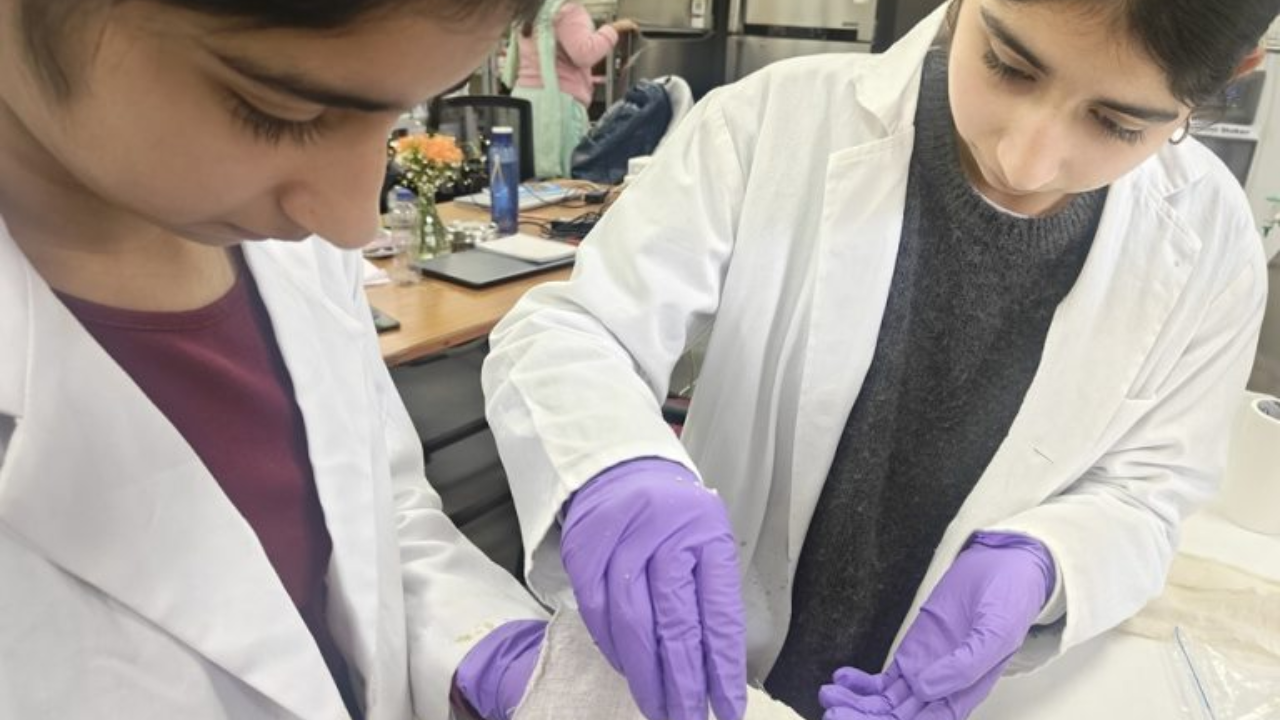
The twin sisters developed Aqua Sattva using plant-based materials.
From concern about groundwater to a science project
The sisters began working on the idea while they were in Class XI. Their interest was sparked by concerns over groundwater quality and depletion in Delhi. “When we came across a Delhi govt study highlighting groundwater depletion across all districts of the city, we felt it was a problem that deserved action,” Nayantara said while speaking to TOI.What started as a concern soon became an experiment. “We first began working on the idea when we were in Class XI, and it took nearly a year to reach meaningful results,” Naina recalled.The twins, who study at Step by Step School, Noida, eventually developed a filtration system using materials that are inexpensive, biodegradable and relatively easy to source. The system consists of sachets resembling tea bags. Inside are two key components: an okra-fenugreek polymer designed to help capture microplastics, and biochar made from rice husk to target PFAS. The estimated cost is around Rs 100 for a pack of 10 sachets.
How does the filter work?
The process is based on two different mechanisms. First, water undergoes basic filtration to remove visible impurities. The next stage uses natural polymers derived from okra and fenugreek. These plant-based substances can help particles clump together through a process known as flocculation. In the sisters’ system, this is intended to bind and trap microplastic particles, making them easier to separate from the water.The second component is rice husk biochar. Rice husk is an agricultural residue that is often treated as waste, and biochar made from it has a porous structure capable of adsorbing certain contaminants.In Aqua Sattva, the biochar is used to target PFAS- a large family of synthetic chemicals that have been widely used in products because of their resistance to heat, water and oil. Their persistence in the environment is also what has earned many PFAS compounds the label “forever chemicals”.The combination gives the system a distinctly different approach from conventional household purification systems.
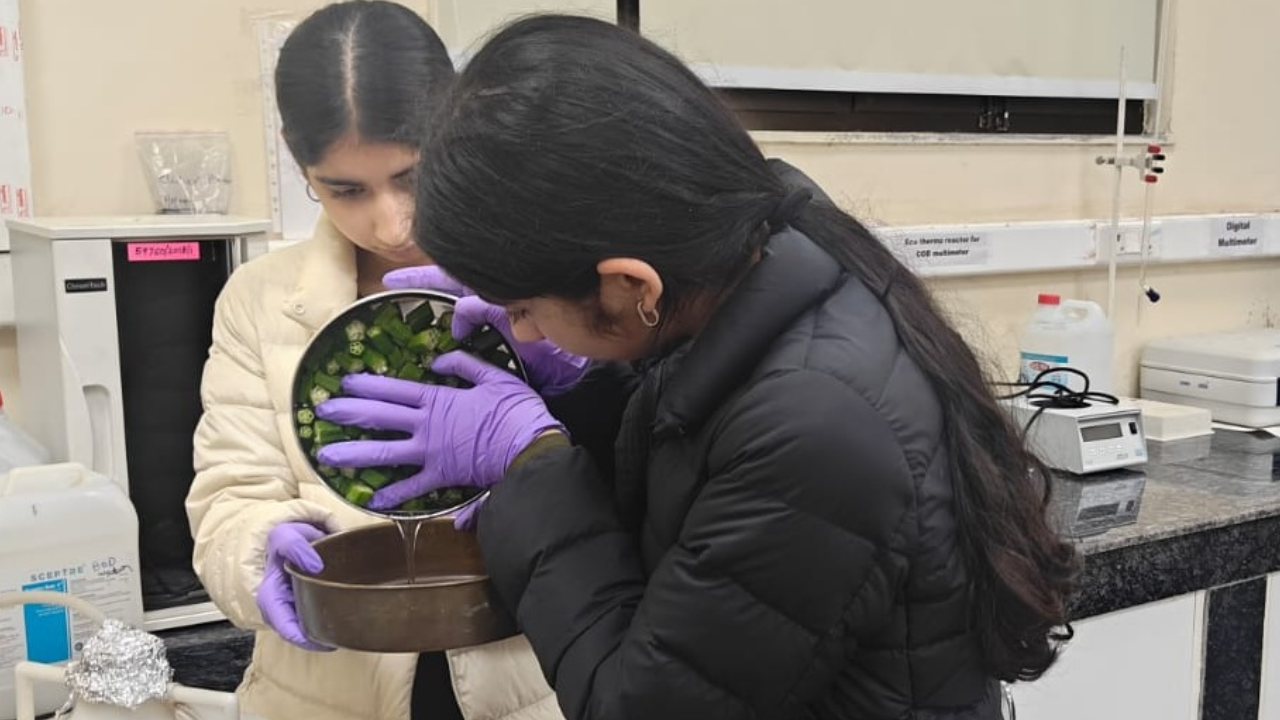
Naina and Nayantara Singh’s ₹100 filter targets microplastics and PFAS.
What did the testing show?
The prototype was developed and tested at IIT Delhi’s biomass laboratory. According to the project findings, independent laboratory testing showed up to 93% removal efficiency across 20 different PFAS compounds after basic filtration. Testing using stereomicroscopy also indicated a substantial reduction in the density of microplastics in treated water samples.The results were significant enough for the project to move beyond a classroom experiment. The sisters are now awaiting a patent for the innovation. The system is not intended to simply replicate an RO purifier. Instead, the sisters say their aim is to create an affordable purification option that can be used without electricity or specialised technical knowledge.“Most effective solutions rely on RO systems, which are expensive, require electricity and also waste significant amounts of water,” Nayantara said. “We wanted to develop something that could work for ordinary households. The objective was to make safe drinking water more accessible and affordable.”
Why the low cost matters
Household water purification can be expensive, particularly for families that cannot invest in sophisticated filtration systems or deal with recurring maintenance and electricity requirements.Aqua Sattva has been designed around a much simpler model. The sachets do not require plumbing, electricity or technical expertise, according to the project description.The estimated price- about Rs 100 for 10 sachets- is a fraction of the cost of many conventional RO systems. There is also an environmental dimension to the choice of ingredients. Okra and fenugreek are plant-based materials, while rice husk is an agricultural byproduct. Turning such materials into components of a purification system gives agricultural waste another potential use.But the bigger challenge for any such innovation will be determining how consistently it performs outside controlled laboratory conditions and across different water sources. The sisters’ work so far represents a promising prototype rather than a replacement for every form of household water treatment.
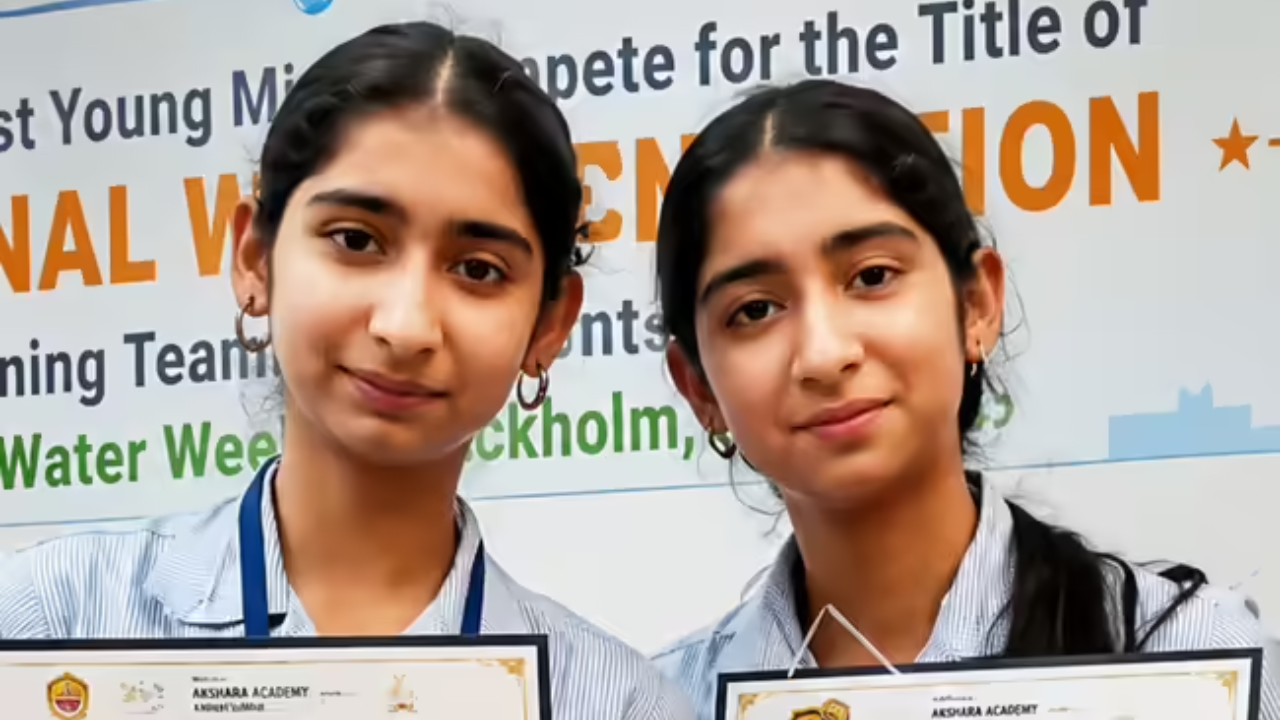
The Class 12 twins developed their water filter after nearly a year of research.
A project built between school and laboratory
Getting the science right was only one part of the challenge. The sisters had to work on their project while keeping up with Class XII studies. At one stage, they were travelling to the laboratory two or three times a week and also used their winter break to continue the research.“When one of us was tied up with academic commitments, the other would keep the project moving,” the sisters said. Their mother, Gopika Kaul, said their curiosity about science had been visible since childhood. “Both of them have always been deeply inclined towards science and are endlessly curious,” she said. “They have always wanted to understand why problems exist and how they can be solved.” That curiosity appears to have shaped the project as much as the laboratory work did.
From school experiment to ‘Water Champions’
The project has already received recognition beyond their school. Last month, Naina and Nayantara were named Water Champions 2026 at the Stockholm Junior Water Prize India competition, a student-focused contest centred on water sustainability. They competed against more than 350 teams and secured third place at the national finals held at IIT Madras.They have also received recognition at the Conrad Challenge, an international entrepreneurship and innovation competition.For the twins, however, the larger idea behind Aqua Sattva appears to be less about winning competitions and more about making water purification accessible.Their experiment began with a question about a problem close to home. It has now grown into an attempt to show that solutions to complex environmental problems do not always have to begin with expensive technology. Sometimes, they can begin with something as ordinary as okra, fenugreek and rice husk- and two school students willing to ask what else those everyday materials might be capable of.
