


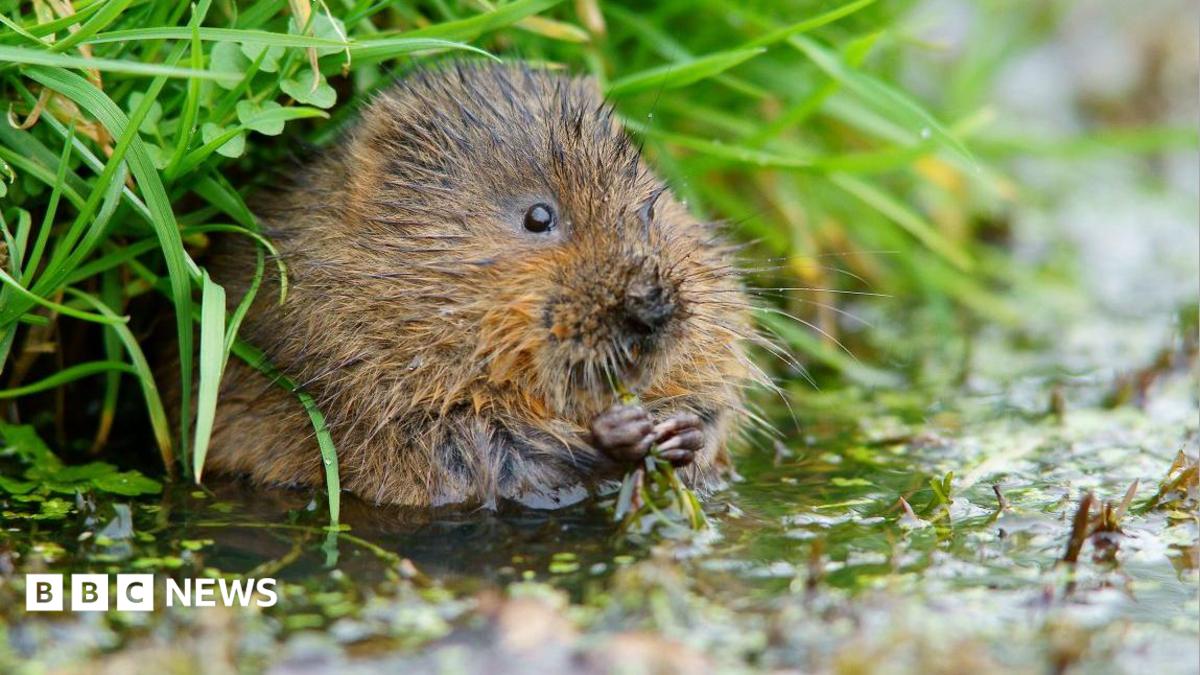
Along with the droppings and camera trap evidence, burrows in the mud bank are also a good indication of the population.
“We’re finding more and more burrows every time we come,” said Trevelyn-Ashby.
At the entrance of a little hole in the muddy river bank she points to a patch of dark brown in the lighter coloured mud.
It is another sign of water vole activity – squashed poo.
This is an “active burrow”, the conservationist said, explaining that the water voles have been “mushing” their droppings.
The rodents have scent glands on their feet and trample on their droppings to mark their territory.
