


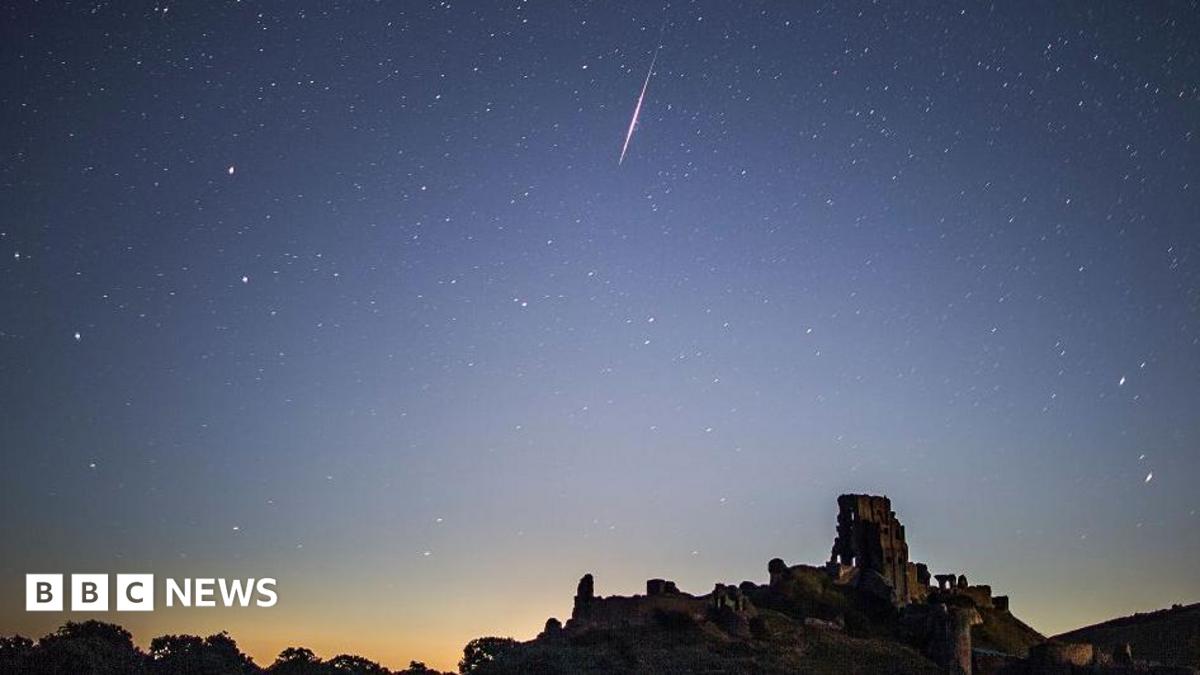
Meteor showers happen when the Earth passes through trails of debris from asteroids or comets – a snowball of frozen rock and gas orbiting the Sun.
As that debris enters our planet’s atmosphere, it burns up and creates spectacular streaks of light – meteors.
Royal Astronomical Society Research Fellow Dr Becky Smethurst described the Perseids as “one of the best nights for astronomy all year”.
The Perseids, pronounced ‘Per-see-ids’, are caused by debris left behind specifically by the Swift-Tuttle comet.
This comet is considered large with its solid core measuring16 miles (26km) across.
As it takes 133 years to complete a single orbit around the Sun – much longer than our own – some of the pieces of rock we see burning up could have been left behind more than a century ago.
“It’s sort of like the Universe’s own cosmic clock in a way,” Smethurst said.
These meteors are visible all around the world and named because they appear to originate from the constellation Perseus.
