



At the end of a school year, textbooks often become yesterday’s material. They are pushed into cupboards, passed on to younger siblings, or sold with other things no longer needed.For another student, however, that same book may be something they cannot easily afford.That contrast is what led Vedika Jain to start thinking about the gap in access to schoolbooks. Now 16 and a Grade 11 student at GD Goenka Public School, Vasant Kunj, she had grown up with easy access to books. As she interacted with students from government schools, she began to understand that the same access was not universal.In 2024, she started Kitaab4u. What began as a small effort to collect and redistribute usable textbooks has since reached more than 6,000 students and involved more than 50 schools and publishers.But the larger issue goes beyond books. Being enrolled in school does not always mean having everything a child needs to participate in the classroom on equal terms.
When the cost of learning adds up
The financial pressure can become more noticeable after Class 8.
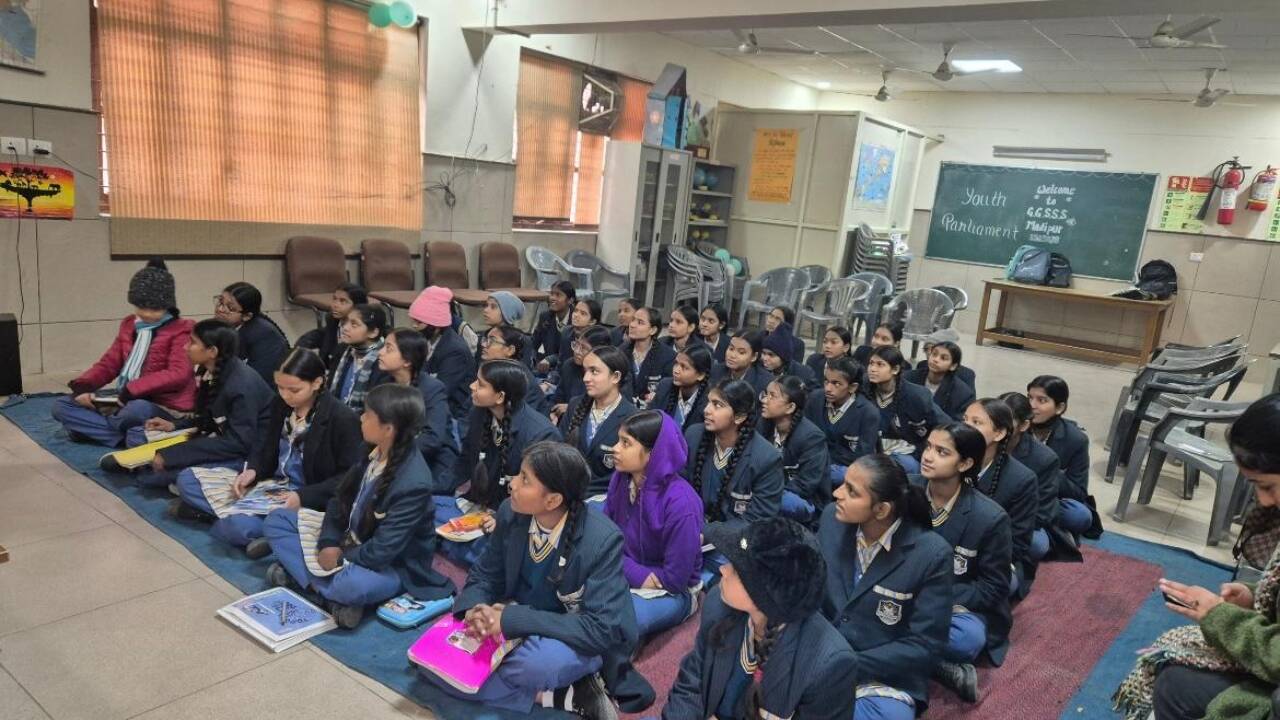
Image credits: Vedika Jain
Government schools generally provide free textbooks up to Class 8, while students in Classes 9 to 12 may have to bear the cost of books. For families already managing several household expenses, buying a complete set can become difficult.The alternatives are often simple compromises: sharing copies, borrowing from others, or managing with incomplete material.None of these necessarily keeps a child out of school. But they can make everyday learning harder.At the same time, usable textbooks from private schools can be left behind once students move to a new academic year.Two very different situations can therefore exist within the same city: books that are no longer needed in one place and students looking for them somewhere else.
The difficult part is making the connection
Giving away an old textbook sounds straightforward until the details are considered.A book has to be relevant to the student’s grade and subject, in usable condition, and available at the right time. Simply collecting large quantities does not guarantee that they will be useful.Kitaab4u gradually developed a process around this. Books are collected through schools and communities, checked, and sorted before being matched with requirements. An online platform also allows students and families to register needs and contribute materials.What began with a small collection among people known to the founder eventually involved schools, publishers, and other educational networks.The work highlighted an often-overlooked part of redistribution: the value lies not just in the surplus but in the system that moves it where it is needed.
One word brought the issue into focus
Among the students who received books, one child described the experience in a way that stayed with the teenager behind the initiative.He said that receiving a complete set made him feel “equal” to the other students in his class.The word captures something that statistics cannot.A missing textbook can mean, depending on a classmate’s copy, being unable to follow a lesson independently or entering the school year feeling different from others. For parents, meanwhile, the expense can be one more thing to worry about in an already stretched household budget.The intervention is small. The effect can be personal.
Education does not end with a textbook
As the initiative developed, its focus began widening.
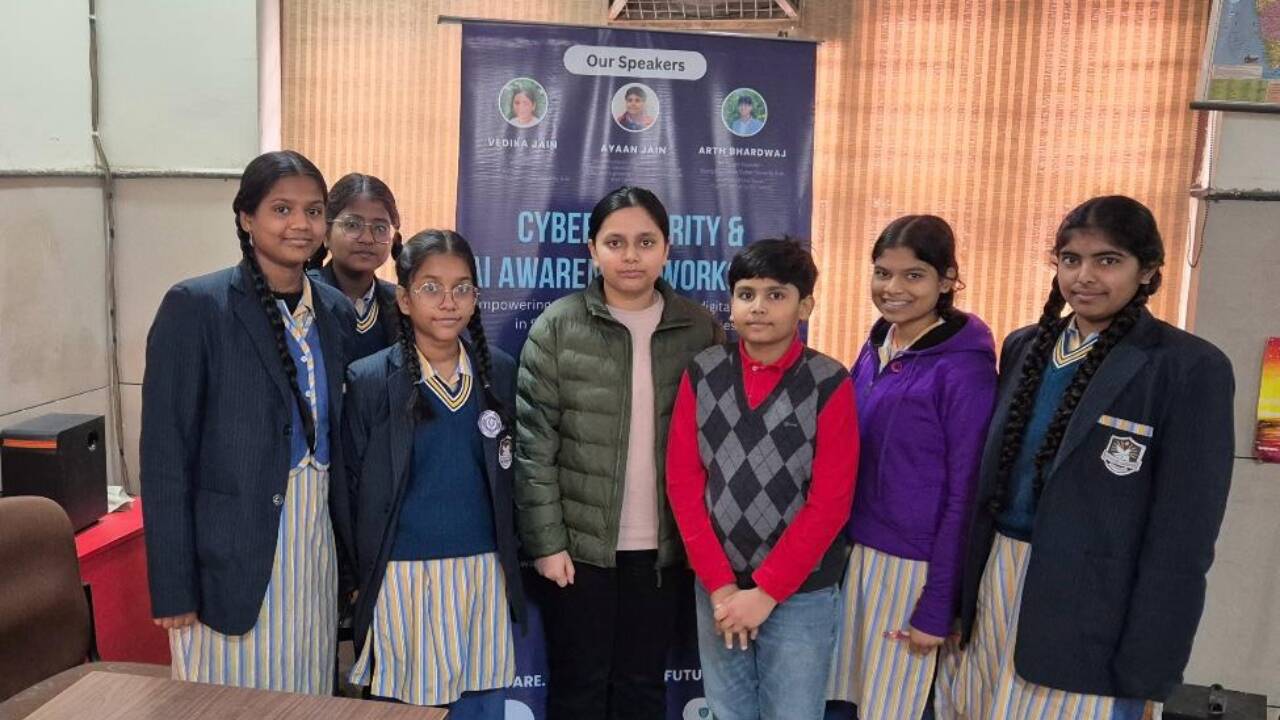
Image credits: Vedika Jain
For children growing up in a digital environment, educational opportunity also involves knowing how to use technology safely, communicate confidently, and encounter areas such as science and technology.Kitaab4u has supported digital-safety awareness sessions in government schools through a collaboration with Young Leaders in Cybersecurity and AI. It is also exploring STEM exposure and personality-development programs.The broader thinking is that educational inequality can appear in different forms. Sometimes the gap is a missing book. Sometimes it is a lack of exposure, information, or confidence.
The founder is still a student
Behind the initiative is a teenager who still has her own school timetable to manage.Vedika is currently in Grade 11, balancing academics with research projects, competitions, and school leadership activities.There have been periods when managing the initiative alongside studies became difficult. Planning, delegation, and support from volunteers have helped keep the workload manageable.Her interests in mathematics, research, technology, and sustainability have also influenced the way she approaches the problem. Rather than viewing social issues through one subject, she is interested in how research, technology, and community participation can work together.The experience has offered a different kind of education too: the routine work of following up, coordinating people, and continuing after the initial excitement has passed.
The bigger test is whether others can carry it forward
A social initiative becomes harder to sustain when everything depends on one person.That is why K4U Corps is being developed as a student-led network, allowing young people to organize collection drives and awareness campaigns within their own schools.The idea is to make the model transferable rather than personality-driven.There are also plans to take the work beyond Delhi, including to tier-2 cities where similar gaps in access to senior-school learning material may exist.
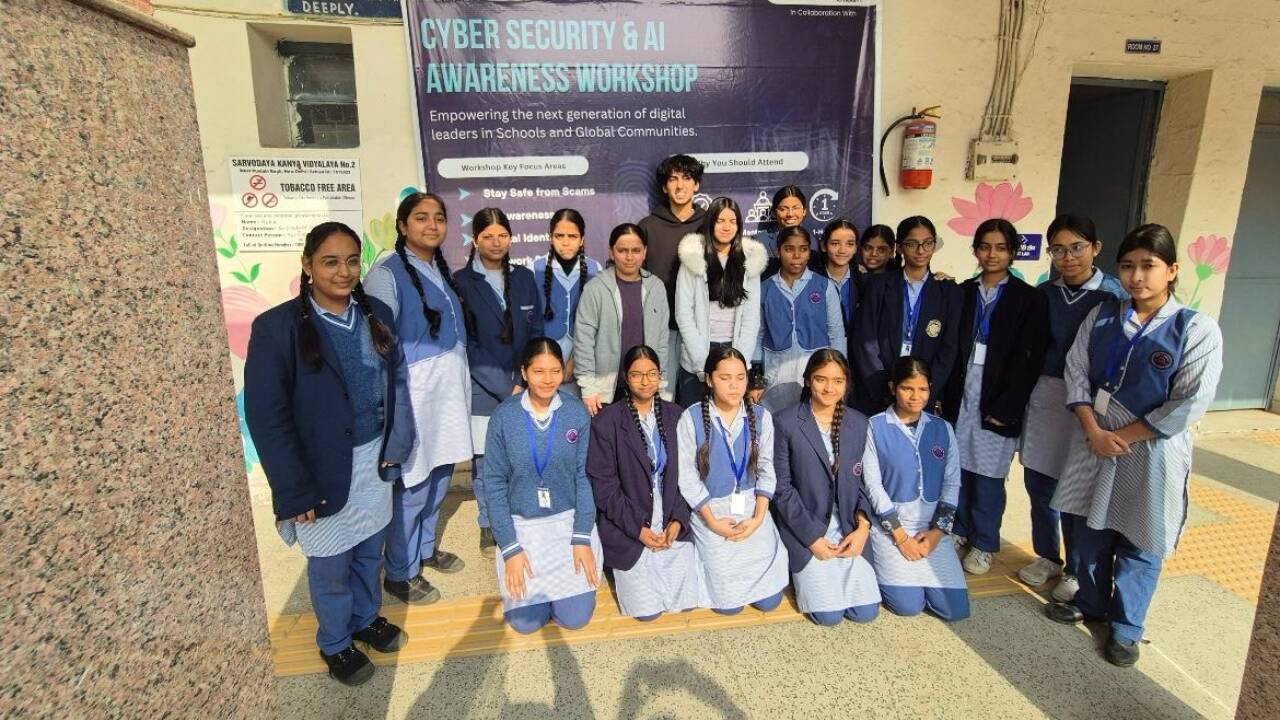
Image credits: Vedika Jain
If that happens, the real measure of growth will not simply be the number of books collected. It will be whether communities can recognize their own surplus, identify local needs, and create a functioning link between the two.
What an old book can tell us
A discarded textbook rarely looks like a social issue.It is simply an object that has outlived its usefulness to one student.But that usefulness is relative. What one household considers finished may still be essential to another.The story behind Kitaab4u began with that simple mismatch. It raises a larger question about how communities use the resources they already have and how easily small financial barriers can become part of a child’s educational experience.For a young person who noticed the disconnect, the answer was not to wait for a larger institution to solve it.It was to test whether something small could work.Sometimes, that is where a larger conversation begins.Disclaimer: This article is based on interview responses shared with The Times of India by Vedika Jain. Figures and details have been presented as provided and have not been independently verified.
