


The debate over the best course for interest rates continued to swirl heading into Wednesday’s rate-setting vote at the Federal Reserve in Washington.
While parts of the U.S. economy are relatively stable, like the labor market, experts say this stability could be undermined by the potential inflationary impacts of a longer Iran war or the Trump administration’s latest tariff push.
Interest rate traders believe the Federal Open Market Committee will keep its Fed Funds Rate, which sets many other borrowing rates throughout the economy, at its current level of about 3.6%, where it has been since December.
While the consensus is for a rate hold, there is an outside possibility that the vote could result in the FOMC recommending a rate hike.
For many consumers and smaller businesses, current interest rates have already pushed the cost of borrowing money increasingly out of reach. This has cut into sales of items like autos and industrial equipment, which are typically financed.
At the same time, the inflation rate has hovered above the Fed’s 2% target for more than five years, a phenomenon that has exacerbated an ongoing affordability crisis. And while some recent inflation indicators have begun showing declines, the pace of rising prices for energy and wholesale items has remained elevated.
“Every month of above-target inflation has compounded the strain on Americans’ budgets,” Dallas Federal Reserve President Lorie Logan said in remarks earlier this month, calling for rates to be “modestly” higher.
The Fed has historically raised rates to curb overall economic activity and rein in inflation. With inflation stubbornly high, many market participants have called for higher rates that would put downward pressure on the pace of price increases.
Among interest rate traders, there is a broad consensus that the Fed will raise rates before the end of the year. According to CME FedWatch, Fed Funds futures contracts point to a 90% probability that rates will be at least 0.25% higher by January.
There is another question hanging over the central bank’s rate-setting meeting this week: How much of an impact would raising interest rates actually have on prices?
Currently, there are several reasons why inflation could potentially be less sensitive to higher interest rates than it has in the past.
High energy prices sparked by the war with Iran, for example, and Trump administration tariff policies are both helping to keep prices elevated for consumers. But experts say higher rates would do little to blunt these kinds of geopolitical forces.
“Hiking [interest rates] doesn’t open up the Strait of Hormuz or end the war,” said Adam Turnquist, chief technical strategist at the asset management group LPL Financial.
The opinions of the Fed’s leaders as to what lies ahead for the U.S. economy will likely also be more of a black box this week than they have been in recent years.
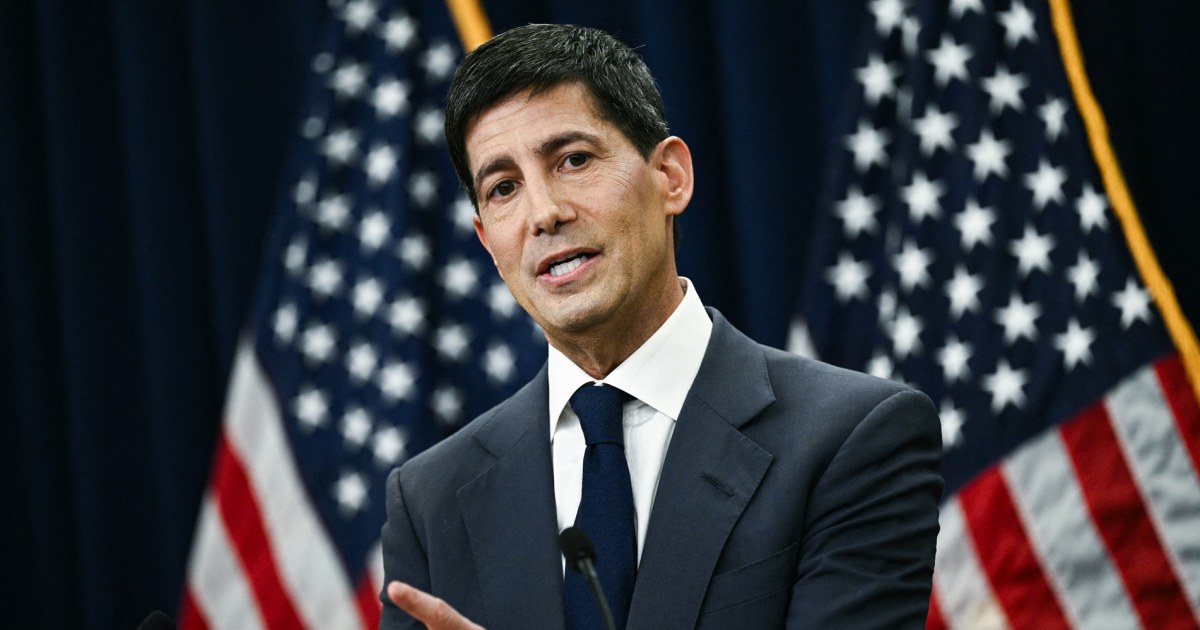
Federal Reserve Chairman Kevin Warsh, who took the reins of the central bank from Jerome Powell in May, has made it a hallmark of his tenure not to tip the Fed’s thinking about the path of monetary policy — much to the frustration of some market participants.
“Chair Warsh’s communication void has encouraged other policymakers to speak more forcefully,” said Greg Daco, chief economist at EY-Parthenon, Ernst & Young LLP.
Among those who speak up, the message has been consistent, Daco wrote in a note: Inflation remains too high and rates must increase.
“After months of upside inflation surprises, patience is wearing thin,” wrote Daco. “If inflation does not soon move back toward 2%, and remains elevated because of persistent supply shocks, stronger AI-related demand, tariffs, or the Middle East conflict, the case for additional policy firming will be clear.”
Other experts are more optimistic that inflation has peaked and the Fed can afford to keep rates at current levels.
“Housing-related inflation continues to cool, and wage growth—the largest input cost in services — is not inflationary when adjusted for productivity gains,” Angelo Kourkafas, a senior investment strategist at Edward Jones, wrote in a recent client note.
“Moreover, the new tariffs announced are broadly consistent with the previous tariff levels that expired and should not trigger a renewed rise in goods prices,” he added.
President Donald Trump’s latest tariffs — a blanket rate of between 10% and 12.5% on dozens of U.S. trade partners — represent a continuation of his protectionist trade policies.
But they also introduce fresh uncertainty into many of America’s most vital economic relationships. Several of the targeted trade partners say the U.S. rationale for this round of import duties — an effort to combat forced labor — amounts to a false pretense.
Within days of their announcement, the latest tariffs were challenged in federal trade court, effectively throwing them into legal limbo even as importers prepare to start paying them.
Some experts believe the tariffs are unlikely to survive a legal challenge, adding yet another layer of uncertainty to the economic outlook.
