


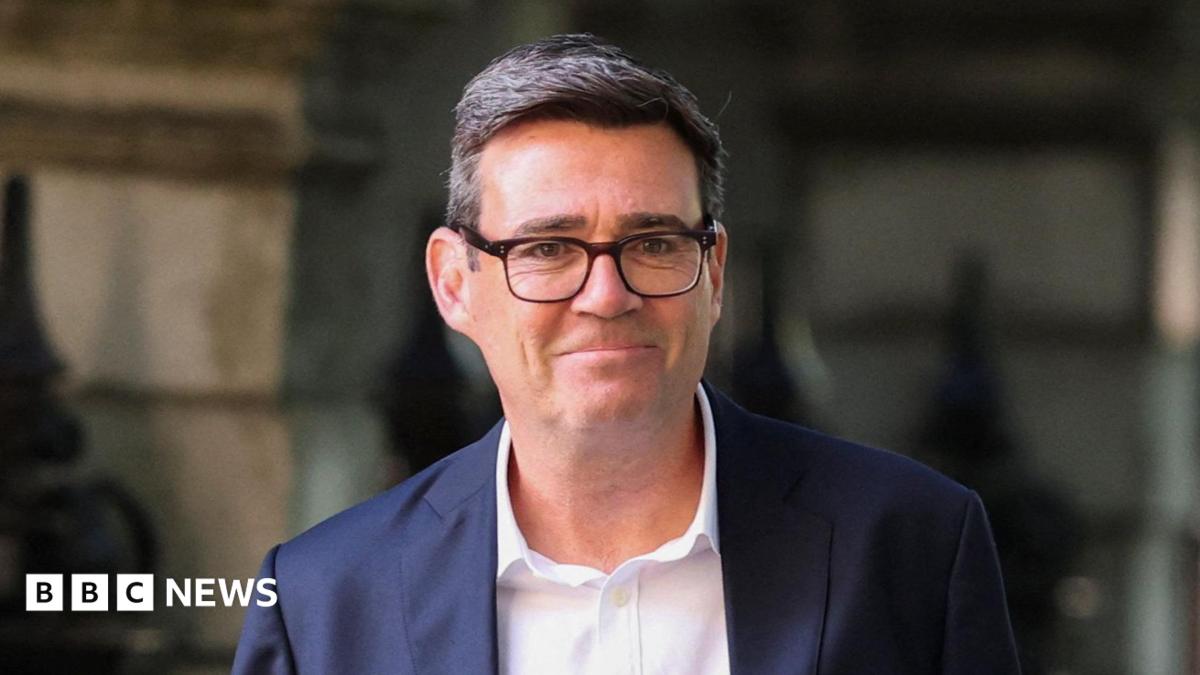
Andy Burnham – who is set to take over as prime minister later this month – has said there is “some room” for movement on tax.
In an interview with LBC, Burnham suggested business rates on warehouses could be increased to fund tax cuts for pubs and some high-street businesses.
But the newly elected Makerfield MP said he would stick to the pledges Labour made not to raise VAT, income tax or national insurance in its general election manifesto in 2024.
He also defended his credibility on economic policy, insisting he would not be “indisciplined” with the public finances if he becomes PM.
Some on the left of the Labour Party have called for borrowing rules to be relaxed to fund more public spending.
Burnham has faced criticism in the past for arguing, external that the UK had “got to get beyond this thing of being in hock to the bond markets”, which governments use to borrow money to fund government spending.
Speaking to LBC presenter Andrew Marr, Burnham said the finances in Greater Manchester had been “rock solid” when he was mayor – and pointed to his previous experience as a Treasury minister in the last Labour government.
“I stick by the manifesto and the promises that it made,” Burnham said.
“So, let me be absolutely clear about that, but there is some room within that manifesto for movement on tax.”
The pledge to help on business rates was made last month during his successful by-election campaign to become the MP for Makerfield.
Burnham said pubs, clubs and music venues would receive a 20% cut, while smaller, independent hospitality, leisure and retail companies would have the threshold for paying business rates raised for the first time since 2017.
The cuts would be paid for by higher levies on giant warehouses operated by online firms such as Amazon, and targeting the owners of empty high street properties.
The LBC appearance was his first media interview since announcing his bid to become prime minister.
Burnham remains the only candidate in the process to replace Sir Keir Starmer as Labour leader and is expected to take over as prime minister on 20 July.
One of the biggest items in his in-tray will be the issue of how to fund an increase in defence spending.
Sir Keir announced plans this week for a £15bn increase – but did not spell out in full where the extra money was coming from.
It means whoever Burnham chooses to replace Rachel Reeves as chancellor will have to find at least £4.7bn in savings from other departments when they deliver their first Budget in the autumn.
On Wednesday, Conservative leader Kemi Badenoch accused Sir Keir of “leaving this mess to his successor” and asked if Burnham had agreed to fund the shortfall.
Asked by Marr on LBC whether he was aware of the funding gap before the defence investment plan was published, Burnham said: “I wasn’t in all of the discussions, but to be fair, the government had had an internal process ongoing.
“I regard it as something that the country has to face up to very seriously.
“We’re in a changing world. The nature of the threat is changing.
“What I can say to you tonight is I will take my responsibilities fully to fund the defence investment plan, if I am in the position to do so, I will take those responsibilities extremely seriously.”
On welfare, Burnham said he would not make “crude cuts to benefit levels that just put people who are struggling in even worse poverty”.
He said he would try to reduce the benefits bill by changing the education system to ensure better support for young people pursuing technical qualifications and providing work placements for 16 year olds.
He also said he wanted to see mental health support provided for those in work.
In his interview Burnham also said:
-
He hadn’t made a decision on who would be his chancellor, amid speculation he could appointed Ed Miliband to the role
-
It was too early to commit to a bank holiday if England were to win the football World Cup
-
He hoped his No 10 North office, announced on Monday, would be based at a proposed government digital campus near to Manchester Piccadilly Station
