


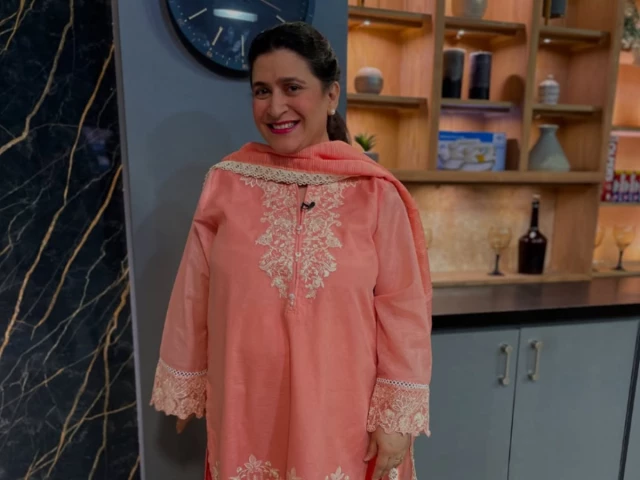
Celebrity chef speaks about Pakistan’s shrinking Parsi community as younger generations increasingly migrate abroad
For years, Chef Zarnak Sidhwa has been a familiar presence in Pakistani households, earning a loyal following through her cooking shows and her reputation as the country’s beloved “dessert queen.”
Beyond her culinary career, however, Sidhwa is also one of the few remaining members of Pakistan’s small Zoroastrian, or Parsi, community—a community striving to preserve its centuries-old traditions amid a steady decline in numbers.
In a recent feature by DW, Sidhwa and other prominent members of the community reflected on the challenges of safeguarding their heritage as younger generations increasingly leave Pakistan in search of opportunities abroad.
The Parsis are descendants of Zoroastrians who migrated from Persia to South Asia centuries ago. While the overwhelming majority settled in present-day India, a smaller community established roots in Pakistan, particularly in Karachi. At the time of Pakistan’s independence in 1947, an estimated 5,000 Parsis lived in the country. According to the 2023 census, that figure has fallen to just 2,348.
Reflecting on the changes she has witnessed over the years, Sidhwa recalled a much larger and more active community during her childhood. “When I was growing up, there was a very big community in Karachi,” she said. “We used to have many festivals. But now, the community has dwindled a lot. Half of the community has migrated, and the other half is very old.”
As the population has shrunk, many community organisations have been forced to close, leaving only a handful of spaces where members can gather and maintain cultural ties. Much of the decline has been driven by migration, particularly among younger Parsis seeking greater economic opportunities and stability abroad.
For families such as the Avaris, who have lived in Karachi for more than a century, the departure of younger generations is both painful and understandable. Businessman Dinshaw Avari noted that many young Parsis are relocating to countries including Australia, Canada, the United Kingdom and the United States.
“They feel the grass is greener on the other side,” Avari said. “Life for them, they feel, is better. There is more freedom, and they believe they can earn more, grow professionally and find greater stability.”
Against a backdrop of economic uncertainty and political challenges, many young people are looking for stronger career prospects, dual citizenship opportunities and long-term security overseas.
Yet despite their shrinking numbers, Karachi’s Parsi community remains determined to preserve its cultural identity. Community members continue to gather for important religious and cultural celebrations, keeping traditions alive through collective participation and shared experiences. “We are preserving as much as we can,” Sidhwa said.
Among the most cherished traditions is Navroz, the Persian New Year, which the community celebrates twice annually. Parsis also continue to host Gahambars, traditional seasonal festivals that bring families and friends together for communal meals, reinforcing bonds of culture, faith and belonging.
For many, these gatherings serve as a reminder that heritage is sustained not only through numbers but through active participation and collective memory.
