


The appeal of a well-crafted thriller novel lies in its ability to pull readers into a tightly woven world of suspense, flawed characters and escalating tension, where every page turn carries the promise of another twist.
That same intensity has increasingly found a second life on screen, as filmmakers and showrunners adapt bestselling books into films and series designed to recreate that relentless sense of unease and discovery.
Across genres ranging from political scandal and espionage to psychological horror and murder mysteries, these adaptations have reshaped how audiences experience modern thrillers, translating written suspense into visual storytelling that aims to keep viewers on edge until the final reveal.
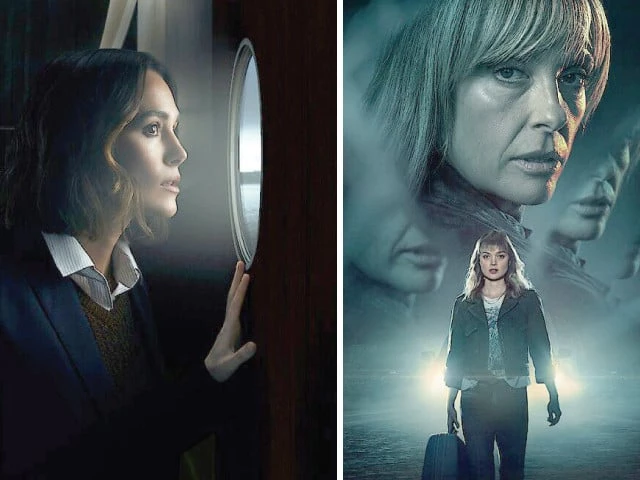
One such adaptation is ‘Anatomy of a Scandal’, a six-part psychological drama based on Sarah Vaughan’s novel. The series explores the collapse of privilege and reputation within Britain’s political elite, centring on a parliamentarian whose career unravels after a damaging secret emerges, while those around him are drawn into competing narratives of truth and loyalty.
In a different tonal direction, ‘Bird Box’, adapted from Josh Malerman’s novel, presents a post-apocalyptic world where an unseen force drives people to self-destruction. Sandra Bullock leads the story as a mother attempting to survive by shielding herself and her children from the threat, turning everyday survival into a constant exercise in restraint and fear.
Espionage and action take centre stage in ‘The Gray Man’, based on Mark Greaney’s book series, where a former CIA operative becomes the target of a global manhunt after uncovering classified agency secrets. The film pits Ryan Gosling’s fugitive agent against a relentless assassin, played by Chris Evans, in a high-stakes pursuit across multiple countries.
Crime and psychological tension drive ‘Dept. Q’, a British series adapted from Jussi Adler-Olsen’s novels, which follows a troubled detective reassigned to cold cases after a traumatic shooting incident. Working alongside an unconventional team, he confronts unresolved crimes while navigating his own emotional scars.
Similarly, ‘Fool Me Once’, based on a novel by Harlan Coben, centres on a woman who believes she has witnessed her supposedly dead husband alive on a hidden camera, pulling her into a web of deception and buried family secrets.
The theme of unreliable perception continues in ‘The Woman in the Window’, adapted from AJ Finn’s bestseller, in which a reclusive woman confined by agoraphobia believes she has witnessed a violent crime in a neighbouring home, only to question whether her own mind can be trusted.
Domestic suspense is also explored in ‘The Perfect Couple’, where a lavish wedding in an affluent family is disrupted by a sudden death, turning a celebration into a locked-room style mystery in which nearly every guest becomes a suspect.
In ‘Leave the World Behind’, based on Rumaan Alam’s novel, a family getaway spirals into unease when a blackout and unexplained events isolate two families in a remote house, forcing them to confront uncertainty without clarity or communication.
Identity and deception are central to ‘RIPLEY’, adapted from Patricia Highsmith’s classic, which follows a small-time con artist who becomes entangled in a wealthy lifestyle in Italy, gradually reshaping his moral boundaries in pursuit of a life he was never meant to have.
Other adaptations such as ‘The Night Agent’ and ‘PIECES OF HER’ expand the genre further into political conspiracy and buried personal histories, each using suspense as a tool to gradually reveal hidden truths beneath ordinary lives.
Together, these films and series demonstrate how thriller literature continues to shape contemporary screen storytelling. While each adaptation interprets its source material differently, they share a common goal: to recreate the immersive tension of the page, where every answer leads to another question and nothing is ever as straightforward as it seems.
