


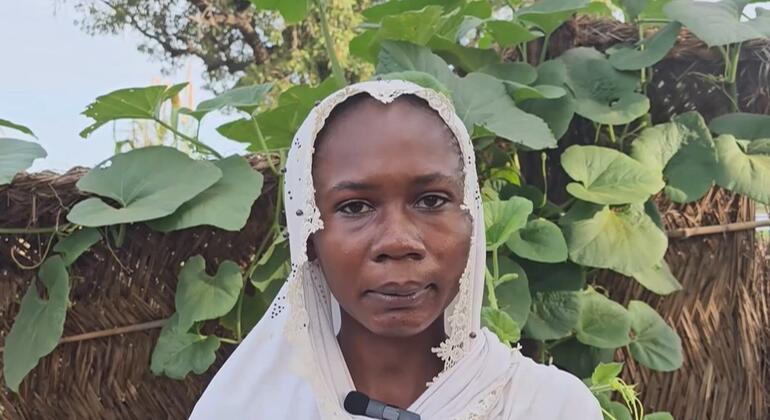
IOM Deputy Director General Sung Ah Lee said that returns were concentrated mainly in the capital Khartoum and neighbouring Al Jazirah state, where she was speaking to reporters.
“I was in Khartoum yesterday and I saw large numbers of people are returning to areas where homes and critical infrastructure including water, health, electricity, have been heavily damaged,” she said.
Running out of options
Going home despite the harsh reality there reflects the determination of the displaced and the difficult circumstances pushing them to return, Ms. Lee explained.
IOM indicates that more than two million additional people are expected to return to Khartoum alone in 2026.
“Many are returning because they believe security has improved,” she said, while for others, life in displacement has become unbearable, notably owing to economic pressures and increasingly hard conditions in neighbouring countries.
According to IOM, at the height of the conflict between the Sudanese Armed Forces (SAF) and the paramilitary Rapid Support Forces (RSF) which erupted on 15 April 2023, nearly 12 million people fled heavily affected areas, particularly Al Jazirah, Khartoum and parts of Sennar and Kordofan. More than 4.5 million crossed into neighbouring countries, first and foremost Egypt, South Sudan and Chad.
Today, almost nine million remain internally displaced.
“Host communities across the eastern and northern Sudan… Kassala, Gedaref, Red Sea, Northern and River Nile states, have carried much of this burden, welcoming displaced families while already facing economic hardship and climate-related pressures,” Ms. Lee stressed.
“This has stretched the available infrastructure almost to the limit.”
Slim chances of survival
While in Khartoum rising returns have placed additional strain on war-damaged urban infrastructure, in Al Jazirah, a major agricultural region, returnees are finding levels of destruction that may jeopardize their chances of growing anything to survive.
“Farmers are returning to fields where irrigation systems and equipment have been damaged,” Ms. Lee said, “threatening livelihoods and food production at a critical moment for the country”.
While the humanitarian response remains severely underfunded, “without urgent investment to restore essential services and rebuild infrastructure and revive livelihoods, safe and sustainable returns are at serious risk,” she concluded.
Ceasefire hopes dashed
Despite repeated diplomatic efforts to achieve a ceasefire, the war between the SAF and RSF has continued unabated since April 2023, becoming the world’s largest displacement and protection crisis.
The conflict has been marked by severe violence and widespread human rights violations against civilians, including sexual violence, torture, arbitrary killings, extortion and the targeting of specific ethnic groups.
The resulting humanitarian crisis has impacted the country and wider region.
And as the Sudan conflict enters its fourth year, the UN refugee agency, UNHCR, warned that both the scale and complexity of the crisis are intensifying.
The agency has continued to witness large internal and cross-border displacement as well as secondary or repeated movements driven by insecurity but also owing to gaps in services in neighbouring countries, with clinics closing, nutrition programmes suspended and protection services cut.
