


Three-month waiver on bank guarantees, credit letters covers rice, seafood, pharmaceuticals among other commodities
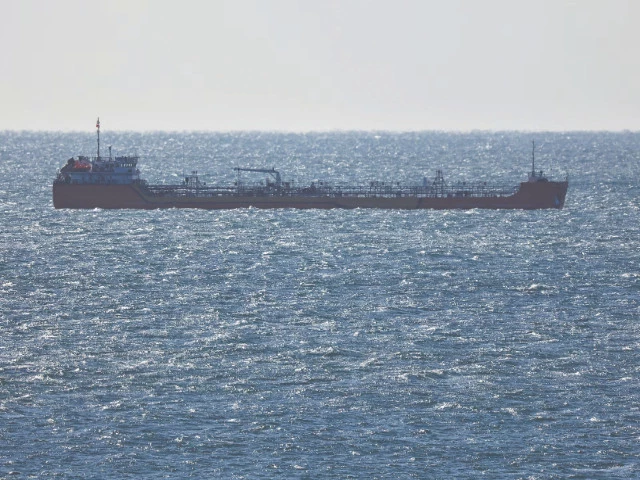
Increased sourcing from the US reduces reliance on the Strait of Hormuz — a narrow maritime corridor through which a substantial proportion of global oil trade passes and which remains vulnerable to geopolitical tensions. Photo: Reuters
ISLAMABAD:
The Ministry of Commerce has approved a temporary exemption from financial instruments, including bank guarantees and letters of credit, for exports to Iran, the Central Asian Republics and Azerbaijan via Iran’s land route, it emerged on Saturday.
The development arose from a March 24 notification by the Ministry of Commerce received by The Express Tribune.
The exemption, issued under the Import and Export Control Act 1950, waived the requirement under Paragraph 3 of the Export Policy Order 2022, which mandates that all exports from Pakistan be made in compliance with Foreign Exchange Rules, regulations, and procedures notified by the State Bank of Pakistan (SBP).
The concession will remain effective for three months, from March 24 to June 21. The ministry stated that the federal government had taken the step to facilitate exporters and enhance regional trade.
Read: Local exports hit by ‘triple threat’
Under the exemption, rice may be exported to the Central Asian Republics and Azerbaijan through Iran’s land route. Exports of the following commodities to Iran via land route were also permitted: rice (milled), seafood, potatoes, meat, onions, maize, citrus, banana, tomato, frozen chicken, pharmaceuticals and tents.
However, the exemption from financial instruments, according to the notification, would be subject to the submission of an undertaking by the exporter that the export proceeds would be submitted within the stipulated time period.
Commerce Minister Jam Kamal Khan said Pakistan would now be able to export rice to Central Asia and Azerbaijan via Iran, adding that removing barriers to pharmaceutical exports was the government’s top priority.
He added that trade through Iran would significantly reduce exporters’ costs and time, and that increasing exports would steer the country towards economic stability.
Read More: Attack on Iran jolts Pakistan’s economy
The Ministry of Commerce said it was utilising all resources to enhance regional connectivity and increase trade volume, adding that the measure would strengthen trade links in the region.
A week ago, Pakistan’s Ambassador to Iran, Mudassir Tipu, said bilateral and transit trade between the two countries remained operational despite ongoing regional tensions.
The envoy expressed gratitude to the Iranian government for extending “full facilitation” to Pakistan’s trade, including transit trade through Iran during “challenging times”.
He added that land border crossings between Pakistan and Iran were functioning “optimally”, with green channels at multiple routes ensuring swift movement of goods on both sides. Further, Tipu said that Pakistan was extending maximum cooperation to Tehran to ensure trade flows remain unaffected by the evolving situation.
