


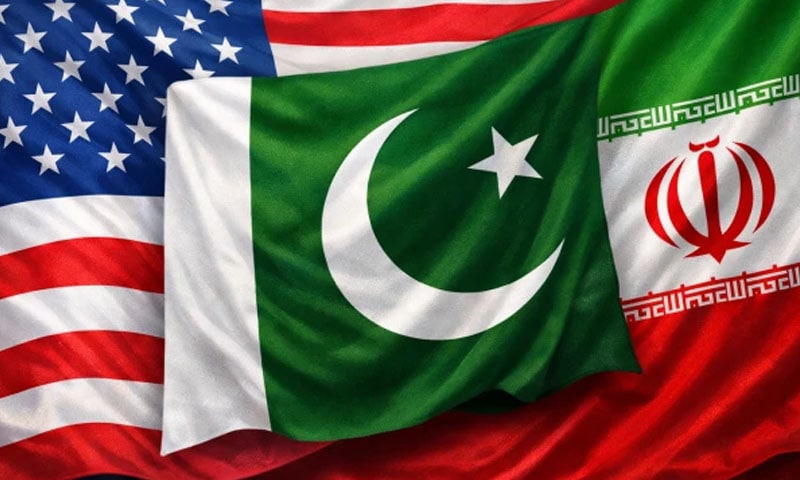
Is Pakistan currently attempting a complicated balancing act in the Middle East? This is the analytical question that is repeatedly surfacing in prominent international newsrooms and diplomatic circles today. However, as someone who closely studies our shifting geopolitical architecture from Islamabad, I can assert that this particular premise is completely misguided. Pakistan is certainly not trying to carefully balance its intricate relations between Iran and Saudi Arabia. Let me be unequivocally clear: our overarching strategic partnership with the Saudi Kingdom was, and will forever remain, thoroughly ironclad. What Pakistan is genuinely executing right now is a far more monumental diplomatic undertaking. We are moving assertively into the position of a global kingmaker, utilising all our national leverage to ensure this disastrous infighting among brotherly Muslim nations finally comes to an end.
However, if Iranian leadership continues to operate under the bizarre notion that they can successfully combat Israel by actively transforming Saudi Arabia into a chaotic battlefield, then someone must highlight exactly how flawed this strategic logic truly is. That specific perspective is deeply mistaken. It is profoundly self-defeating at best, and overwhelmingly anchored by rampant conspiracy theories at worst.
I must pose a series of vital questions here. Why explicitly force an unwanted war upon a neighbouring country that steadfastly refuses to deploy any aggressive tactical toolkit against you, even after enduring four agonising weeks of persistent drone and missile strikes launched against its critical public infrastructure? Why repeatedly and casually discard the profoundly wise, deeply sincere advice delivered by close friends like Pakistan? We have consistently begged you not to tragically expand this growing war into the Kingdom. Saudi Arabia serves as an emotional extension for every individual Pakistani simply because it rightfully holds the absolute sanctity of the two holy places. And crucially, why willingly accomplish the precise geopolitical bidding of Israel? Transforming the complex conflict involving Iran, the United States, and Israeli entities into an utterly bloody Muslim-against-Muslim proxy war gives Tel Aviv exactly what it desires. Confronted directly by such deliberate regional provocation, our choice within Islamabad becomes abundantly clear. We will unequivocally stand by what is right and profoundly just.
This absolute adherence to diplomacy has thrust Pakistan into the role of a sudden regional mediator. Witness the staggering momentum surrounding the impending talks between Washington and Tehran. This Monday, when President Donald Trump opted to point out that he had pointedly postponed his heavily threatened military strikes on critical Iranian power plants and energy grids for a duration of five crucial days, insiders noted exactly who orchestrated that exact breathing room. Working closely with Turkey and Egypt, Pakistani officials effectively utilised extensive diplomatic networks to decisively de-escalate the situation. Unnamed domestic officials rightfully confirm to premier global publications like Nikkei Asia that we are doing significantly more than simply participating. Pakistan sits absolutely central to these newly proposed talks. In fact, Islamabad is widely favoured to host these truly historic diplomatic negotiations.
Critics might occasionally wonder why exactly Pakistan feels uniquely compelled to initiate such a daunting mediating role. In reality, stepping up to the mantle of a supreme peacekeeper is a direct act of profound sovereign preservation. Our policymakers inherently understand that a protracted conflict could realistically pull our very own borders directly into the flames. Consider that last September, Pakistan and Saudi Arabia formally established a monumental defence pact, which unambiguously stated that an act of direct aggression targeting one party shall unconditionally be interpreted as raw aggression toward both. As scholars like Zahid Shahab, researching at Deakin University, thoughtfully warn, any sudden deterioration in Middle Eastern security would realistically call upon Pakistan to provide structural support to Saudi national defence. Preventing such a dire escalation through very early diplomatic mediation essentially remains incredibly critical for us.
Fortunately, Pakistan genuinely holds the diplomatic currency required to assume this formidable mediator role. Foreign affairs experts quickly highlight how Field Marshal Asim Munir confidently secured the trust of the incoming Trump administration, quickly building strong professional relationships with elite figures like American envoy Steve Witkoff. Simultaneously, Pakistan naturally commands absolute respect inside Tehran. We have comprehensively demonstrated our absolute regional loyalty through immense diplomatic and structural political support for Iran during the localised friction seen last June and have consistently maintained it throughout this ongoing security crisis.
This success builds directly upon our well-recognised institutional muscle memory. Seasoned geopolitical observers accurately conclude that Pakistan historically accumulated invaluable expertise in repeatedly managing massive strategic tensions by deploying calculated, limited escalation alongside extraordinarily controlled behavioural responses. There is immense creative space strictly waiting for Pakistan to seamlessly import that very same diplomatic blueprint directly into the current Persian Gulf quagmire. Ultimately, successfully navigating regional normalisation dramatically solidifies Pakistan’s global standing, putting it on the charts as a trending diplomatic powerhouse.
This successfully propels our overall reputation to a remarkably higher level than that of historic geopolitical rivals like India. In fact, “Pakistan has outsmarted us” are the very words Indians are increasingly saying. Dismayed voices in India publicly acknowledge that this is a colossal diplomatic win for Pakistan and that Prime Minister Modi has lost everything on the international stage. India’s opposition Congress party has explicitly pointed out that Modi has an extremely weak foreign policy. Further proving New Delhi’s irrelevance in the region, Iran pointedly did not thank the Indian government—though it did express gratitude to the people of India for standing by them when the US and Israel were attacking them. Meanwhile, Pakistan’s success subsequently unlocks highly beneficial financial windfalls, permanently generating entirely unprecedented prospects regarding massive mutual trade routes with an Iranian economy severely starved by enduring American economic sanctions.
Pessimistic domestic observers often eagerly complain about our recently worsened Taliban borderland dynamic as a method of dismissing this exact foreign policy triumph. Beginning roughly in October and severely worsening during fresh episodes of unprovoked militant artillery shelling late in February, we truly encountered grim local security realities directly out of Kabul. But actively blending together Afghan militant boundary struggles with colossal Iranian diplomatic manoeuvring displays profoundly terrible analysis. Any leading internal observer correctly stresses how profoundly distinct those completely unrelated crises honestly remain. With Afghanistan, we combat deeply entrenched legacy border violence, holding distinctly inferior stakes and completely alternate historical roots.
Handling massive power brokers requires exquisite strategic brilliance. Islamabad transcends mere reaction; Pakistan is instead commanding immense peace among global rivals, decisively proving itself the unmatched kingmaker our troubled continent so desperately needs.
