


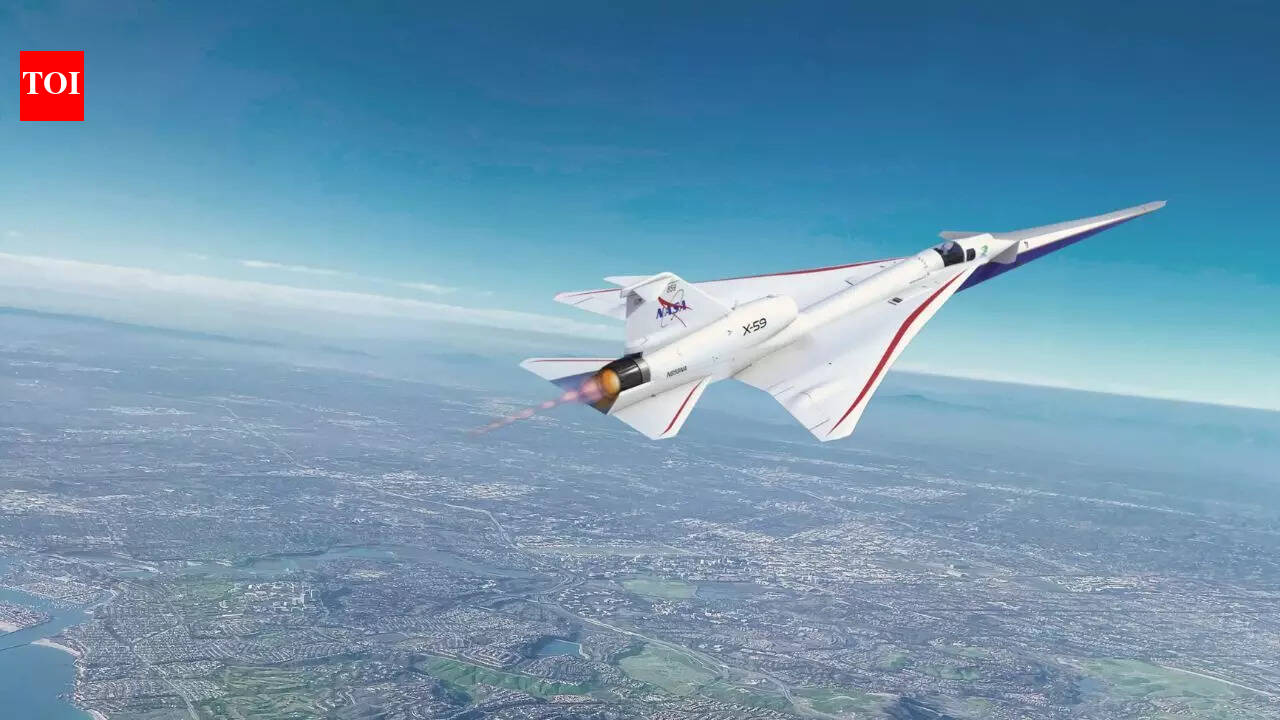
Lockheed Martin designed NASA’s Quesst mission. An experimental aircraft called X-59 is being tested as a significant part of this mission. It will attempt to fly at a speed of Mach 1.4 (approximately 925 miles per hour) and create a much quieter sonic thump rather than the normal loud sonic boom that shakes windows all around the world every time it flies over land. NASA intends to provide evidence to regulatory agencies such as the FAA and revolutionise the regulations against flying over land with a supersonic aircraft all over the world, which will, in turn, greatly reduce the amount of time required to travel from one location to another across the world. NASA has asked for community feedback about the perceived noise created by the X-59 in its flight to help collect data for regulation change; they will also be holding a media briefing on March 19, 2026, to outline their plans to expand the flight envelope of the X-59 after completing its first flight at Edwards Air Force Base on October 28, 2026.
NASA’s X-59 shows how supersonic planes can fly without noise
The X-59’s main goal is to show that the existing loud and disruptive sonic boom can be changed into a ‘quiet sonic thump’ using an entirely different approach. When conventional supersonic aircraft fly at speeds exceeding Mach 1 (the speed of sound), they create multiple shockwaves, which eventually create overlapping shockwaves when they reach the ground; this causes the loud sound of the sonic boom to be heard as either one or two distinct sounds.The long and thin 99.7-foot-long (30.5 metres) shape of the X-59 aircraft and its specially designed nose (which has a tapered shape that reduces the chance of shockwave merging) enables the plane to produce an acoustic signature with a ‘quiet sonic thump.’ These details will help NASA meet their objective of providing data to regulatory agencies to lift the current ban on supersonic aircraft flying over land.
NASA to test X-59 at various speeds to ensure safe supersonic flight
After completing its first test flight, NASA is now ready to begin testing data collection at the conclusion of the successful initial three-month flight program. NASA will complete ‘envelope expansion testing’ in March 2026. During the envelope expansion testing phase, the X-59 will be flown at various speeds and altitudes so that NASA test pilots and engineers will determine if the aircraft is structurally sound and operationally safe at Mach 1.4 flight speed. Once envelope expansion tests have been completed, it will be possible for NASA to define and determine the number of community overflight tests to ensure that the public understands and perceives the sound from the X-59 when it flies over the selected cities.
How to watch the NASA X-59 media briefing live
NASA will host an international media teleconference on March 19, 2026, at 5:30 p.m. EDT, via their official digital platforms. People can watch it live on NASA+, the NASA app, and their website. It’s also streamed on YouTube and X (formerly Twitter). Even though the purpose of this teleconference is to provide media access for questions and answers, anyone who is interested in sonic technologies can listen in to learn.
