


NEWYou can now listen to Fox News articles!
A Los Angeles mother of three says she’s lucky to be alive after an uncommon procedure left her cancer-free.
Amy Piccioli, a busy CPA, was just 39 when she visited the ER last year for what she thought was dehydration due to a stomach bug.
Instead, a CT scan revealed a mass in her colon and multiple lesions in her liver, which led to a colorectal cancer diagnosis — despite having “zero signs.”
WOMAN’S ALARMING CANCER SYMPTOMS BLAMED ON PREGNANCY FOR YEARS BEFORE STAGE 3 DIAGNOSIS
“I had no symptoms,” Piccioli told Fox News Digital. “I’m one of those people who’s very diligent about my health and very cognizant about changes in my body. So for this to have happened without any signs or symptoms was just shocking to me.”
Because the cancer had already spread, it was automatically a stage 4 diagnosis.
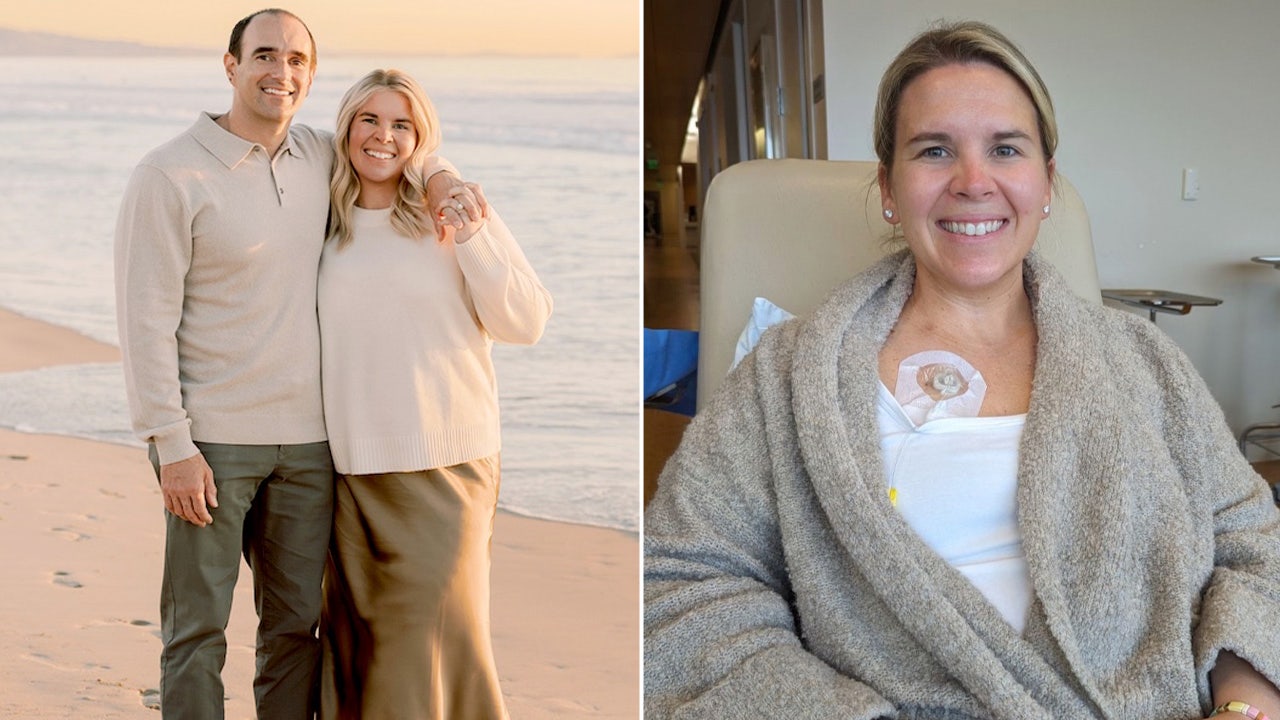
Amy Piccioli, a Los Angeles mother of three, says she’s lucky to be alive after an uncommon procedure left her cancer-free. (Amy Piccioli)
“I just went numb — I couldn’t believe it,” Piccioli said. “Immediately, you have those feelings of panic and fear.”
In June 2024, Piccioli began undergoing chemotherapy, along with an immunotherapy drug. Just three months later, scans showed that the chemo had shrunk the tumors. Next, she underwent surgery to remove a tumor from her colon.
An unlikely path
After completing the traditional courses of treatment, Piccioli found herself embarking on a path to liver transplantation.
“The cancer was all over my liver,” she shared. “In cases where the cancer is confined to one side of the liver, they can basically cut that portion out … but in my case, a resection was not a possibility because the cancer was everywhere.”
RED FLAGS FOR COLORECTAL CANCER THAT WARRANT SCREENINGS BEFORE 45 YEARS OF AGE
Although the chemotherapy was successful, she said, “it was always going to be a ‘whack-a-mole’ situation, where I would be on systemic chemo for an extended period of time, new stuff would pop up, and it would just be this cycle over and over and again.”
“The chances of eradicating the cancer entirely from my liver with chemo alone was very slim. In cases like mine, liver transplantation is really the only long-term solution.”
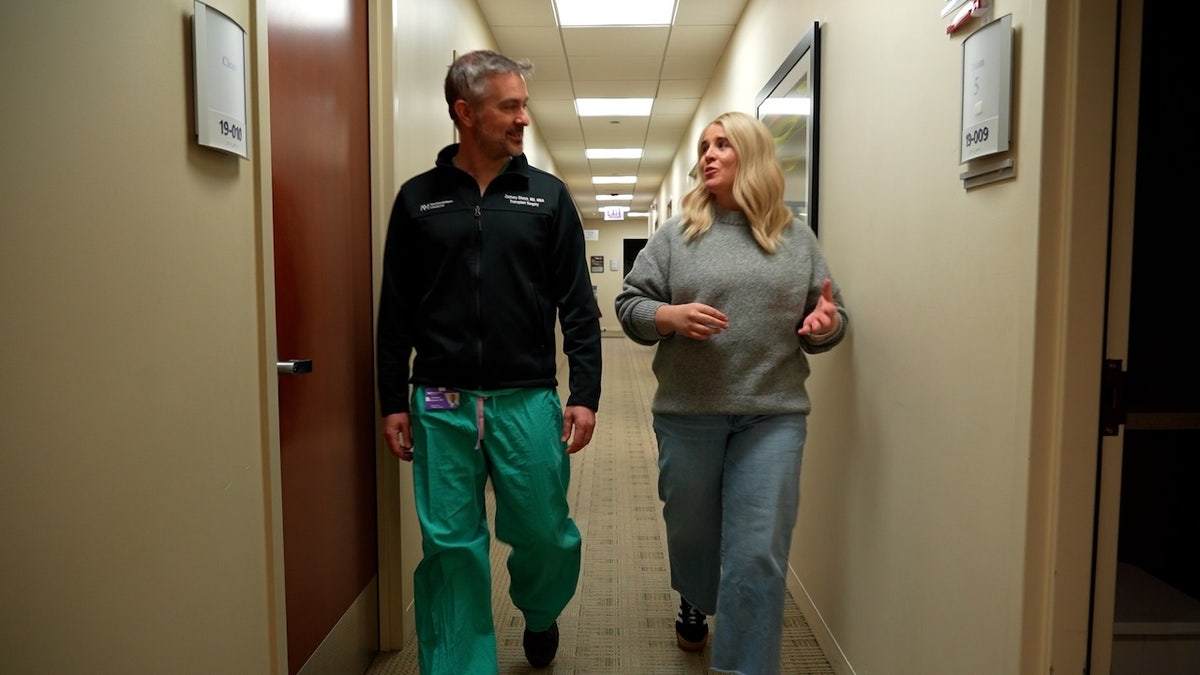
Piccioli (right) is pictured with Dr. Zachary C. Dietch, a transplant surgeon at Northwestern Medicine. (Northwestern Medicine)
Liver transplantation as part of a colorectal cancer treatment is more prevalent in Europe, but not common in the U.S.
JAMES VAN DER BEEK’S DEATH HIGHLIGHTS ALARMING COLON CANCER RISE IN YOUNGER ADULTS
“We just didn’t think it would be an option here,” Piccioli said. “It seemed like something that was going to require a lot of effort to get.”
Her California care team soon discovered, however, that Northwestern Medicine in Chicago offers a liver transplantation program specifically for metastatic colorectal cancer patients.

“I have no evidence of disease currently,” shared Piccioli, pictured on the beach with her husband and three kids. (Amy Piccioli)
“When liver metastasis is noted, our medical oncologists, along with our transplant surgeons begin to make care pathways tailored to the patient,” Satish Nadig, MD, PhD, transplant surgeon and director of the Northwestern Medicine Comprehensive Transplant Center, told Fox News Digital.
The chances of a successful transplant depend largely on how the patient responds to treatment, according to doctors. In “carefully selected” patients, the five-year survival rate can be 60% to 80%.
CLICK HERE FOR MORE HEALTH STORIES
“Response to chemotherapy is a critical gatekeeper for liver transplantation in colorectal liver metastases,” Nadig said.
“Demonstrated disease control or response is usually required, as it identifies patients whose tumor biology (less aggressive and not spreading quickly) is favorable enough to justify a transplant.”
IMAGE
Piccioli, who was in search of a living donor, shared the need with family and friends. A lifetime childhood friend, Lauren Prior, underwent screening and was deemed a match.
The transplant was performed in December 2025, making Piccioli the first person at Northwestern to receive a living donor transplantation for metastatic colon cancer.
CLICK HERE TO SIGN UP FOR OUR HEALTH NEWSLETTER
Today, she and the donor are recovering well.
“The first week or two were difficult, but by week four, I was up and around, getting back to doing normal life things,” she said. “About two months out, I started working out again. I’m now three months out and feel completely normal. It’s amazing what the body can do.”

Piccioli, who was in search of a living donor, shared the need with family and friends. A lifetime childhood friend, Lauren Prior (right), underwent screening and was deemed a match. (Amy Piccioli)
Piccioli recently had her first post-transplant blood screening for tumor molecules within the body, and none were detected. “So I have no evidence of disease currently,” she shared.
She will remain in Chicago for ongoing monitoring and screening until the end of March, when she will return home to Los Angeles.
On the lookout
Early-onset colorectal cancer is often “silent,” according to Nadig.
“That’s because screening is absent before age 45 and symptoms (such as slow bleeding) are usually subtle,” he cautioned. Tumors can also grow in hard-to-detect locations, like the right side of the colon, or with biology that “delays obvious warning signs.”
TEST YOURSELF WITH OUR LATEST LIFESTYLE QUIZ
Although Piccioli experienced no warning signs, she encourages others to pay attention to any changes in the body that may signal cancer.
CLICK HERE TO DOWNLOAD THE FOX NEWS APP
“Do the screenings at the recommended ages, follow up and just be diligent about your health,” she advised.
“I think a lot of the reason that I got to Northwestern and was able to receive this transplant was because I was so diligent about calling the doctors, scheduling the appointments … I think that is really the most important thing: You have to be the captain of your own ship.”
