


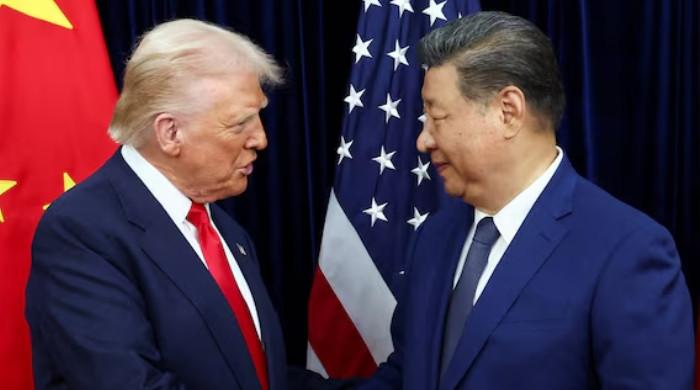
- Trump says China fine with trip rescheduling.
- Trip postponed as Iran war upends US foreign policy.
- Postponed visit heightens uncertainty for markets.
President Donald Trump on Tuesday said he is postponing a highly anticipated trip to Beijing to meet Chinese President Xi Jinping as the war with Iran upends US foreign policy and delays an effort to ease tensions between the world’s two biggest economies.
“We are resetting the meeting … We’re working with China. They were fine with it,” Trump told reporters in the Oval Office.
Trump had been set to travel to Beijing from March 31-April 2 for the first trip there of his 14-month-old second term. The trip will now take place in about five or six weeks, Trump said.
The postponed visit heightens uncertainty for markets and diplomacy alike, as the war with Iran has driven oil prices higher, threatened shipping through the Strait of Hormuz and sharpened investor focus on energy security.
Trump’s campaign in Iran has unleashed a wave of military and economic consequences and commanded attention from across his administration.
Visit at odds with US economic struggles
The image of Trump on a lavish state visit was increasingly seen at odds with a struggling US economy and the return of American service members killed in the Middle East, said a person briefed on planning for the Beijing meetings.
Iran has responded to joint US-Israeli attacks by threatening to fire on vessels moving through the Strait of Hormuz. Trump has called on numerous nations, including China, to help ships safely transit the strait, where one-fifth of the world’s oil transits on a daily basis.
Trump’s request for assistance so far has largely been rebuffed. China, which imported around 12 million barrels of oil daily in the first two months of 2026, the most in the world, has not directly responded to his request.
Beijing never officially announced dates for Trump’s visit and normally does not detail Xi’s schedule far in advance.
Early preparations for the meeting included talks this week in Paris between US Treasury Secretary Scott Bessent and Chinese Vice Premier He Lifeng.
Those talks focused on potential additional purchases of US agricultural goods, including poultry, beef and non-soybean row crops. They also discussed increasing the flow of rare earth minerals largely controlled by China and new approaches to manage trade and investment between the countries, according to people familiar with the talks.
“Head of state diplomacy plays an irreplaceable role in providing strategic guidance to China-US relations,” said Lin Jian, a Chinese Foreign Ministry spokesperson, earlier this week.
