


Last Updated:
Worried about adulterated mustard oil? Learn a simple 2-minute test and key signs to check purity in your kitchen.




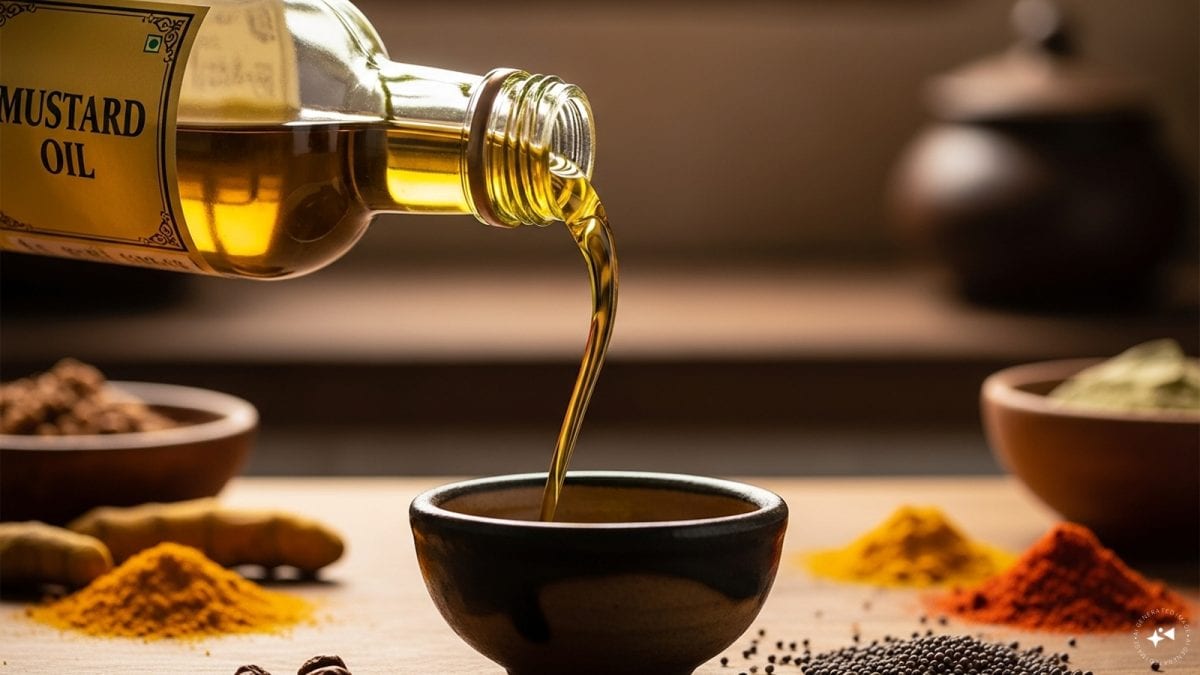
Mustard oil has a distinct pungency and a naturally sharp profile. (Image: AI)
Mustard oil is one of those kitchen staples you rarely question. It sits on the shelf, gets heated till it smokes, and finds its way into everything from tadkas to pickles. But lately, there’s been a growing unease around what exactly is going into that bottle, and whether it’s as pure as it claims to be.
Food safety authorities have flagged concerns around adulteration in cooking oils, and mustard oil is no exception. The issue isn’t always visible. In many cases, adulteration involves cheaper oils or synthetic additives that blend in seamlessly, making it difficult to detect without a closer look.
Why Mustard Oil Adulteration Is A Real Concern
Mustard oil has a distinct pungency and a naturally sharp profile. When diluted or mixed with inferior oils, not only does the flavour change subtly, but the nutritional value takes a hit too. More importantly, certain adulterants can pose health risks when consumed regularly over time. This isn’t just about taste, but it’s about what repeated exposure might mean for your body.
The 2-Minute Mustard Oil Fridge Test
One of the simplest ways to check mustard oil at home doesn’t require any equipment—just your refrigerator.
Pour a small amount of oil into a transparent bowl and refrigerate it for about 1–2 hours. Pure mustard oil tends to remain clear and uniform. If you notice cloudiness, separation, or solidified layers, it could indicate the presence of other oils mixed in. This is not a lab test, but it’s a quick first filter, and often enough to raise a red flag.
Other Mustard Oil Adulteration Signs To Watch For
Beyond quick tests, your senses can tell you a lot. A muted aroma, unusually light colour, or lack of that signature sharpness could point to dilution. Texture matters too. Mustard oil should feel consistent, not overly greasy or thin. Packaging is another giveaway. Trusted brands, proper labelling, and certification marks can offer some reassurance, though they’re not foolproof.
This conversation also opens up a larger shift in how we choose our ingredients. Cold-pressed oils, smaller-batch producers, and traceable sourcing are gaining attention. In a kitchen that’s increasingly ingredient-aware, purity is becoming just as important as flavour.
Mustard oil may be a staple, but it shouldn’t be a blind spot. A quick check, a little awareness, and paying attention to small cues can go a long way. Because when it comes to everyday cooking, what you don’t notice might matter the most.
Delhi, India, India
March 17, 2026, 14:25 IST
